
Last updated November 21, 2026
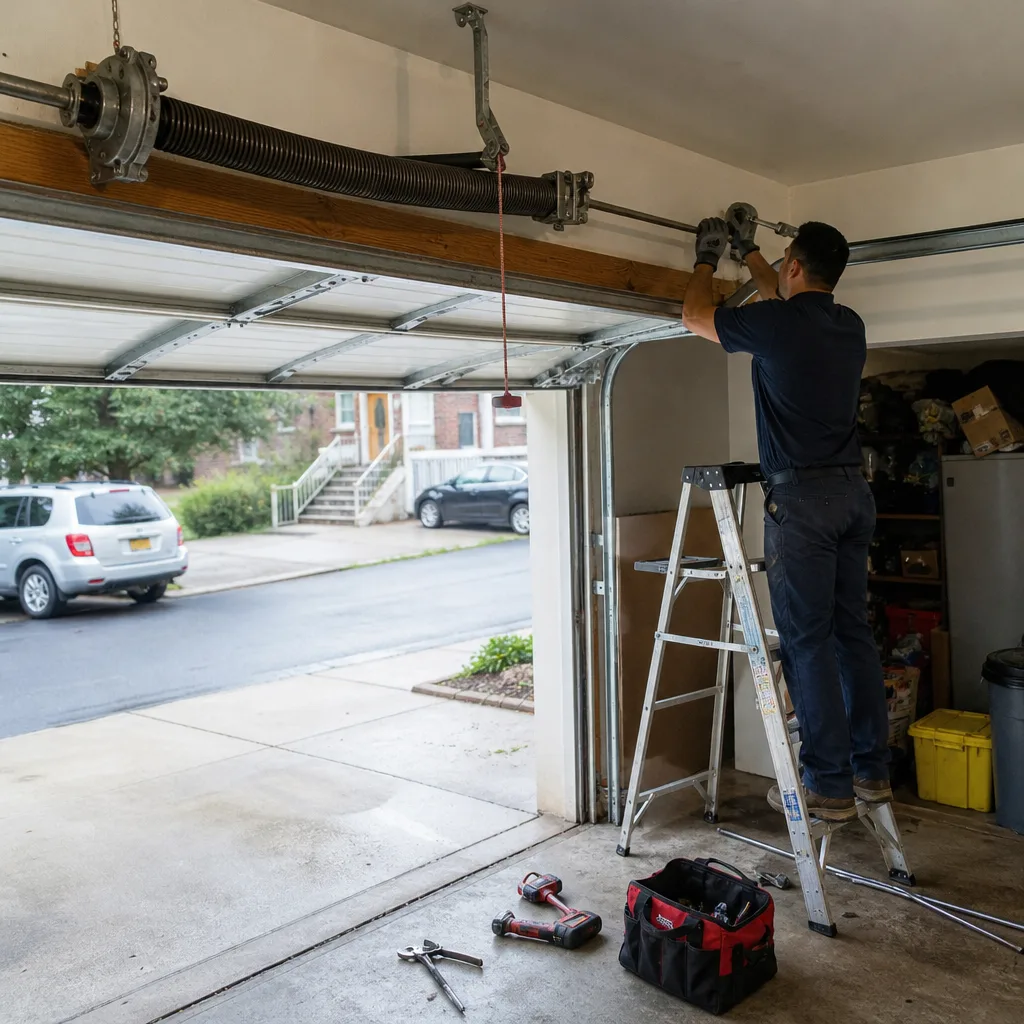
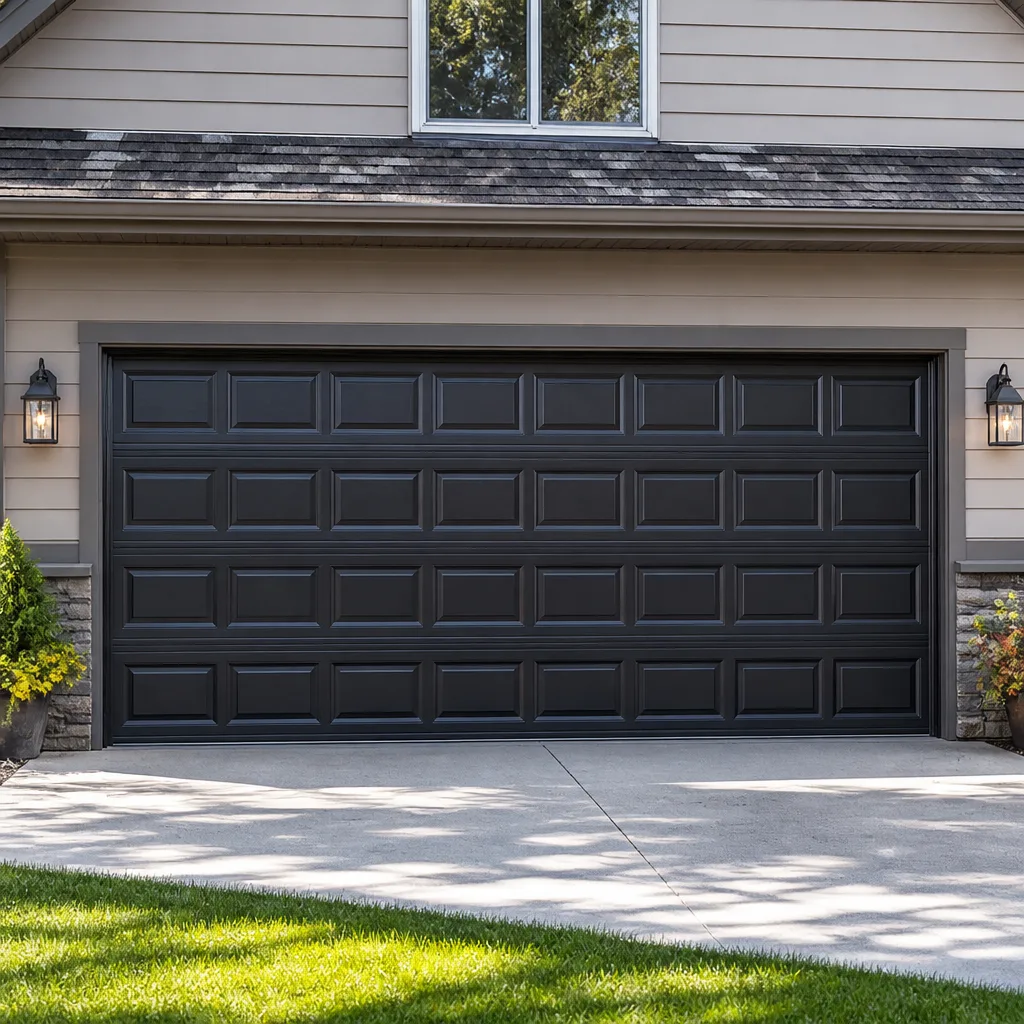 Raised-panel steel
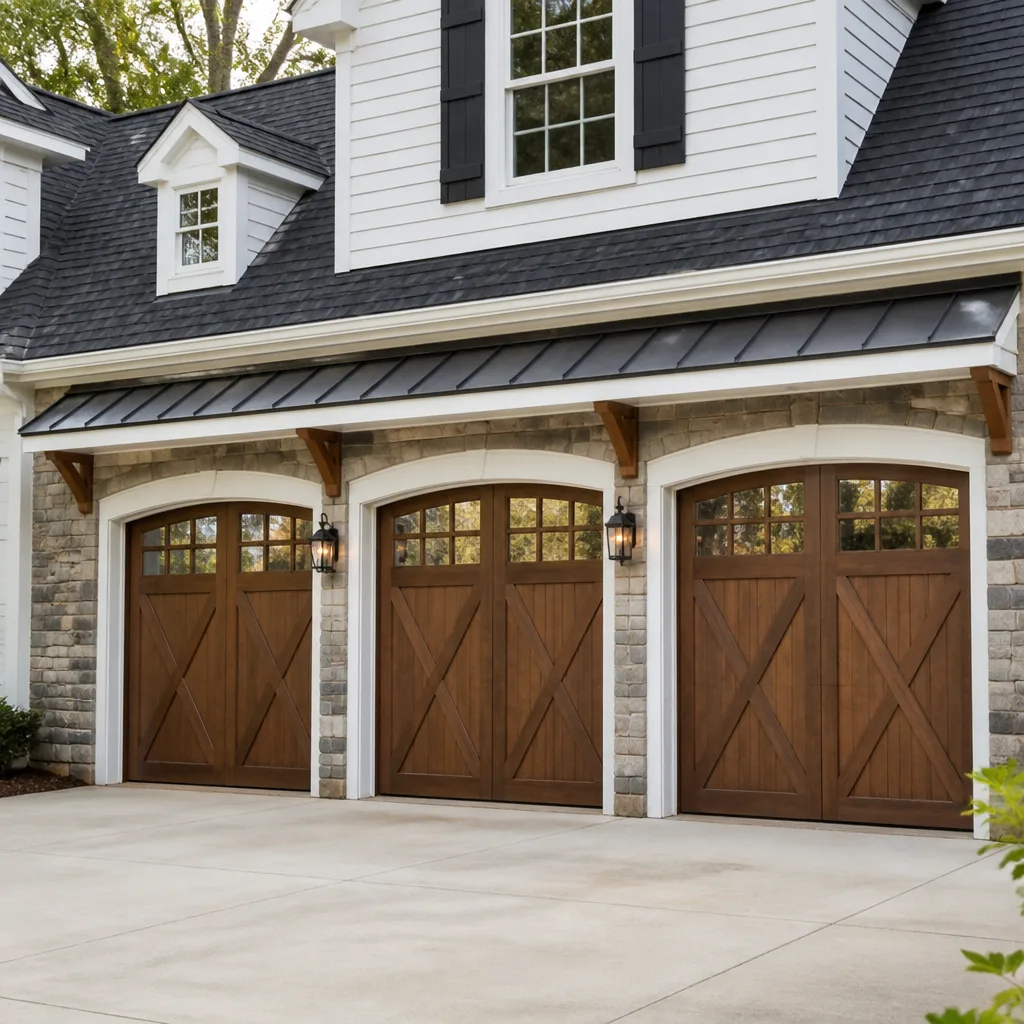 Carriage house
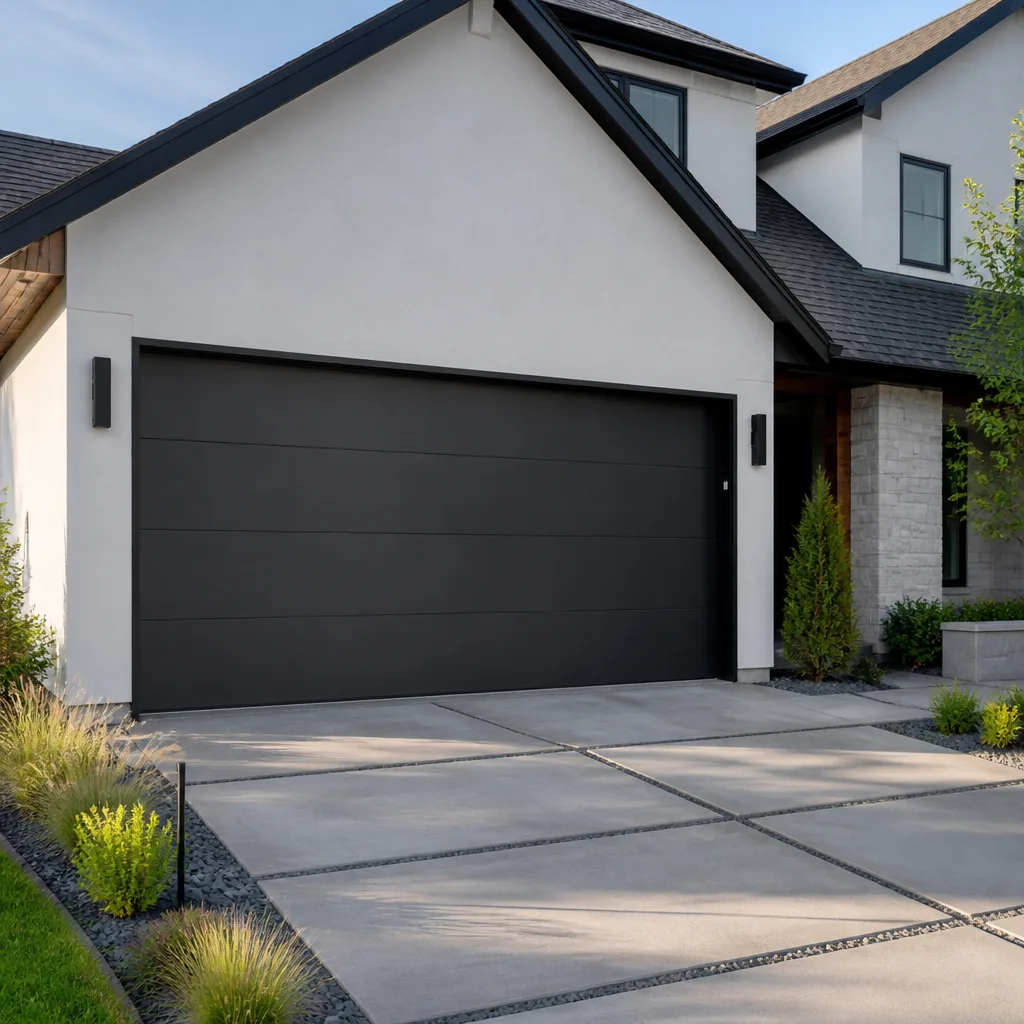 Modern flush
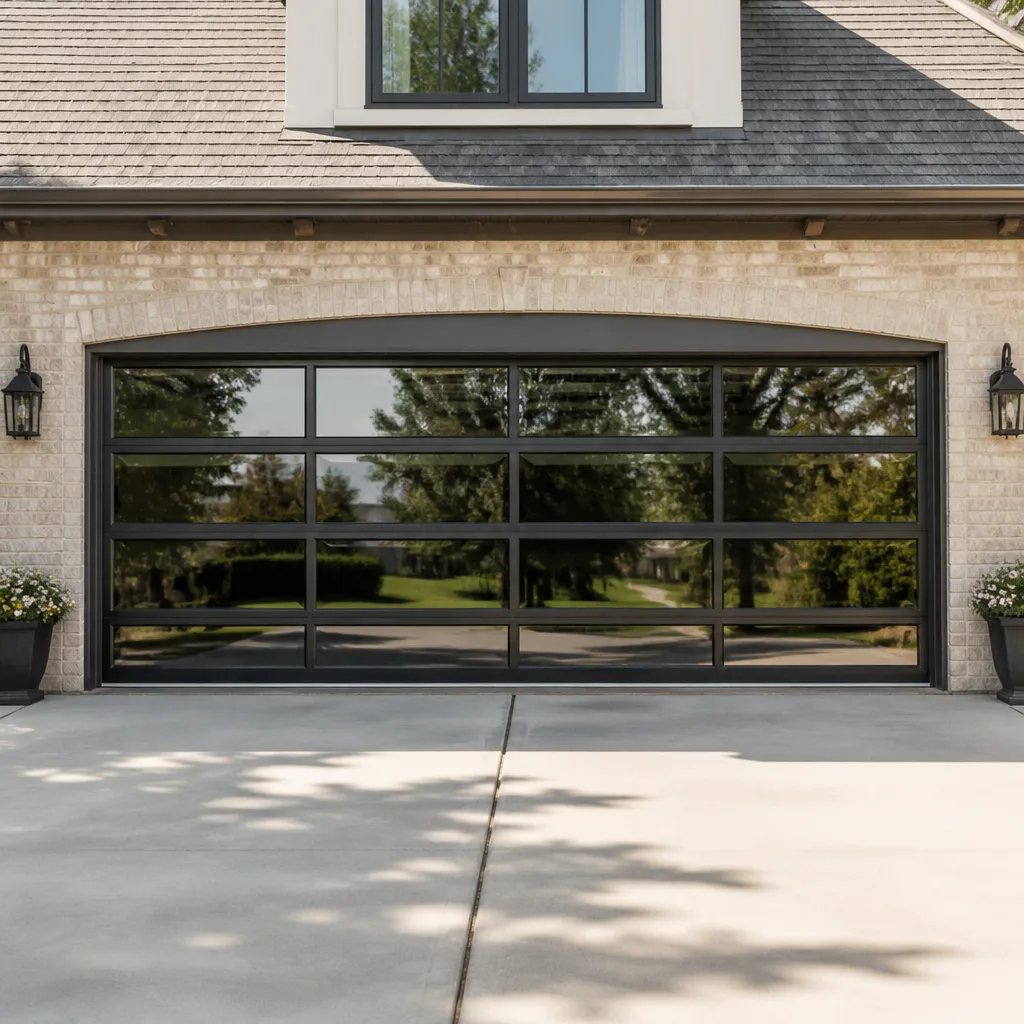 Full-view glass
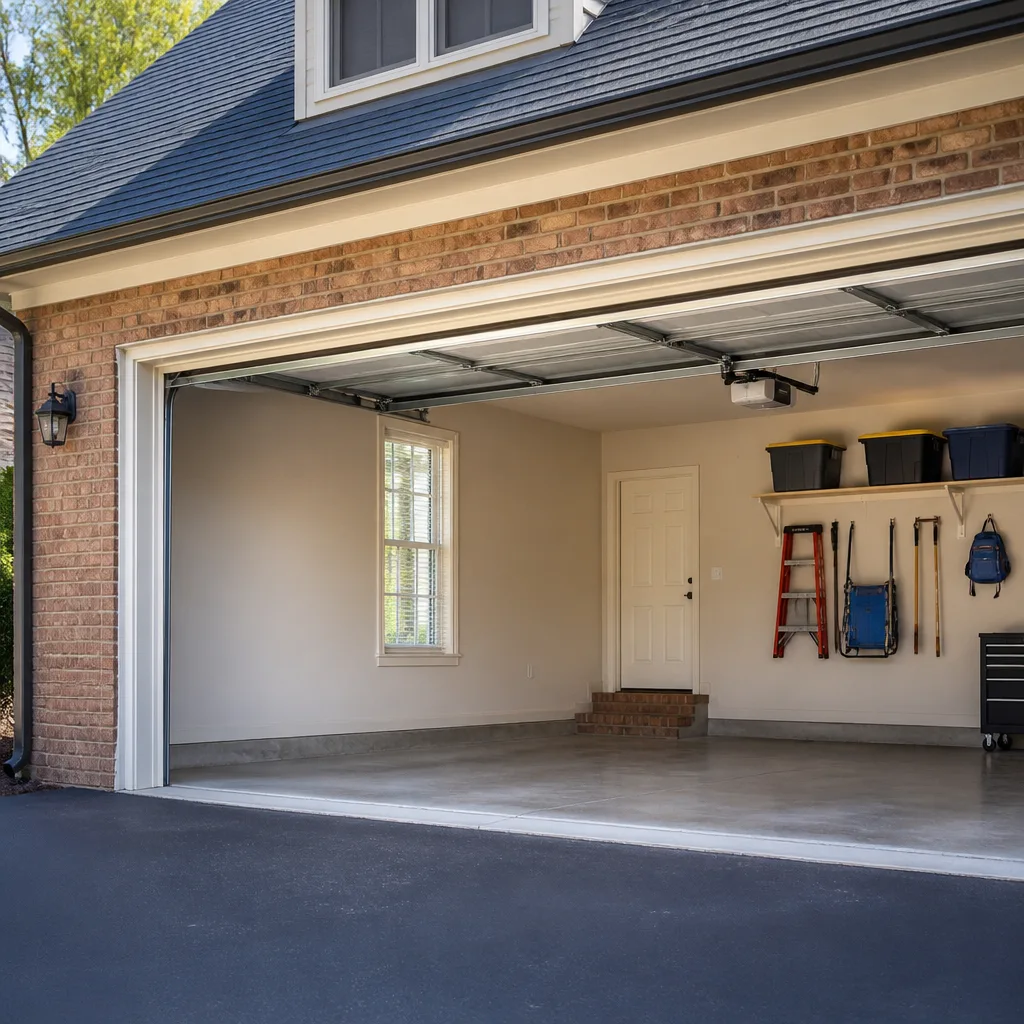 LiftMaster openers
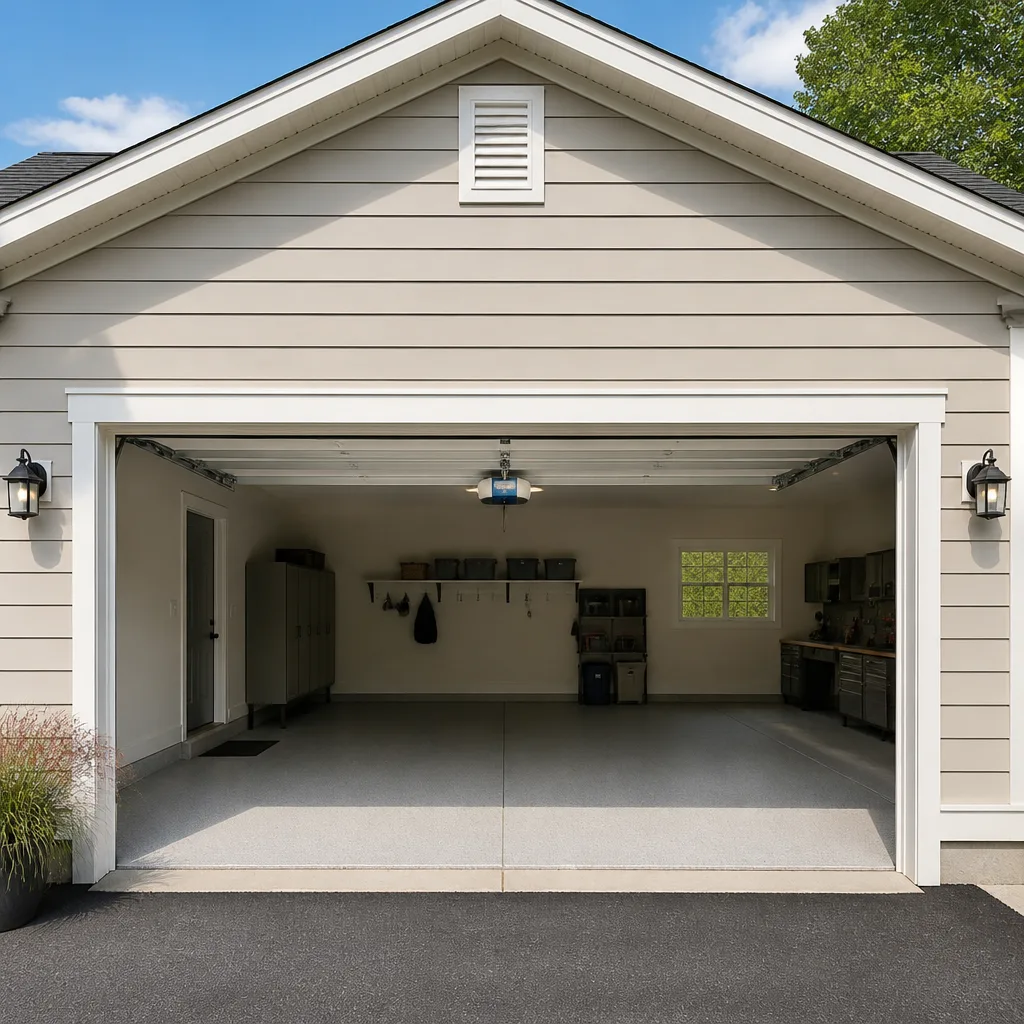 Chamberlain openers
Full 25-point door and opener safety check with every visit - springs, cables, rollers, tracks, and your LiftMaster or Chamberlain opener included
You get a price before we start. It does not change when the pro arrives.
Get your free estimateGarage Door Cost Breakdown: The Harlem Homeowner’s Reference for 2026
Most homeowners assume a garage door quote is mostly parts and a little labor. In Harlem it’s the other way around. The hardware is often the smallest line on the page; what moves the number is getting a truck to your block, paying for parking while the technician is inside, hauling the old door out through a building where the loading rules are strict, and working on a building where the frame may be older than anything the manufacturer planned for. That’s why a job quoted at $200 nationally can land closer to $275 here before anyone touches a spring. This reference walks through every line item you’ll see on a Harlem garage door quote in 2026, what each one actually represents, and where there’s room to push back.
Quick Answer
Garage door costs in Harlem in 2026 typically run $275-$425 for a single spring replacement, $450-$800 for opener replacement, and $1,200-$3,900 for a full door installation, depending on size, material, and the access conditions at your building. Those ranges sit above national averages mainly because of Manhattan service-vehicle costs, disposal fees, and multi-brand parts availability. The written estimate you receive before work begins sets the final price.
Styles & brands we work with
- Raised-panel steel
- Carriage house
- Modern flush
- Full-view glass
- LiftMaster openers
- Chamberlain openers
Table of Contents
- What does spring replacement cost in Harlem?
- Cables, rollers, and the small parts that add up
- How much does opener replacement cost in Harlem?
- What does a new garage door cost in Harlem?
- NYC cost adders most quotes don’t explain
- How to read a garage door quote line by line
- Repair or replace? The cost-per-year math
- Red flags: quotes that are too low and quotes that are padded
What does spring replacement cost in Harlem?
Spring replacement in Harlem typically runs $275-$425 per spring, with high-cycle springs and heavy doors pushing toward the top of that range. A torsion spring is the coiled steel above the door that carries most of the door’s weight. When it snaps, the door becomes almost impossible to lift by hand and dangerous to force.
Springs are usually sold and replaced as a matched pair. If one spring has failed on a two-spring door, the other one is the same age and holds the same load, so replacing just one leaves you back at square one next season. A pair therefore costs roughly twice a single spring. Any quote that offers a single range “for the pair” without saying so is worth questioning.
- Single torsion spring, standard residential door: $275-$425
- Matched pair, same door: roughly double the single-spring figure
- High-cycle springs (rated for more open-close cycles): higher end of the range
- Extension springs on older one-piece doors: often at the lower end, but not all old hardware is supported
Springs are the most dangerous repair in this trade. The torsion system holds hundreds of pounds of tension, and a spring that lets go during a DIY attempt can injure hands, arms, and faces. We won’t describe how to wind one here because it isn’t a job for a homeowner with a winding bar from a hardware store. If you hear a loud bang from the garage and the door won’t lift, stop pulling on it and call a trained professional. Our garage door repair team handles spring work as a standard service, not an afterthought, and we carry the exact replacement for the door we find.
Cables, rollers, and the small parts that add up
The spring is the headline, but the cables, rollers, hinges, and bottom bracket are what actually transfer its tension to the door. Each has its own price line, and in Harlem those lines matter because the doors here are often older and the small parts have worn together.
- Cable replacement (per cable): $90-$180. Cables fray and stretch with age. A snapped cable is a safety issue, not just a squeak.
- Roller replacement (per set of 10-12): $120-$220. Nylon rollers run quieter than steel in a building where the door is directly under a bedroom.
- Hinge replacement: $15-$40 each. Worn hinges let panels sag and misalign.
- Bottom bracket and seal: $60-$140 for the pair. The seal keeps weather and pests out; the bracket holds the cable.
- Panel replacement (single section): $180-$450 depending on whether it’s stock or a matched profile.
Here’s where the multi-brand angle earns its keep. A door from Clopay or Amarr has a specific panel profile, and a door with a LiftMaster or Chamberlain opener has a specific set of safety sensors and travel limits. A technician who shows up with generic parts either forces a fit or has to come back with the right ones. That’s why we work across eight major brands rather than one: the parts match the door, which means the job finishes the same visit instead of turning into a two-trip repair.
How much does opener replacement cost in Harlem?
Opener replacement in Harlem typically costs $450-$800 installed, and opener repair (a board, a gear, a sensor, or a remote) usually runs $120-$280. The gap between repair and replacement is the single most useful number on this page. A motor that’s fine but has a dead logic board is a repair. A motor that’s twenty years old and struggling to lift a heavier modern door is a replacement waiting to happen.
Most Harlem buildings already have one of the dominant brands, which is good news for repair rather than replacement. LiftMaster and Chamberlain (they share a lot of internal design) cover most of what we see, with Genie and Craftsman making up much of the rest. Smart openers with Wi-Fi and app control have their own failure points: the radio module and the phone pairing, not the motor. We work on both the connected units and the older mechanical ones, so an opener that won’t connect isn’t automatically a “replace it” call.
- Diagnose first. A technician tests the motor, the safety sensors, the wall control, and the remotes before quoting anything.
- Repair if the motor and gearbox are sound. Board, sensor, or remote failures are usually a fraction of replacement cost.
- Replace if the lift capacity or safety hardware is obsolete. Modern openers include reversing sensors older units lack; that’s a genuine safety upgrade, not a sales pitch.
If the opener is dead and the door is stuck, that’s when scheduling matters. Call (877) 829-5867. We answer 24/7. Fast dispatch from 7am to 7pm, Sunday through Friday. Our garage door opener repair service covers both the smart units and the legacy mechanical ones.
What does a new garage door cost in Harlem?
A full garage door installation in Harlem typically runs $1,200-$3,900, and the swing is driven mostly by door size, material, and whether the opening and framing are standard. A single-car steel door sits at the bottom of the range; a double door, a wood or carriage-style door, or an insulated unit pushes toward the top. Installation is not a same-day call. It’s measured, ordered, and scheduled, so the right promise here is a free measure and a written price, not a dispatch window.
The installation quote should break out the door itself, the labor to remove and dispose of the old one, and any framing or track work. In Harlem, the “any framing work” line can surprise people because older buildings sometimes have openings that aren’t quite square or tracks that were installed decades apart. A door measured carefully fits; a door ordered from a stock size may need rework, and rework costs more than a correct measurement.
When we quote garage door installation, we measure first and give you the written price before anything is ordered. That way the number you see is the number on the invoice. If the opening needs framing or the tracks need replacing, that’s stated up front, not discovered later. Full-scope coverage matters here: the same visit that measures your opening can also assess the opener, so you’re not coordinating a repair company and an installation company who each blame the other when the new door doesn’t run right.
NYC cost adders most quotes don’t explain
This is the part of a Harlem quote that national pricing guides never mention, and it’s why a number that looks high against a website average may actually be fair for the block you live on.
- Service-vehicle costs. Parking a work vehicle in Manhattan during a scheduled job is a real expense, whether it’s a meter, a garage, or a commercial loading zone. It shows up as a small adder, not a hidden fee.
- Parking and access time. If the technician has to wait for a spot, walk equipment from a garage, or navigate a building’s service entrance, that time is part of the job. Clear access instructions save you money.
- Permit fees. Structural changes to an opening, or work that alters the building envelope, may require a permit. Most cities require one for structural work, so confirm with the NYC Department of Buildings or your co-op’s managing agent before work starts.
- Disposal surcharges. Old doors and tracked hardware don’t go in a curbside bin. Moving a full door panel out of a Harlem building and disposing of it legally costs more than tossing it in a suburban dumpster.
- Labor differentials. Union and non-union crews operate under different cost structures, and a quote should tell you which one you’re getting and why it affects the number.
- Building rules. Co-ops and condos often restrict when deliveries and work can happen, which can stretch a job across more trips than a single-family house requires.
None of these are negotiable in the sense of being fake. They’re real costs of working in Harlem. What’s negotiable is clarity: a good quote names them so you’re not comparing a bare-bones out-of-borough number to a Harlem number that includes what the out-of-borough quote forgot.
How to read a garage door quote line by line
A quote is a list of promises. Read it as three questions: what’s the part, what’s the labor, and what happens if the job takes longer than expected.
- Parts line. It should name the brand and spec, not just “spring” or “opener.” A Clopay panel is not the same part as a generic panel, and a LiftMaster unit is not the same as an unbranded one. If the brand isn’t named, ask.
- Labor line. This is the technician’s time for the specific job. It should be a flat figure tied to the work, not an hourly number that can drift. If the quote says “plus labor,” ask for the labor number in writing.
- Service-call or dispatch line. Some contractors charge a call-out fee. Ask whether it’s included in the total or added on top. Our estimates are free and the price is set per job by the written estimate, so there’s nothing to add after the fact.
- Parts markup. Every contractor prices parts above wholesale. A modest markup is normal; a large one on a stock part is worth questioning.
- Disposal and access. If disposal or parking is going to be charged, it belongs on the quote, not on the invoice.
- The “unforeseen” clause. Good quotes describe what happens if the frame is rotten or the tracks are bent. Bad quotes just leave a blank where the extra charge goes.
The single most important thing to confirm: the price is quoted and agreed before any work starts. If a contractor won’t put a number on paper before starting, that’s a conversation to end. You can call our team at (877) 829-5867 and we’ll walk through a quote line by line, free, whether or not you hire us.
Repair or replace? The cost-per-year math
Here’s the calculation most homeowners get wrong. They compare the price of a repair today to the price of a new door today, see that the repair is cheaper, and repair. But the useful comparison is cost per year of reliable service, not the sticker on the day.
Take a door that’s on its third repair in four years, with worn springs, tired cables, and an opener that’s already been worked on once. Those repairs, stacked up, can approach the price of a modest new door. A new door, with new hardware and a fresh opener, then has years of low-failure service ahead of it. On a cost-per-year basis, the new door can be the cheaper choice even though it costs more on the day you write the check.
- Repair makes sense when the door is sound, the failure is isolated, and the repair returns it to reliable service for several more years.
- Replacement tips the balance when multiple systems are aging at once, when parts for the door are no longer available, or when repairs are recurring rather than one-off.
- The Harlem wrinkle is part availability. Older doors in older buildings sometimes have no current replacement parts, which makes a repair a patch rather than a fix. A technician familiar with Clopay, Amarr, and the other major brands can tell you quickly whether the part still exists.
Diagnosis first, then options. That’s how we work. You’ll get a straight reading of whether the repair is a real fix or a farm-out, and the written estimate sets the price either way.
Red flags: quotes that are too low and quotes that are padded
Pricing problems run in both directions. A quote that’s far below the Harlem range and a quote that’s far above it are both worth a second look, for opposite reasons.
Quotes that are suspiciously low usually leave something out: the second spring, the disposal fee, the parking cost, or the proper high-cycle spring. They may also quote a generic part where a brand-specific one is needed, which leads to a repeat visit and a second charge. A low number that doesn’t name the brand, the spring type, and the disposal handling is a number you can’t compare.
Quotes that are padded have their own tells: a service-call fee plus a labor fee plus a “diagnostic” charge for the same visit; a parts markup that dwarfs the part; an “emergency rate” for a job done at a normal hour. Push back on any line you can’t explain, and ask for the brand and the spring rating. A fair quote answers that without hesitation.
The safest comparison is apples to apples: same brand, same spring type, same disposal, same access terms. Once the lines match, the prices are comparable, and the choice comes down to who you trust to do the work.
Common Mistakes to Avoid
- Replacing one spring of a pair. The second spring is the same age and carries the same load. Replacing one leaves you doing the job again soon.
- Comparing a Harlem quote to a national average. The average doesn’t include parking, disposal, or multi-brand parts. Compare local Harlem quotes to local Harlem quotes.
- Skipping the written estimate. A verbal price is a guess. Insist on paper before work starts, and read every line.
- Letting a quote hide the brand. “Spring” and “opener” aren’t specs. If the quote doesn’t name the brand and model, ask before you sign.
- Forcing a stuck door. Pulling a door with a broken spring or cable can bring the whole thing down. Leave it closed and call a professional.
- Ignoring the access instructions. Tell the company about building rules, parking, and service entrances up front. It keeps the price honest and the job on schedule.
- Assuming a new door is always the answer. If the failure is isolated, a repair returns the door to service at a fraction of the price. Diagnose first.
See the difference
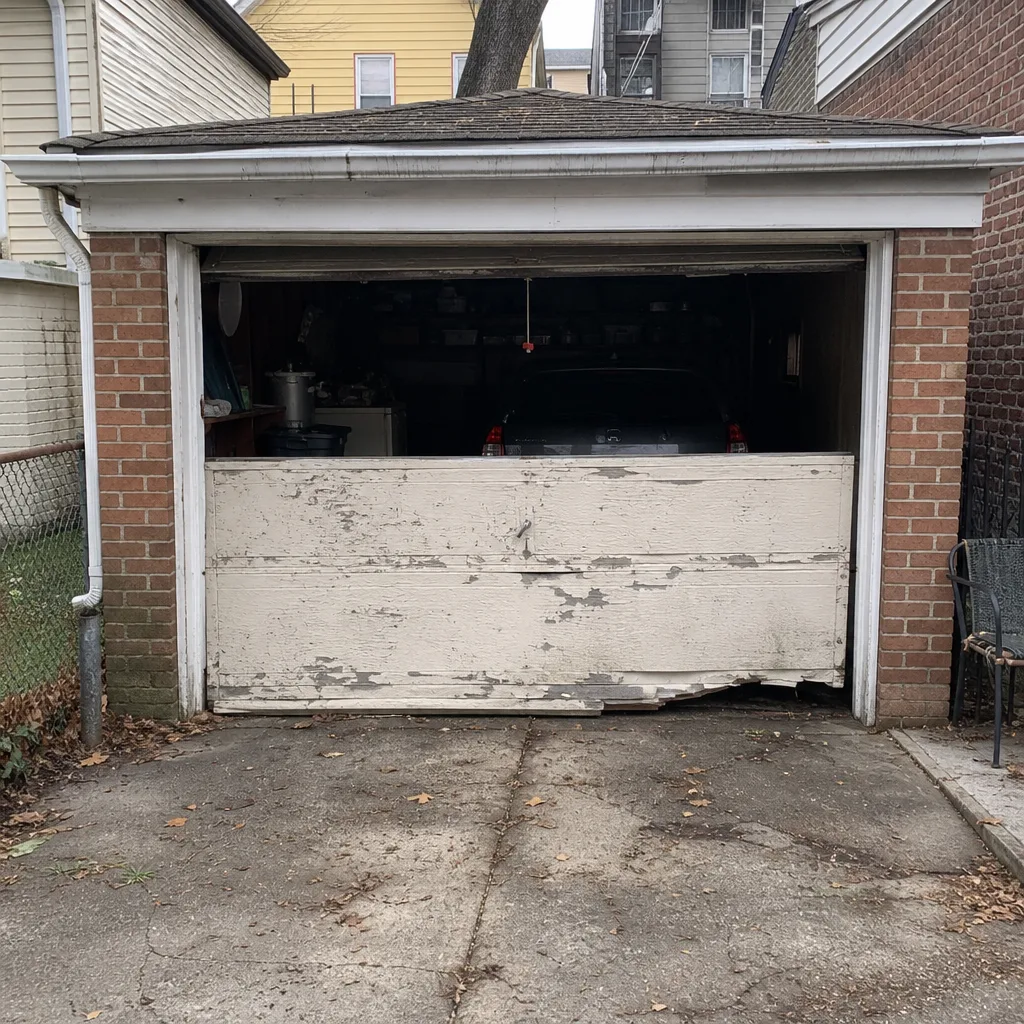 Before
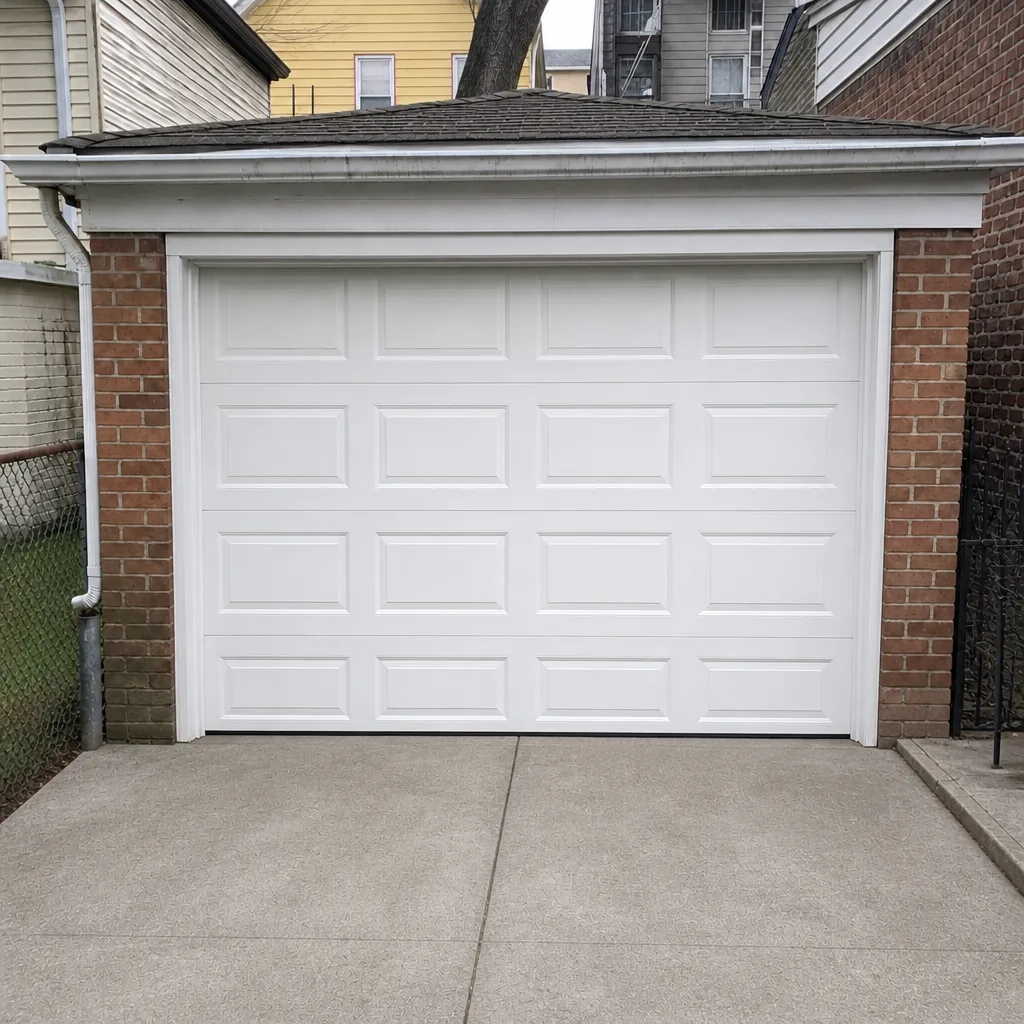 After
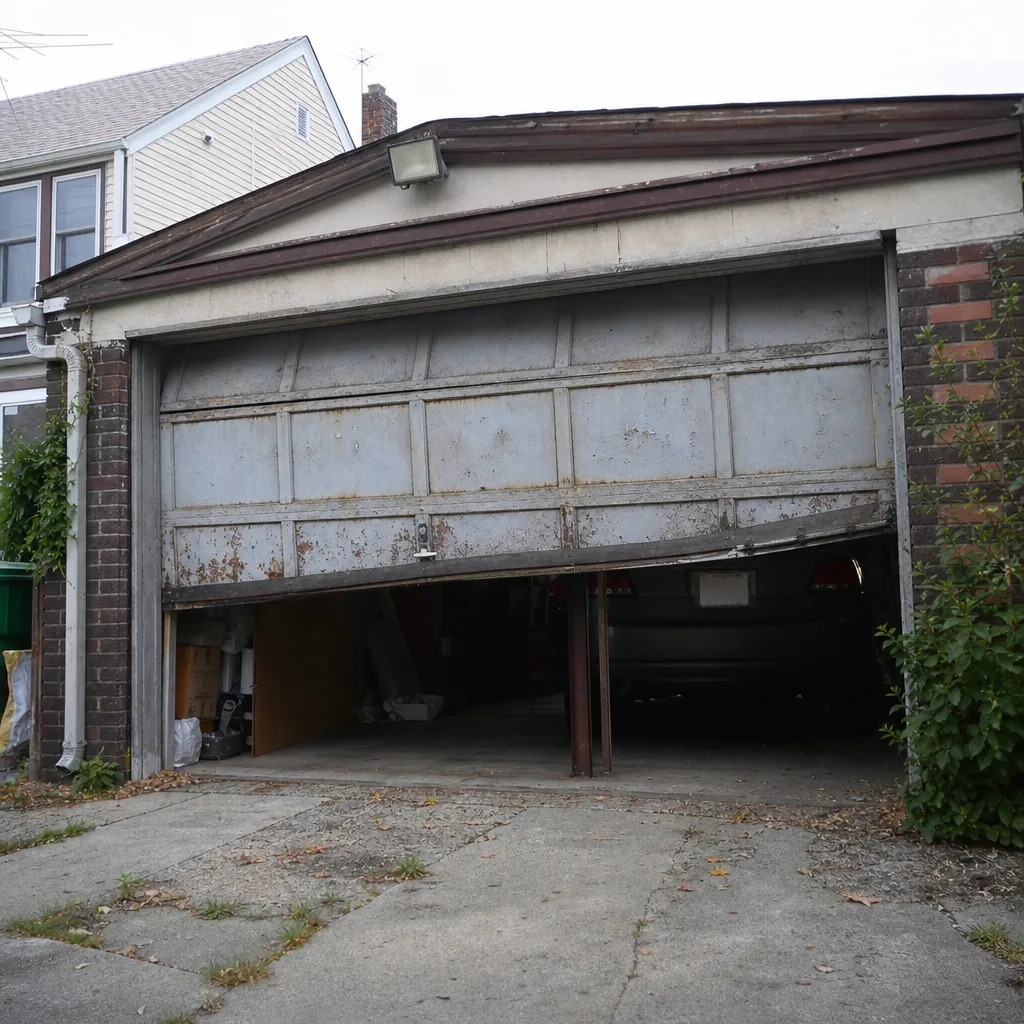 Before
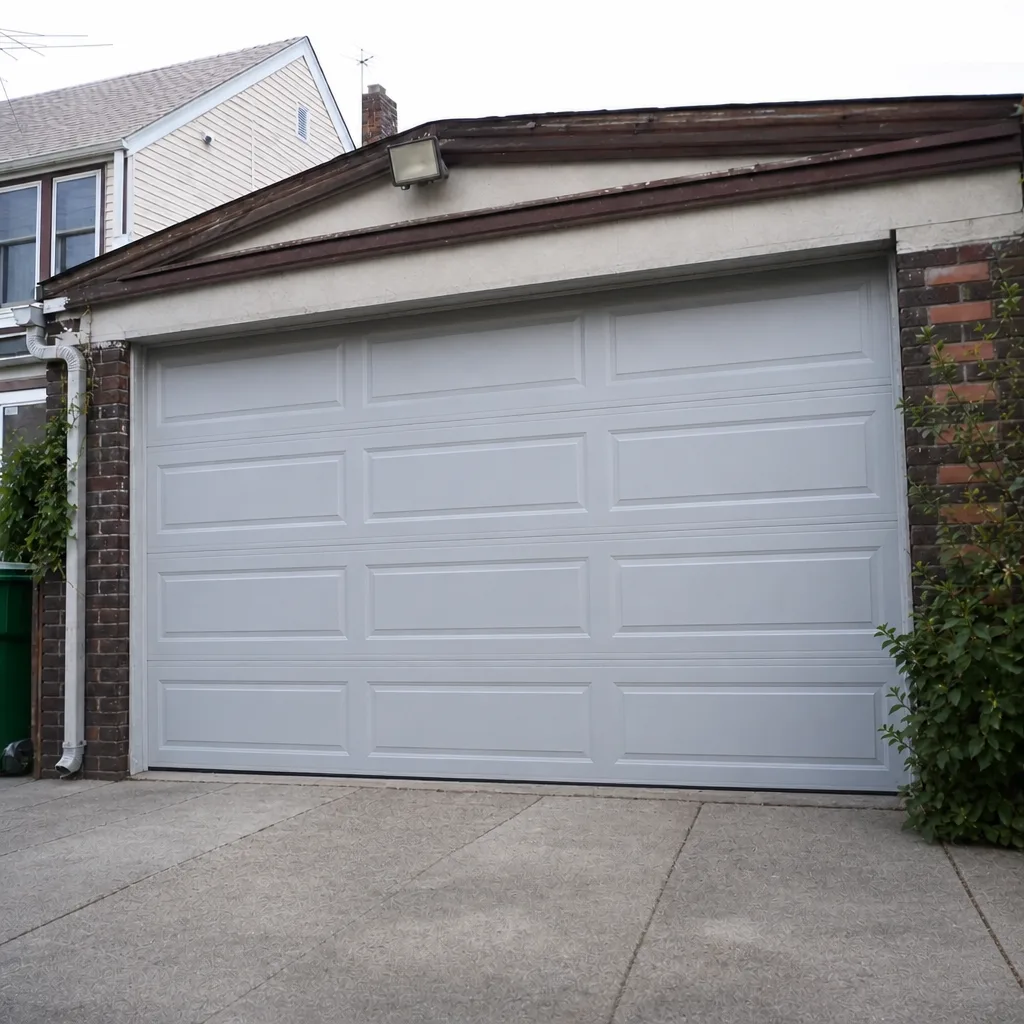 After
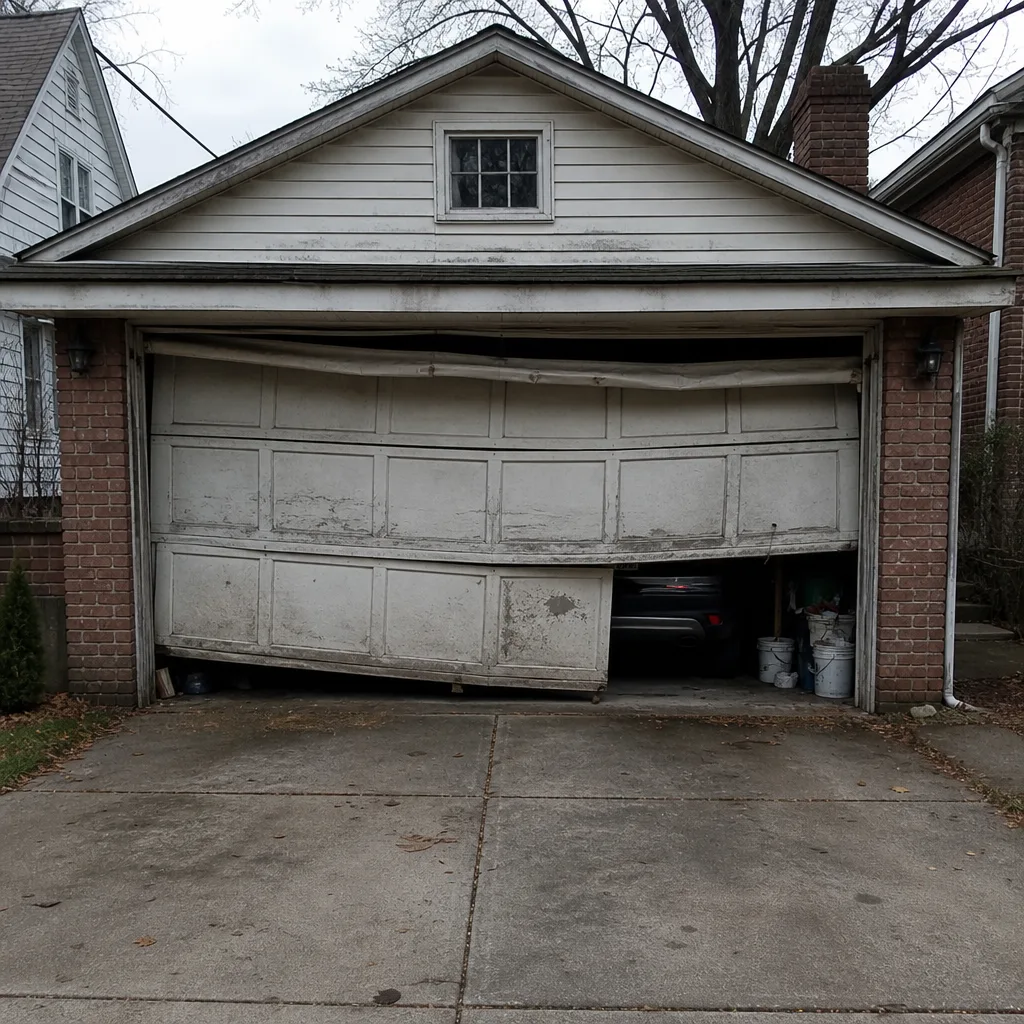 Before
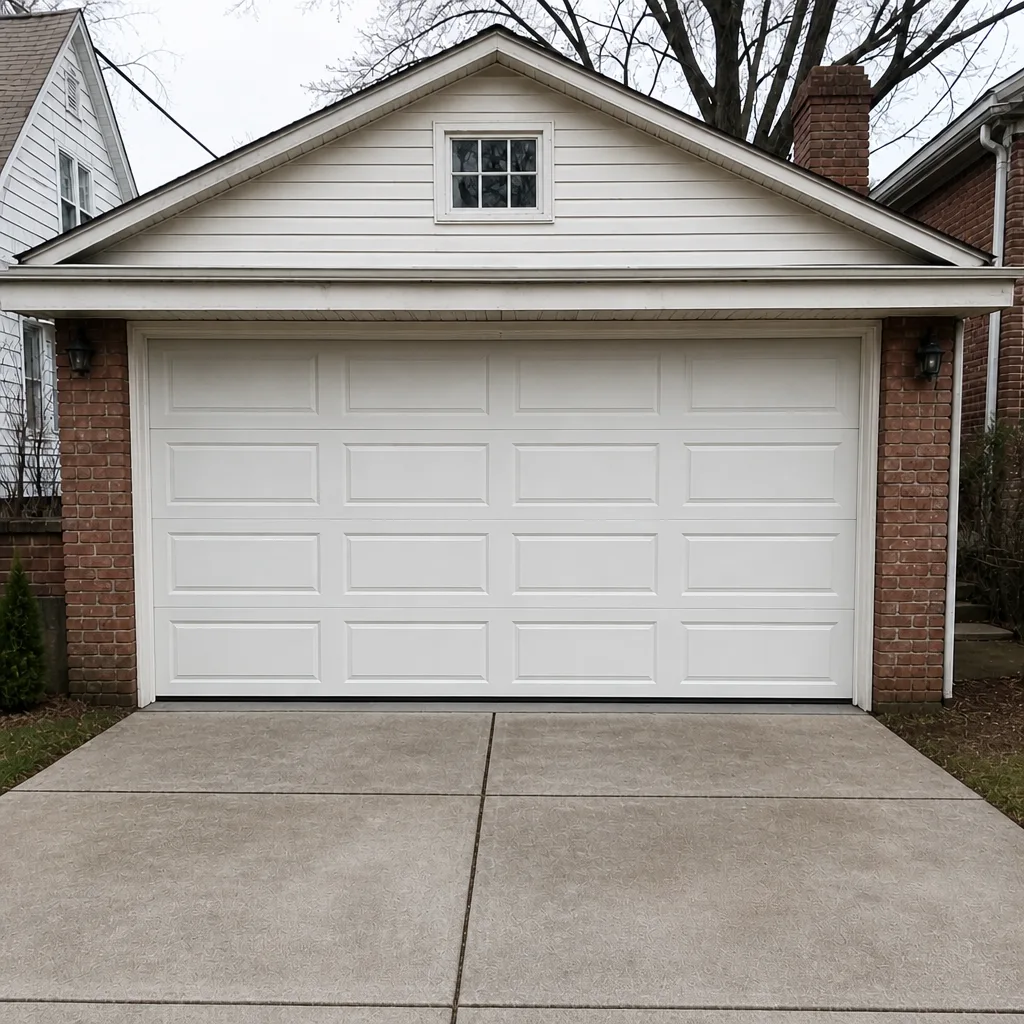 After
When to Call a Professional
Some garage door problems are safe to watch and some are not. Call a professional if the door won’t lift, a spring has snapped, a cable is frayed or hanging, the door is crooked or one side is lower than the other, the opener runs but the door doesn’t move, or the door reverses unpredictably. Those are not jobs to attempt with a ladder and a tool kit. Springs, cables, and torsion systems store enough energy to cause serious injury, and a trained technician knows how to release that tension safely.
For pricing, timing, or a straight answer on whether a repair is worth it, call our team. Garage Door Repair Harlem offers free estimates in Harlem. Call (877) 829-5867. We answer 24/7. Fast dispatch from 7am to 7pm, Sunday through Friday. Our technicians have up to 13 years of experience, and the local pro is licensed and insured as their state requires.
Frequently Asked Questions
Garage door repair in Harlem typically runs $120-$425 for most common fixes, with spring replacement at the higher end and small part repairs at the lower end. A full opener replacement is a separate line, usually $450-$800 installed. The written estimate before work starts sets the final price. Call (877) 829-5867 for an exact quote – estimates are free.
Harlem prices run higher mainly because of Manhattan service-vehicle costs, building access time, disposal fees, and the premium for parts on multi-brand doors. Those are real costs of working in Harlem, not padding. A local quote that names them is more honest than a bare out-of-borough number that leaves them out and adds them later. Call for a free local estimate.
For spring failures and stuck doors, yes, we schedule same-day service where an opening allows. Spring repair is a repair call, not a scheduled install, so it can often be handled quickly. Call (877) 829-5867. We answer 24/7. Fast dispatch from 7am to 7pm, Sunday through Friday.
No. The price is quoted and agreed before any work starts, and the written estimate sets the final price. If the technician finds something the quote didn’t cover, that’s discussed before any additional work begins, not added to the invoice afterward. Call for a free estimate and a clear number.
Yes. The local pro we connect you with is licensed and insured as their state requires, so the work is covered. We can walk you through the coverage on the call before dispatch. Call (877) 829-5867 for a free estimate.
Repair is usually cheaper on the day, but replacement can be cheaper per year of service when several systems are aging at once. If the spring, cables, and opener are all near the end of their life, the stacked repairs can approach the cost of a modest new door. A diagnosis first tells you which applies. Call for a free estimate either way.
The Bottom Line
Garage door pricing in Harlem isn’t random, and it isn’t all markup. Spring replacement at $275-$425 per spring, opener work at $450-$800 for a full replacement, and installation at $1,200-$3,900 reflect real local costs: parking, access, disposal, and the parts that match the brand on your door. Read every quote line by line, confirm the brand and spring type, ask what’s included, and get the number in writing before work starts. And treat a snapped spring or a hanging cable as a call-a-professional event, not a weekend project.
Call (877) 829-5867. We answer 24/7. Fast dispatch from 7am to 7pm, Sunday through Friday. Our Garage Door Repair Harlem team handles repair, opener repair, spring repair, installation, and emergency service across the brands you actually own, so one call covers the whole project. Estimates are free.
Written by the team at Garage Door Repair Harlem.