
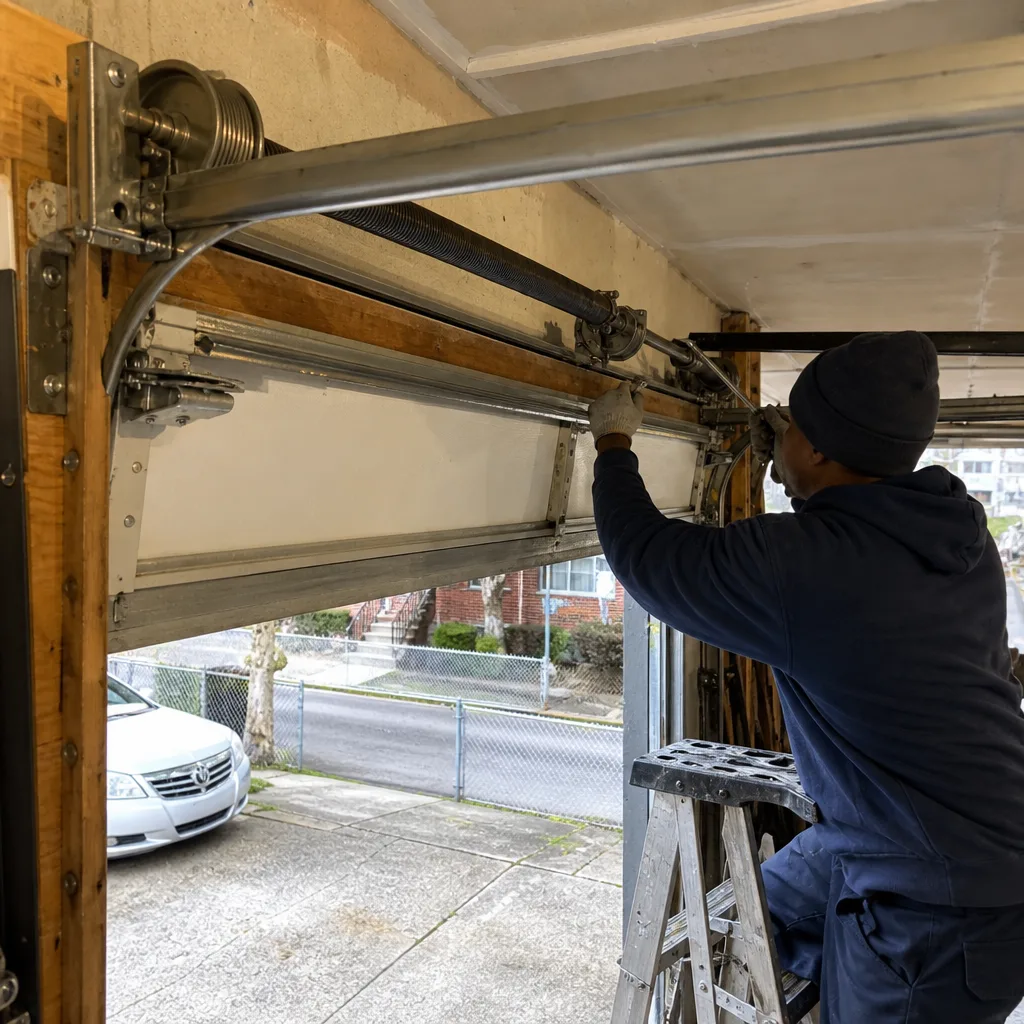
Last updated November 21, 2026
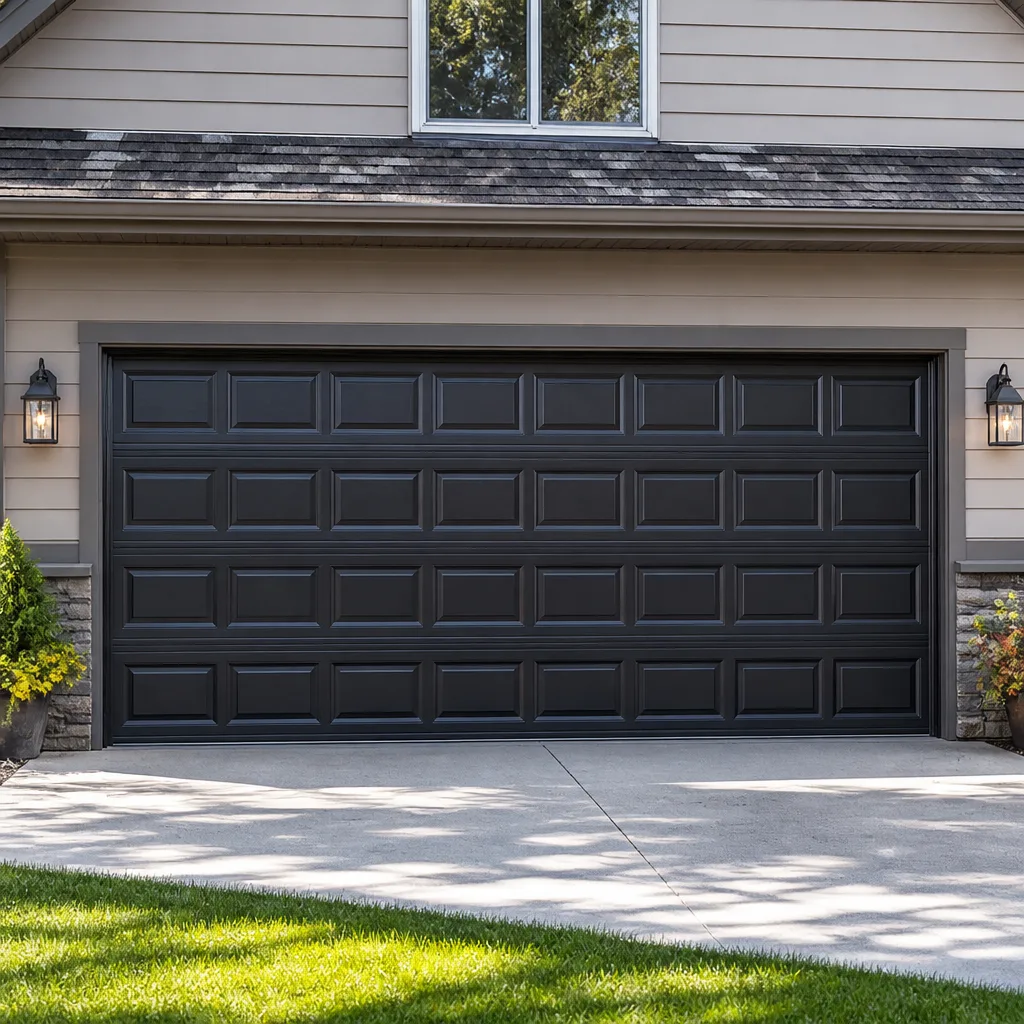 Raised-panel steel
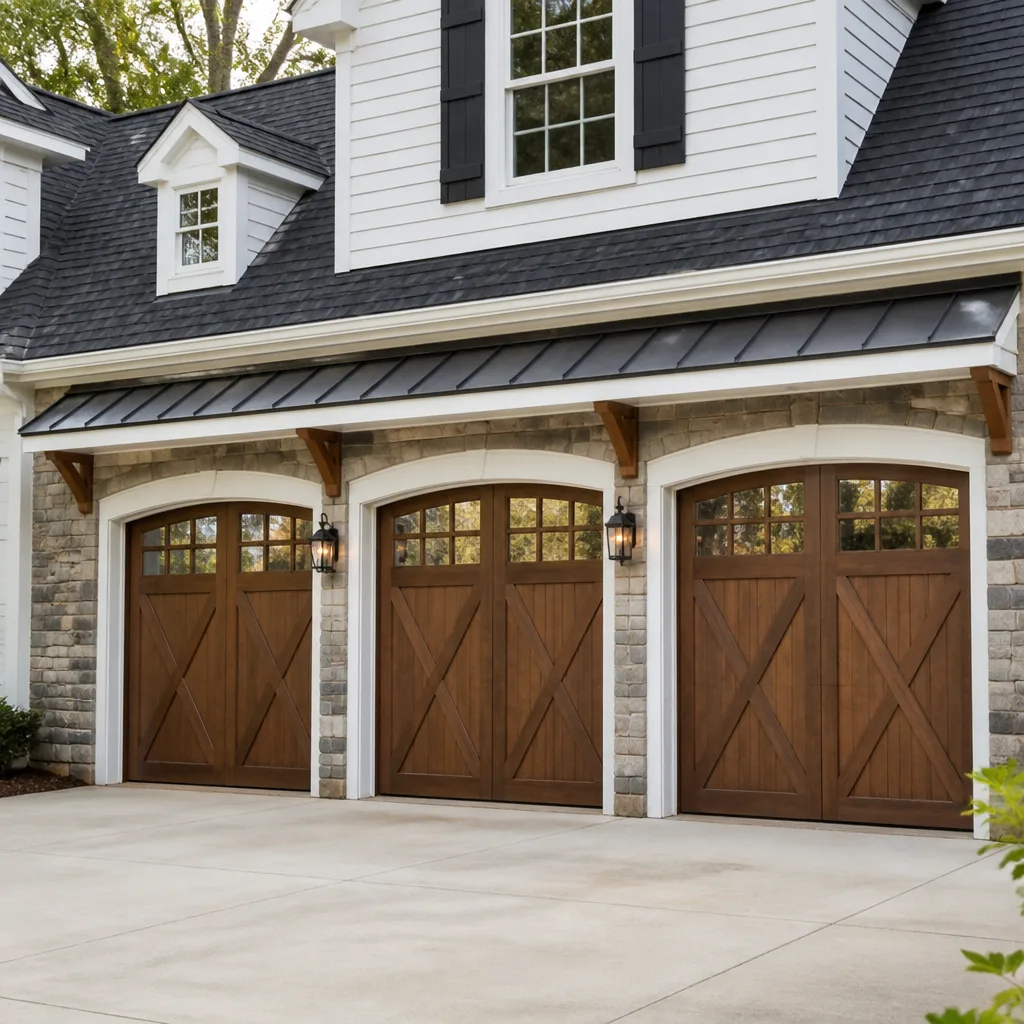 Carriage house
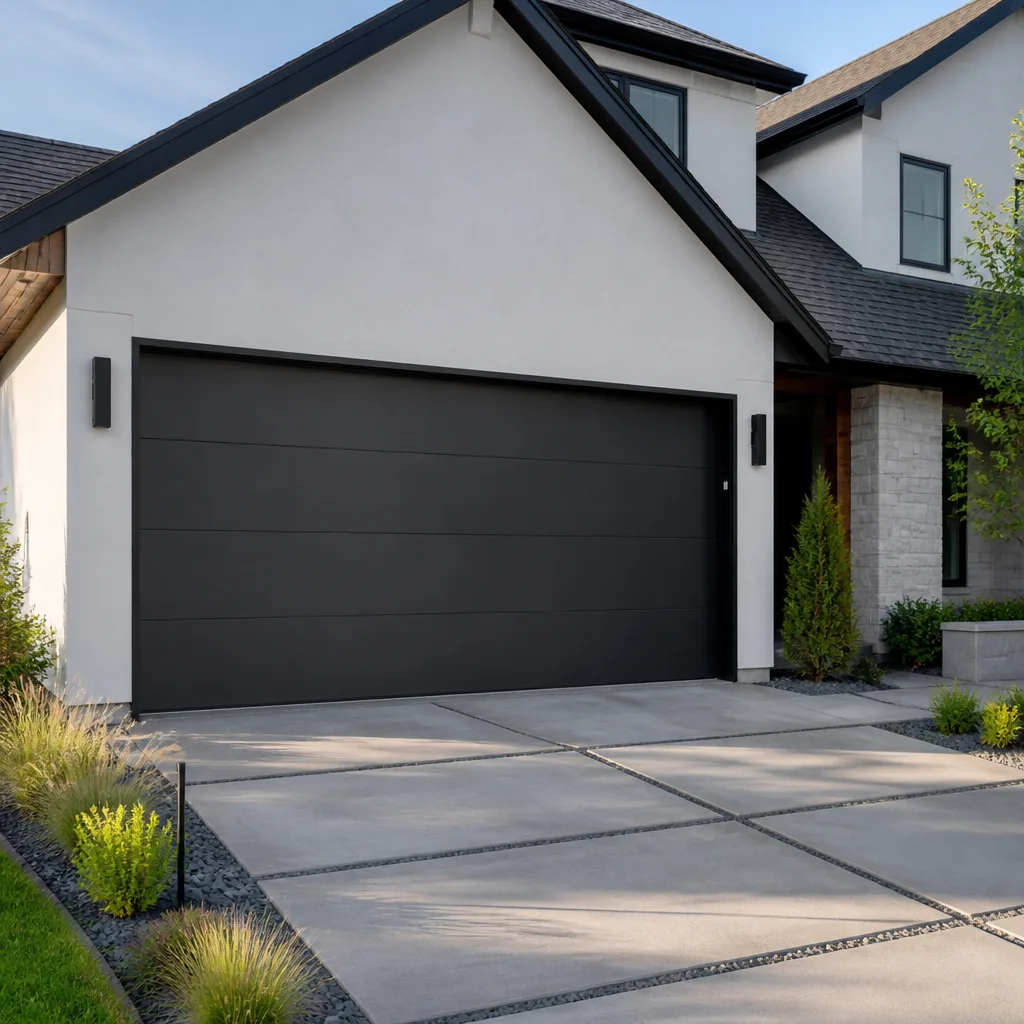 Modern flush
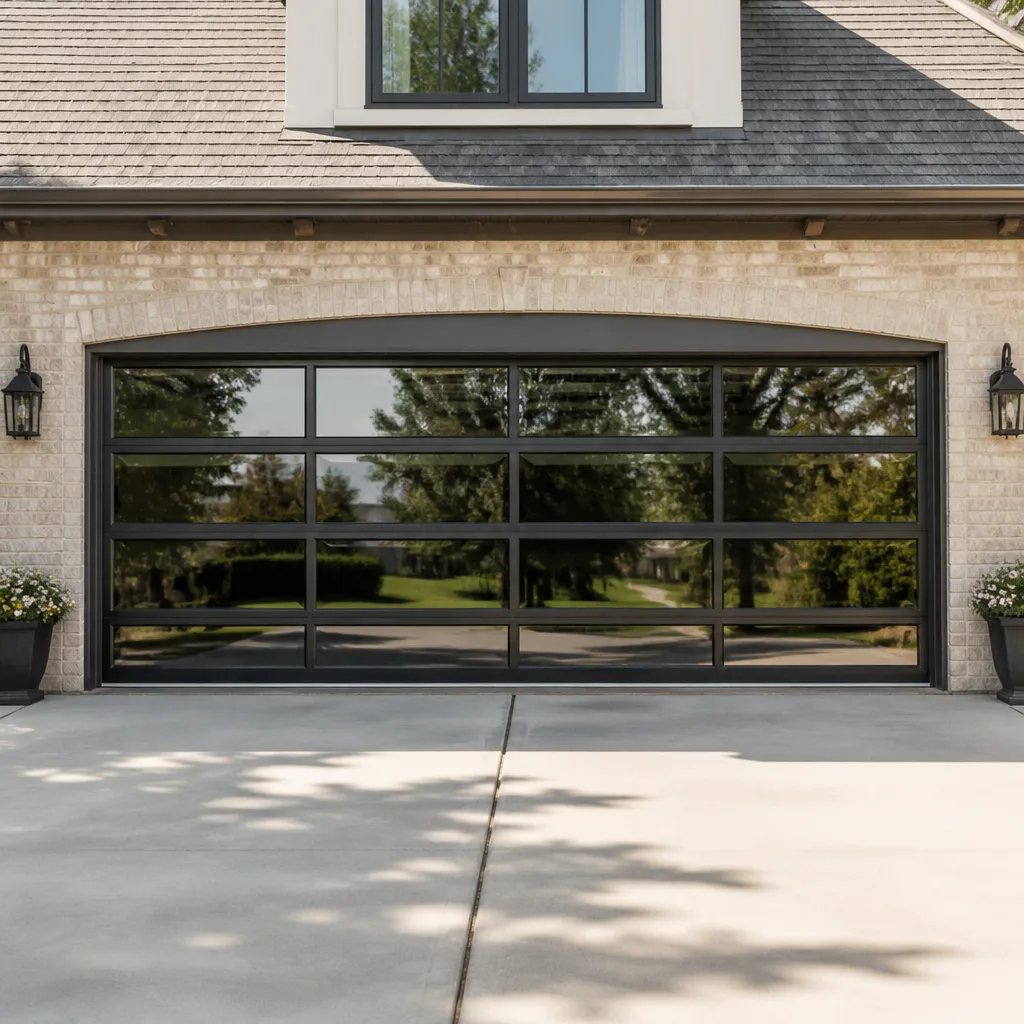 Full-view glass
 LiftMaster openers
 Chamberlain openers
Full 25-point door and opener safety check with every visit - springs, cables, rollers, tracks, and your LiftMaster or Chamberlain opener included
You get a price before we start. It does not change when the pro arrives.
Get your free estimateHow to Hire a Garage Door Contractor in Harlem: A Step-by-Step Guide
The mistake we see most often from Harlem homeowners isn’t hiring someone unlicensed. It’s hiring someone licensed who doesn’t actually know the NYC permit and code landscape, and that turns a one-day repair into a weeks-long compliance scramble. The second most common mistake is a brand mismatch: a technician shows up, looks at your Genie opener or your Clopay door, and quietly admits they don’t carry the parts and will need to order them. What follows is the filter we’d want a neighbor to use if they were hiring anyone but us. You’ll learn how to verify a contractor’s credentials, what to ask about brand coverage before anyone rings your bell, how to compare two quotes honestly, and where a real warranty begins and ends.
Quick Answer
To hire a garage door contractor in Harlem, verify their NYC Home Improvement Contractor (HIC) license through the Department of Consumer and Worker Protection database, confirm in writing that they actually work on your door and opener brand, get a written scope of work and a written price before any labor starts, and ask how parts and labor are each warranted. A contractor who answers all four clearly is usually a good hire. One who dodges any of them is a risk, licensed or not.
Styles & brands we work with
- Raised-panel steel
- Carriage house
- Modern flush
- Full-view glass
- LiftMaster openers
- Chamberlain openers
Table of Contents
- Step 1: Verify the NYC HIC License
- Step 2: Confirm Brand Coverage Before Booking
- Step 3: Ask the Right Permit Questions
- Step 4: Demand a Written Scope of Work
- Step 5: Compare Quotes on Scope, Not Price
- Step 6: Understand the Warranty
- What Makes Hiring a Garage Door Contractor in Harlem Different
- Common Mistakes to Avoid
- When to Call a Professional
Step 1: Verify the NYC HIC License
New York City requires home improvement contractors to hold a Home Improvement Contractor license issued by the Department of Consumer and Worker Protection. In Manhattan, including Harlem, that license applies to the work you’re hiring for. This is the single credential worth confirming before you book anyone.
Here’s how to check it in five minutes:
- Ask the contractor for their HIC license number in writing, by text or email, not just verbally on a call.
- Go to the DCWP license lookup on the NYC.gov site.
- Search by the license number, not by business name. Names vary, numbers don’t.
- Confirm the license status reads “Active” and the business name matches exactly what’s on your quote.
- Confirm the license covers home improvement work, which is the category garage door repair falls under.
Two red flags to watch for. First, a contractor who gives you a number that belongs to a different business name than the one on the quote. Second, a contractor who says “we’re licensed” but won’t put the number in writing. In a dense borough like Harlem, where small operators and subcontractors move between addresses, the license number is the one stable identifier you have. If it doesn’t check out, walk. There are other contractors.
Ask, too, whether the person actually doing the work is an employee or a subcontractor, and whether the subcontractor carries their own license. The DCWP database won’t tell you who’s showing up to your door, so you have to ask.
Step 2: Confirm Brand Coverage Before Booking
Garage door hardware is not interchangeable. A technician who’s familiar with LiftMaster opener logic may spend twice as long on a Genie, and a door built by Clopay uses different spring and panel hardware than a Wayne Dalton or an Amarr. Before you book, ask which brands the technician actually works on. Then listen for specifics.
A strong answer sounds like this: “We work on LiftMaster, Chamberlain, Genie, Clopay, Amarr, Wayne Dalton, Craftsman, and Raynor. What’s your door and opener?” A weak answer sounds like “we work on everything” with no brands named. That second answer usually means the contractor is hoping the job is simple enough to fake.
Ask a second question about parts availability:
- Do you carry the parts for my opener model, or will you order them? Most opener repairs use standard parts, but Wi-Fi integrated units from LiftMaster, Chamberlain’s myQ system, and Genie’s Aladdin series sometimes need specific modules. A technician who knows this without checking is a technician who’s actually worked on your brand.
- If you need to order, how long is the lead time? A day is normal. Two weeks on a common part means you’re dealing with someone who doesn’t stock the basics.
- Will the technician arrive with the parts or make a second trip? A second trip means a second scheduling window, and in Harlem that can mean another full day without a working door.
This is the step that separates a contractor who does garage doors from a general handyman who’s willing to try. It’s also where a full-scope specialist earns their keep: if your door needs garage door repair today and a fresh opener next month, one technician who knows your exact hardware is better than two who each know half of it.
Step 3: Ask the Right Permit Questions
Whether a garage door job needs a permit depends on the scope. A spring replacement or an opener swap typically does not. A full door replacement, especially on a multi-unit building or attached garage, may trip into NYC Department of Buildings requirements that vary by building type and zoning in Harlem.
The safe move is to ask, not assume. Ask three questions before the quote is finalized:
- Does this job require a DOB permit? If the contractor says no without asking about your building type, they’re guessing. A contractor who says “let me check with the building department on your building type” is doing it right.
- If a permit is required, who files it and who pays? Get this in writing. The answer should be clear and not vague.
- Do you handle any required inspection? A door replacement on a commercial-adjacent residential building sometimes requires sign-off. Know who owns that step.
Any contractor who refuses to answer permit questions directly, or who waves them off with “permit’s not a problem,” is a contractor worth pausing on. In our experience, the permit question is the fastest way to separate a real professional from someone operating on the edge of the rules. The answer might be “no permit needed for your job,” and that’s fine. What matters is that the contractor asked before they answered.
Step 4: Demand a Written Scope of Work
A verbal quote is not a quote. It’s a guess with a handshake attached. Before any work starts, you want a document, email, or detailed text listing exactly what’s being replaced, repaired, or installed, the brand and model of any new hardware, the price, and the terms. No exceptions.
Here’s what a written scope should include for a typical Harlem garage door job:
- The problem as diagnosed. “Right torsion spring snapped” beats “spring repair.”
- Parts, named specifically. “One torsion spring, matched pair replacement” or “LiftMaster 8500W” if an opener is being swapped.
- Labor included. Removal of old parts, installation of new, adjustment, testing.
- Cleanup and haul-away. If they’re taking the old door or springs away, say so.
- The price, in writing. Itemized, so you can see where the money goes.
- Payment terms. When payment is due, and what forms of payment are accepted. A contractor who accepts only cash should be asked why.
A written scope protects you twice. It locks the price, which answers the fear of an invoice bigger than the quote. It also defines the boundary of the job, so nobody can add a surprise charge for “extra labor” that was actually part of the agreed repair. If a contractor balks at putting their quote in writing, treat that as a hard stop. There’s no legitimate reason to refuse.
Once you have the scope, agree to it before any work begins. The price is quoted and agreed before the job starts, not after. That’s how a fair contractor operates.
Step 5: Compare Quotes on Scope, Not Price
Two quotes that look $200 apart on the headline number are almost never $200 apart on the actual job. The lower one usually assumes less, replaces less, or has a narrower warranty. To compare honestly, line up the details side by side.
Make a simple grid and fill it in for every quote you get:
- What’s being replaced? One spring or a matched pair? Just the opener motor, or motor plus rails and sensors?
- Brand and model of parts? A generic spring is cheaper than a matched pair from a known manufacturer. A Clopay door is not the same door as an Amarr, even if both fit your opening.
- Labor included? Removal, installation, adjustment, and testing. Confirm all four.
- Warranty on parts and labor. Separate numbers, or a single number covering both, and for how long.
- Permit handling. Who files, who pays, who confirms inspection if required.
- Total price, itemized. Not a single lump sum.
A $900 quote that replaces both springs, uses a name-brand matched pair, warrants labor for a year, and handles the permit question cleanly is often cheaper than a $700 quote that replaces one spring, uses an off-brand, and offers a 30-day labor warranty. The headline price is the wrong number to compare.
If you’re weighing repair versus a full replacement, ask whether garage door installation is actually cheaper over a five-year window. Sometimes it is, especially on older doors where you’d otherwise replace every component one at a time. A contractor who runs those numbers honestly, even when it means less work today, is the contractor you want. Diagnosis first, then options.
Step 6: Understand the Warranty
Garage door warranties come in two parts: parts and labor. Most contractors are clear on one and vague on the other, and the vague one is where trouble hides.
Ask two separate questions:
- What’s the warranty on the parts? Springs usually carry a longer warranty than openers. Ask for the number in writing, and confirm whether it comes from the manufacturer or from the contractor.
- What’s the warranty on the labor? This is what covers you if the same door fails again because of an installation mistake. Labor warranties vary widely. Ask for the term and what it covers.
Two more things to confirm:
- What voids the warranty? A homeowner who adjusts a spring themselves, or lets someone else work on the door, can void both parts and labor coverage. Know the boundary.
- How do you process a warranty claim? A warranty is only as good as the speed and clarity of the process. If they can’t describe the claim process, the warranty is a piece of paper.
In NYC’s contracting environment, warranty disputes are common because the market moves fast and small operators disappear. A written warranty that names the parts, the labor term, and the claims process is what you want. Anything less is a verbal promise. In our experience, a contractor who volunteers their warranty terms before you ask is a contractor who expects to honor them.
What Makes Hiring a Garage Door Contractor in Harlem Different
Harlem isn’t a suburb, and the differences matter when you’re hiring. The housing stock is dense, mixed, and old. Brownstones and walk-ups share walls with newer construction, and a garage door that faces the street often sits directly under a fire escape, a stoop, or an entryway. That affects how work gets done.
The climate here also wears on doors in ways that don’t show up in a brochure. Harlem gets real freeze-thaw cycles through the winter, and every one of those cycles is a small stress test on a torsion spring. A door that works fine in July can fight you in February, and the spring that snapped on the first cold morning was probably weakened months earlier. When a contractor quotes you a spring repair, ask whether they’re replacing the matched pair. In this climate, replacing one of two springs on the same door usually means the second one fails within a season.
Then there’s access. Harlem streets aren’t wide, and a technician who needs to park a truck, unload a door panel, and carry it to a garage behind a brownstone is doing a different job than one working a suburban driveway. A contractor familiar with the borough plans for this. A contractor who doesn’t may arrive late, or worse, damage something during the carry.
Finally, the building stock affects permit questions. A single-family brownstone and a multi-unit co-op on the same block can have entirely different requirements for a door replacement. A contractor who’s worked across Harlem’s neighborhoods knows to ask which type of building they’re walking into before answering yes or no on permits.
Step 7: Prepare the Call Before You Dial
The best hire often comes down to how well you’ve prepared your first call. Have the answers ready before the technician asks:
- The door brand and model if visible on the door or frame.
- The opener brand and model if you have one. LiftMaster, Chamberlain, Genie, and Craftsman are the most common in Harlem, and a technician who knows them will tell you that in the first sentence.
- What’s actually happening. Is the door stuck open, stuck closed, making a noise, or not responding to the remote? Each symptom points to a different repair.
- Whether it’s a one-car or two-car door. Spring pricing and part numbers depend on it.
- Whether you’re the building owner or renting. Some landlords handle door repairs directly, and knowing the chain of approval saves a second call.
Having these answers ready gets you a clear, accurate quote sooner and cuts down on the “we’ll need to see it first” back-and-forth. It also signals to the contractor that you know what you’re hiring for, which tends to get you more honest answers on scope and price.
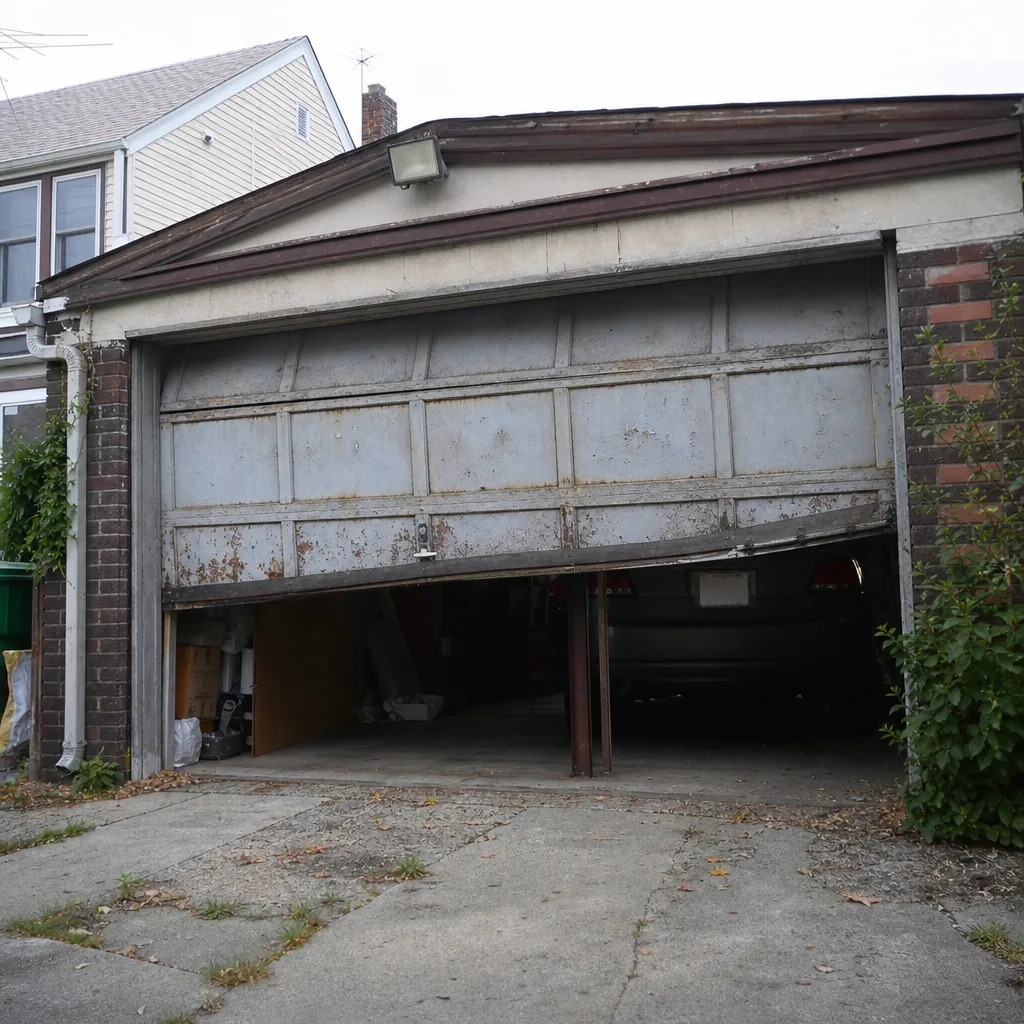
See the difference
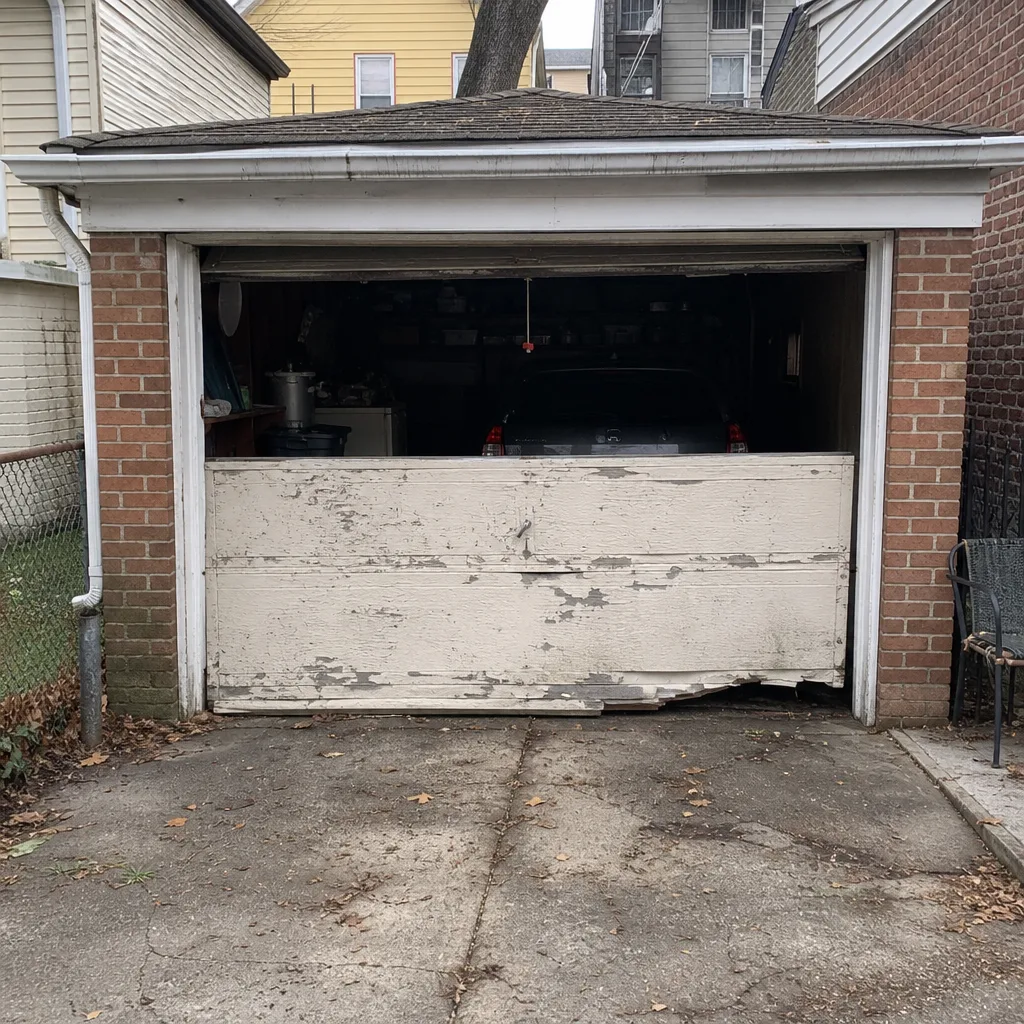 Before
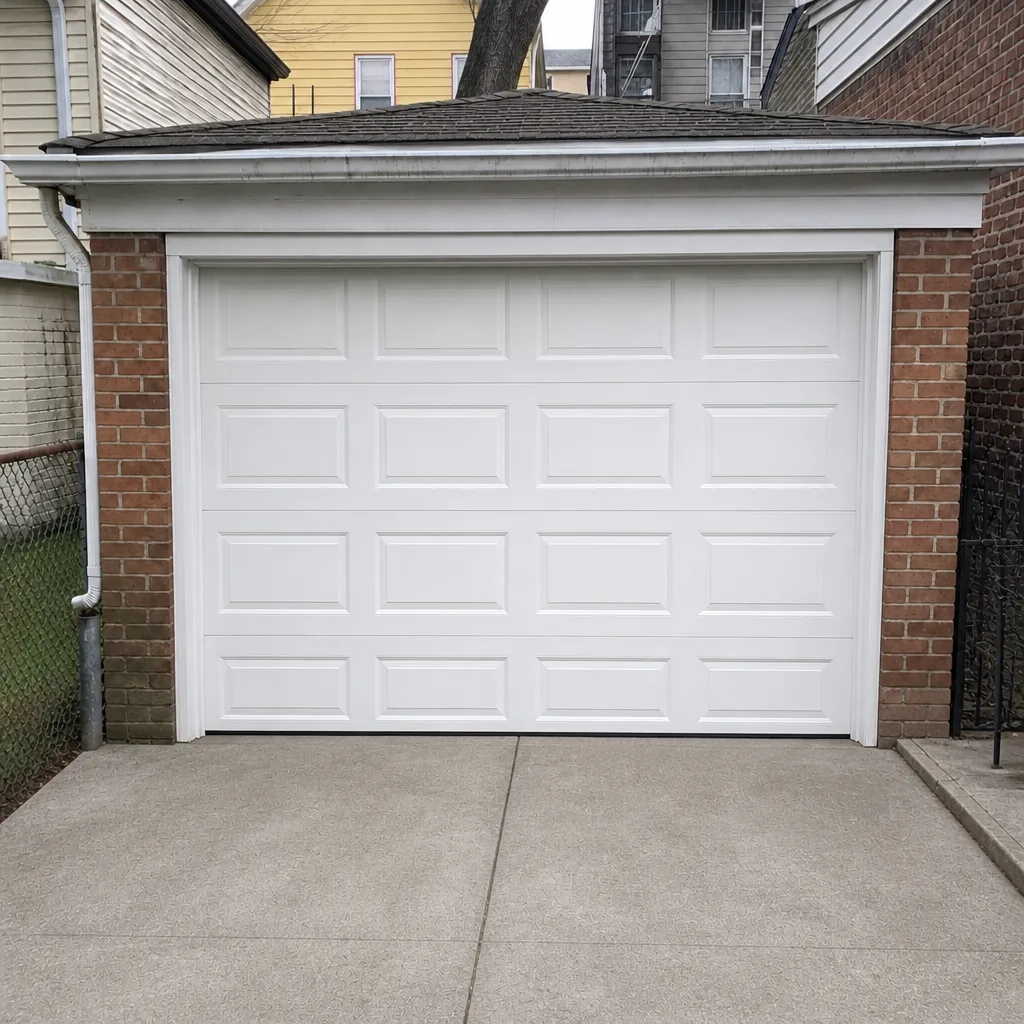 After
 Before
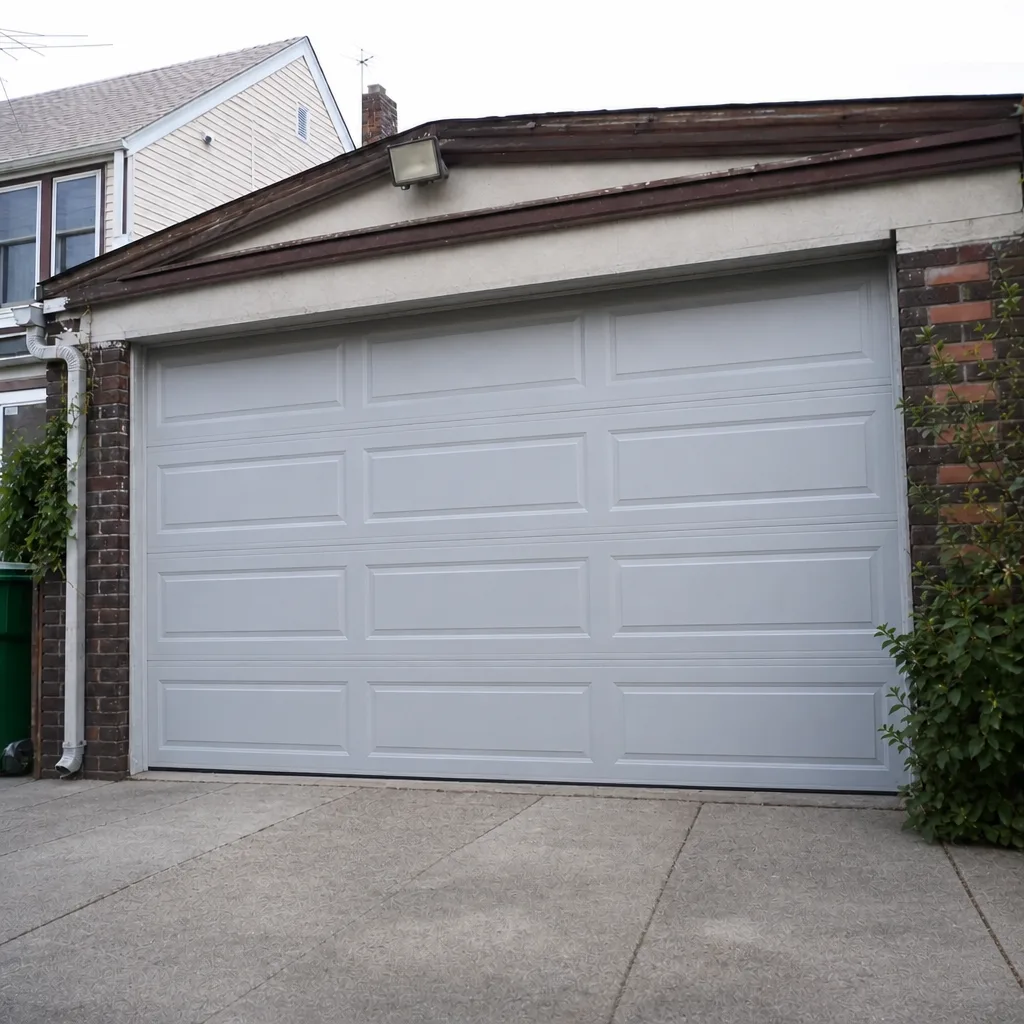 After
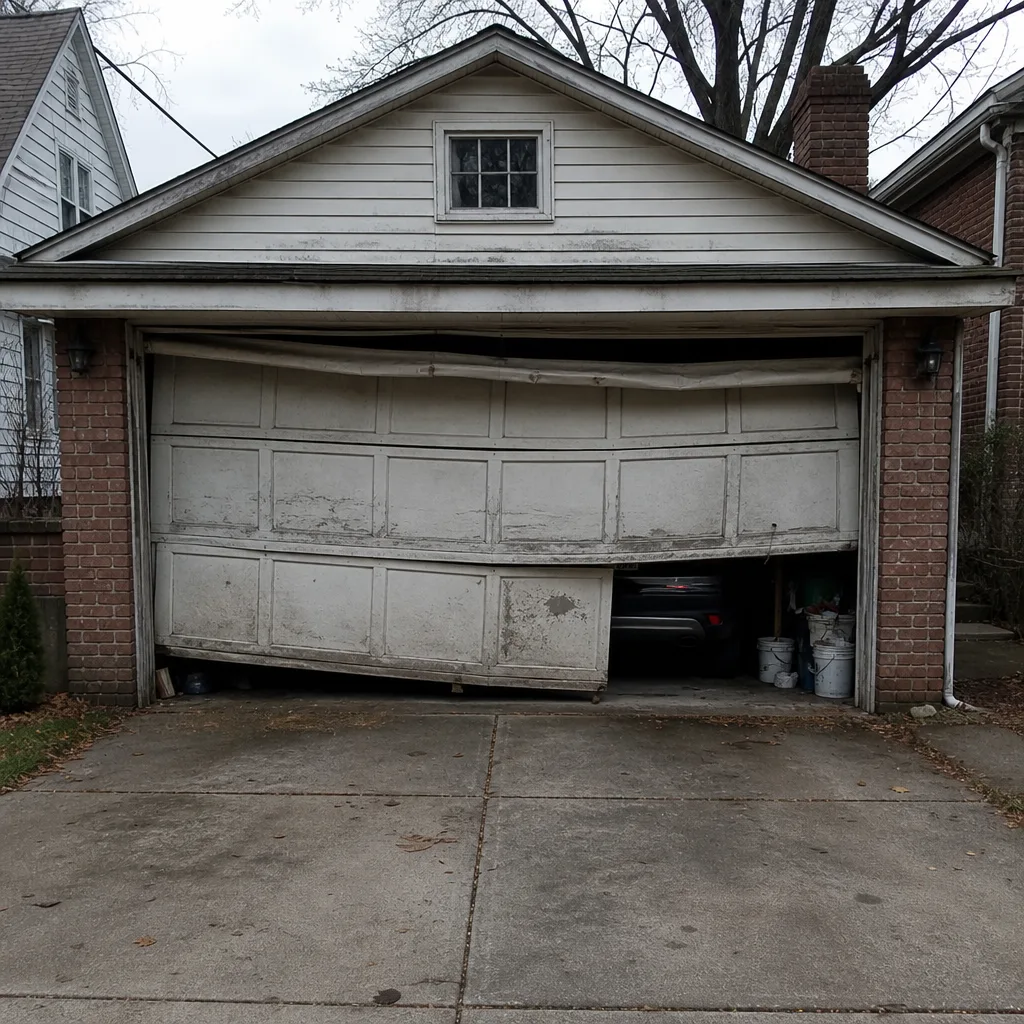 Before
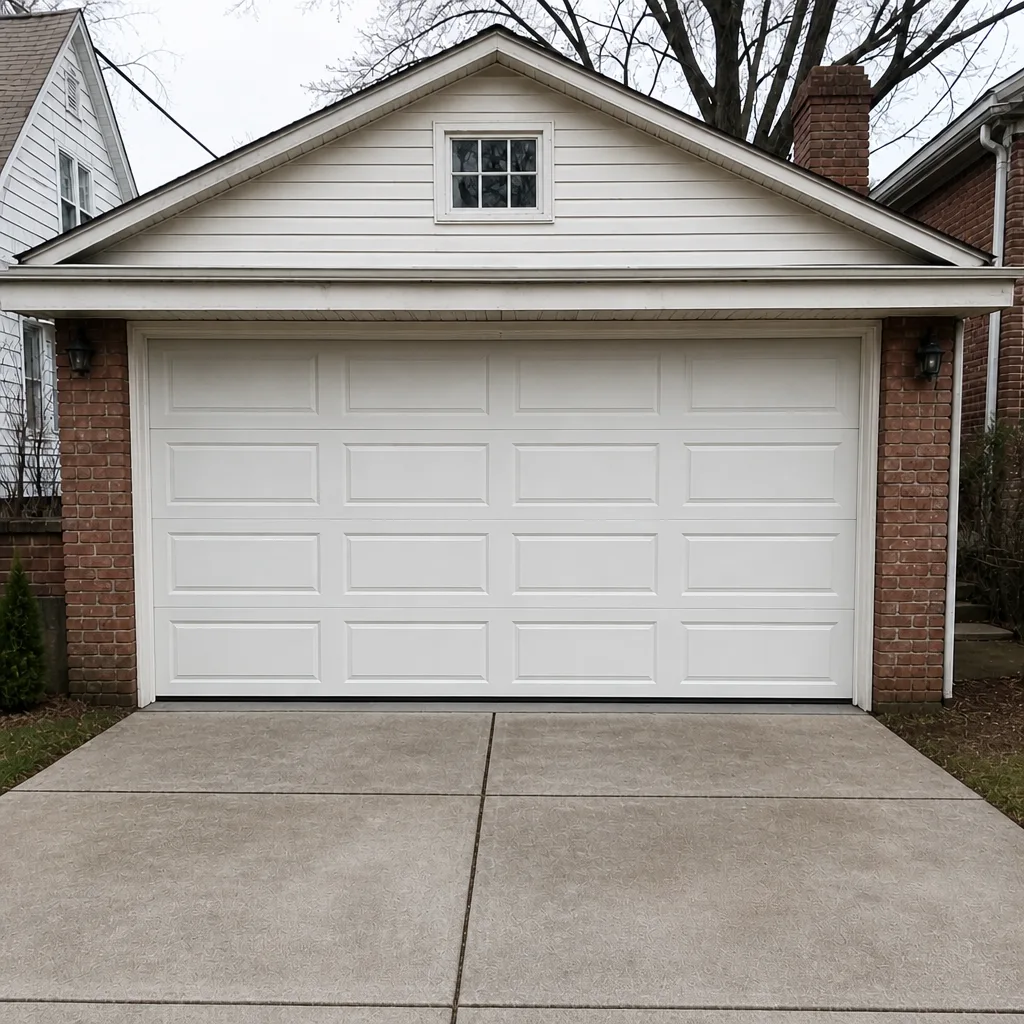 After
Common Mistakes to Avoid
- Hiring a licensed contractor without confirming they work on your brand. A license doesn’t tell you whether they know a Wayne Dalton door from a Clopay. Ask about brands before you book, and get the answer in writing.
- Accepting a verbal quote because the person seemed trustworthy. Trust is not a contract. Without a written scope and price, you have no way to hold anyone to anything.
- Comparing quotes by headline number. A $200 difference usually hides a $400 gap in parts, labor, and warranty. Line up the specifics before deciding.
- Calling a general handyman for a spring repair. Torsion springs are dangerous to handle without the right tools and training. This is not a DIY or handyman job, and hiring someone who treats it like one is the single riskiest mistake on this list.
- Forgetting to ask about permits for a full replacement. In Harlem, multi-unit and brownstone replacements may require DOB involvement. A contractor who assumes “no permit” without asking your building type is a contractor who’s guessing.
- Accepting a labor warranty with no defined claim process. If you can’t describe how you’d file a claim, the warranty isn’t a warranty. It’s a sentence.
- Booking a cash-only contractor. Cash-only isn’t automatically a scam, but it removes the documentation you’d need if something goes wrong. Ask why before you agree.
When to Call a Professional
Some garage door problems are safe to check yourself; most aren’t. If the door is stuck mid-travel, the spring is visibly broken, the cable has come off the drum, or the opener has died and won’t reset, that’s the moment to call someone. Don’t try to force the door, and don’t adjust the spring or cable by hand. Torsion springs are under enormous tension, and a single slip can cause serious injury. Leave it to a trained technician.
If the door is making a new noise, moving unevenly, or the opener is running without moving the door, those are also signals worth a call, even if the door still works for now. Catching a worn spring or a failing opener early is usually cheaper than waiting.
Garage Door Repair Harlem offers free estimates in Harlem. Call (877) 829-5867. We answer 24/7, with fast dispatch from 7am to 7pm, Sunday through Friday. Our technicians have up to 13 years of experience and work on your brand across LiftMaster, Chamberlain, Genie, Clopay, Amarr, Wayne Dalton, Craftsman, and Raynor. Diagnosis first, then options, and the price is agreed before any work starts.
Frequently Asked Questions
Ask for the HIC license number in writing, then search it on the NYC Department of Consumer and Worker Protection license lookup at NYC.gov. Confirm the status reads active and the business name matches what’s on your quote. If the number doesn’t check out, don’t hire them. Call (877) 829-5867 for an exact quote – estimates are free.
For springs, cables, and opener repairs, always a specialist. General handymen usually decline spring work because it’s the most physically dangerous repair in the category, and the ones who don’t decline it are often the riskiest to hire. For simple cosmetic work like a weather seal, a handyman may be fine. Call (877) 829-5867 for an exact quote – estimates are free.
Repair pricing in Harlem is set per job by written estimate, and it depends on the part, the door type, and the brand. A single torsion spring replacement is priced separately from a matched pair, and a matched pair is more. An opener repair is priced separately from a full opener replacement. Call (877) 829-5867 for a free estimate – we’ll give you a written price before any work begins.
The written estimate sets the price, and the price is agreed before any work starts. If the technician finds something during the job that changes the scope, they should stop and get your approval before doing the extra work. A reputable contractor won’t hand you an invoice bigger than the quote without a conversation first. Call (877) 829-5867 for an exact quote – estimates are free.
The local professional we connect you with is licensed and insured as New York State and New York City require, including the HIC license for home improvement work in Manhattan. Ask for the license number and verify it through the DCWP database before booking. Call (877) 829-5867 for an exact quote – estimates are free.
Same-day service is often possible for common repairs, and emergency service for a stuck or failed door is a core offering. We answer 24/7, with fast dispatch from 7am to 7pm, Sunday through Friday. A call outside dispatch hours is booked into the next opening. Call (877) 829-5867 for an exact quote – estimates are free.
Ask which brands they work on and whether they carry parts for your opener model. A strong answer names specific brands like Genie, Clopay, Amarr, or Wayne Dalton and asks what you have. A weak answer says “we work on everything” without naming any. Call (877) 829-5867 for an exact quote – estimates are free.
It depends on the scope and the building type. A spring or opener repair usually doesn’t require one, but a full door replacement on a multi-unit or brownstone property may fall under NYC Department of Buildings requirements. Ask the contractor directly, and ask the city’s building department if you’re unsure. Call (877) 829-5867 for an exact quote – estimates are free.
The Bottom Line
Hiring a garage door contractor in Harlem comes down to four checks: verify the HIC license through DCWP, confirm brand coverage before booking, get a written scope and written price agreed before work starts, and understand the parts and labor warranty as two separate things. Do those four, and you’ll filter out most of the risk before a technician ever rings your bell. The rest is comparison: line up quotes on scope and warranty, not headline price, and ask the permit question even if you’re pretty sure the answer is no.
If you’d rather start with a contractor who already works on your brand, we can help. Call (877) 829-5867 for a free estimate. We answer 24/7, with fast dispatch from 7am to 7pm, Sunday through Friday. Our technicians have up to 13 years of experience across LiftMaster, Chamberlain, Genie, Clopay, Amarr, Wayne Dalton, Craftsman, and Raynor, and we cover the full scope from garage door repair through garage door installation. One call covers it. For a complete look at what we do, start with Garage Door Repair Harlem, and if the opener is the problem, see our garage door opener repair page.
Written by the team at Garage Door Repair Harlem.