
Last updated November 21, 2026
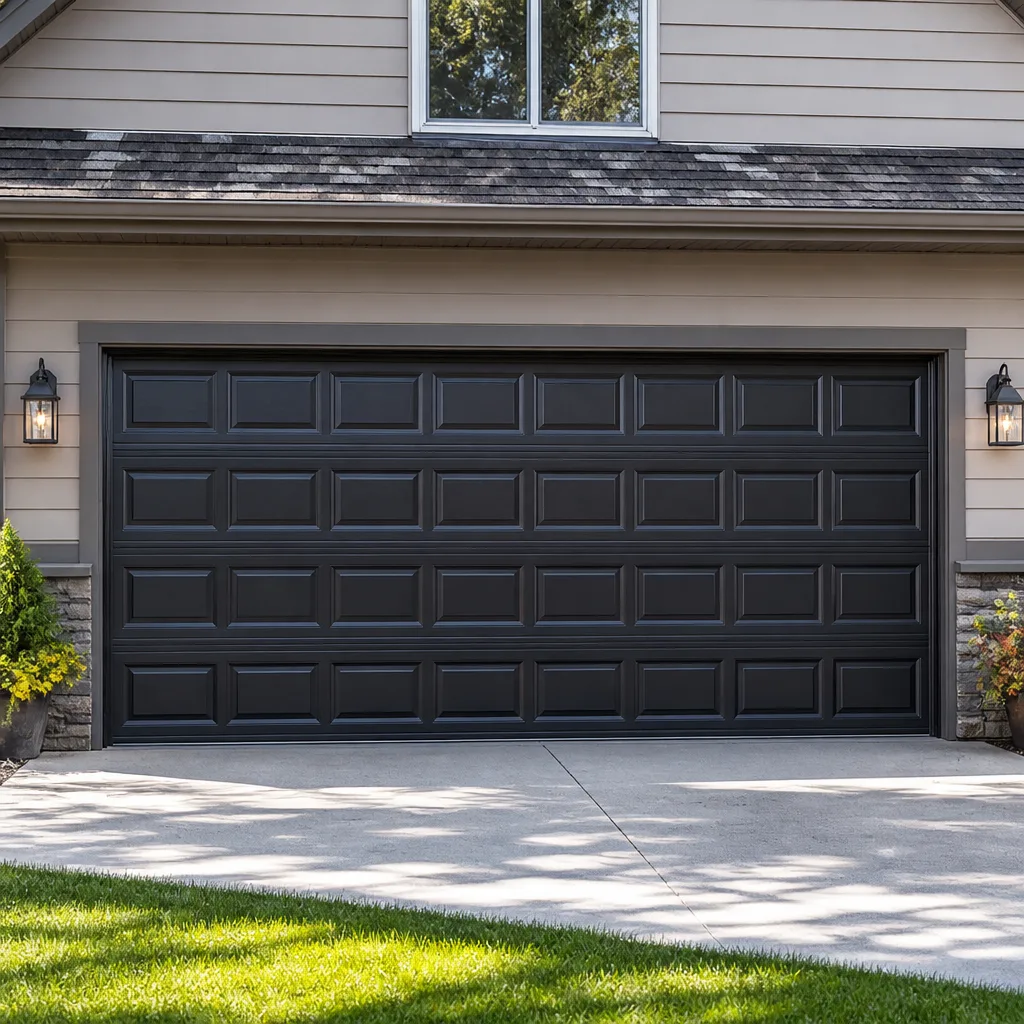 Raised-panel steel
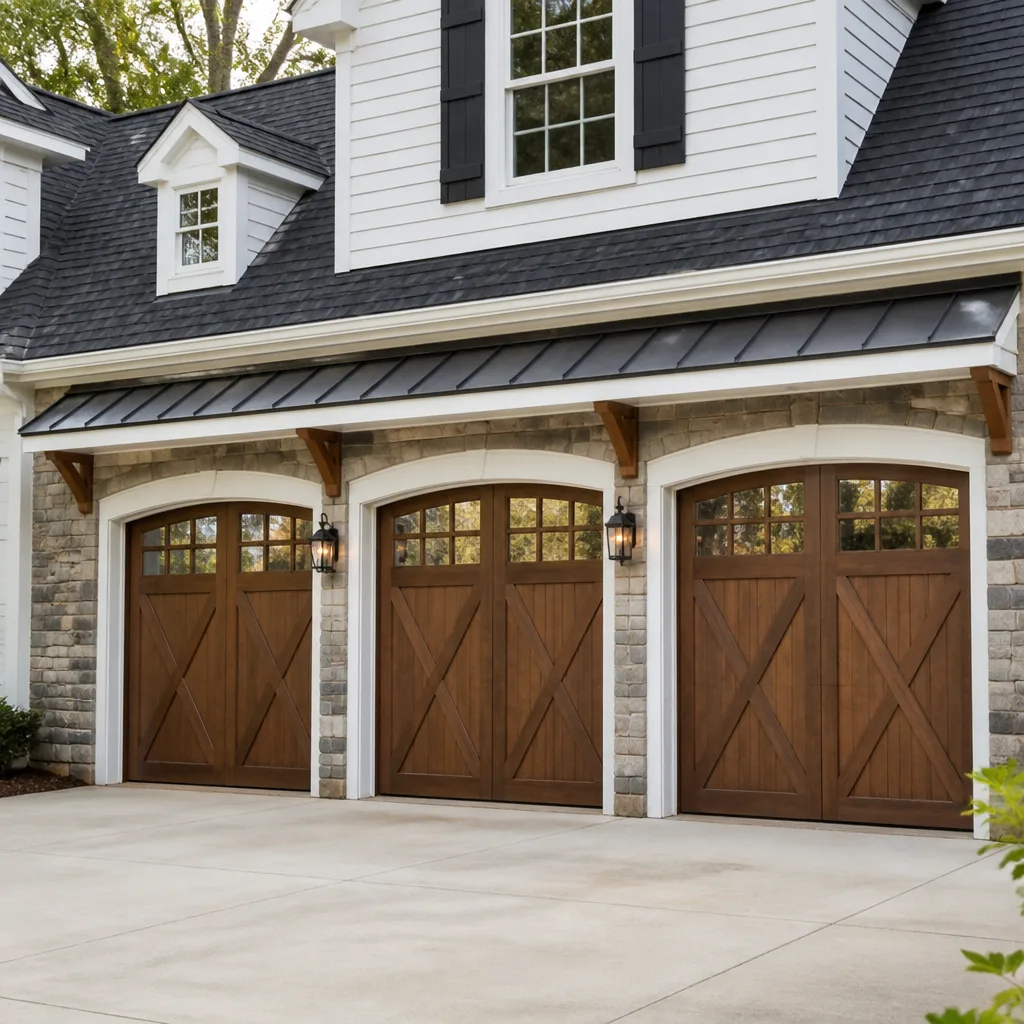 Carriage house
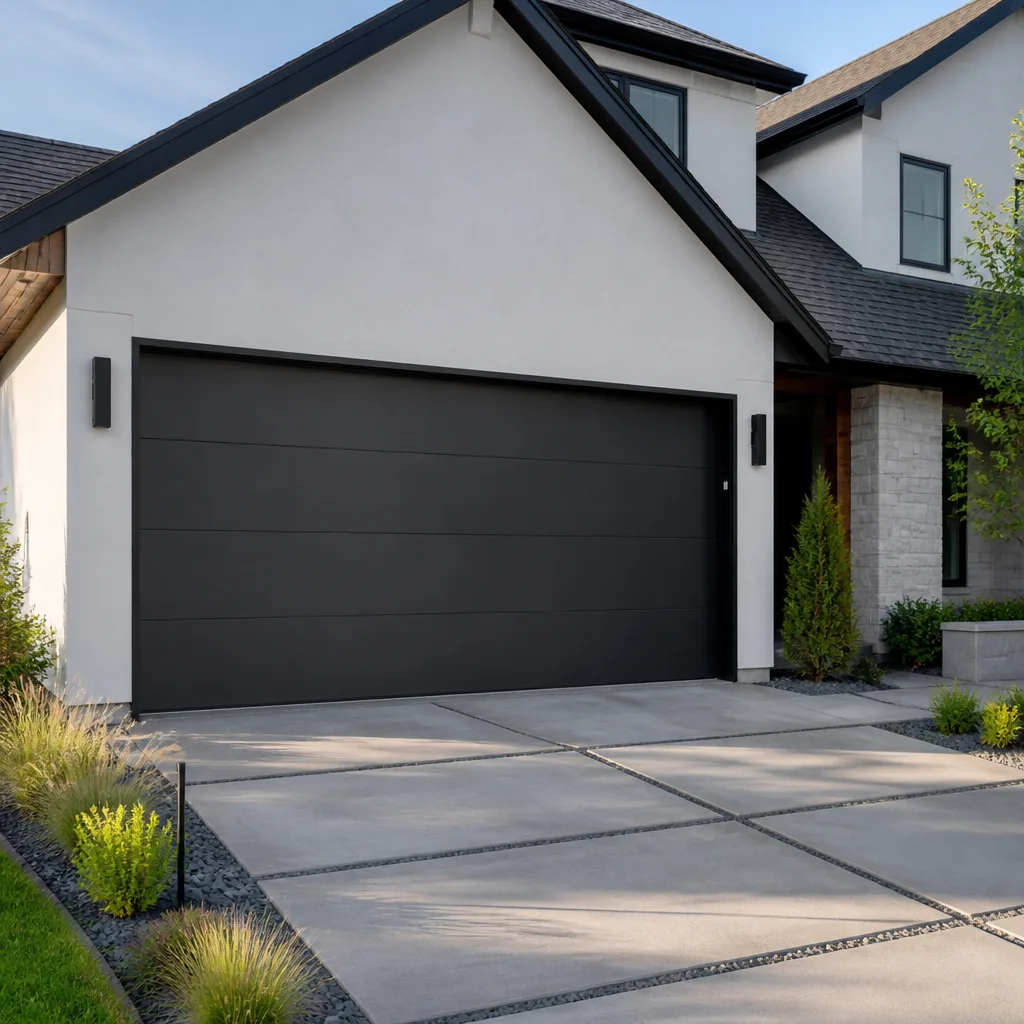 Modern flush
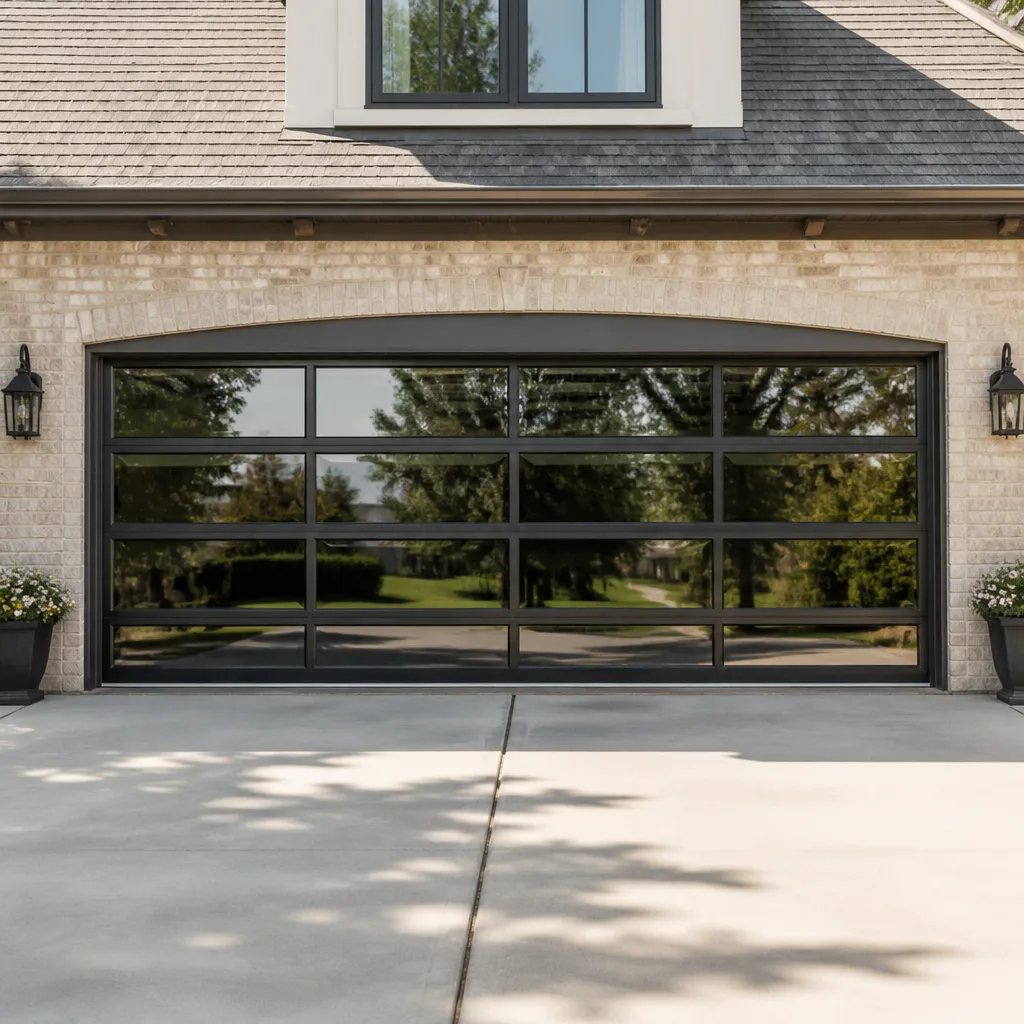 Full-view glass
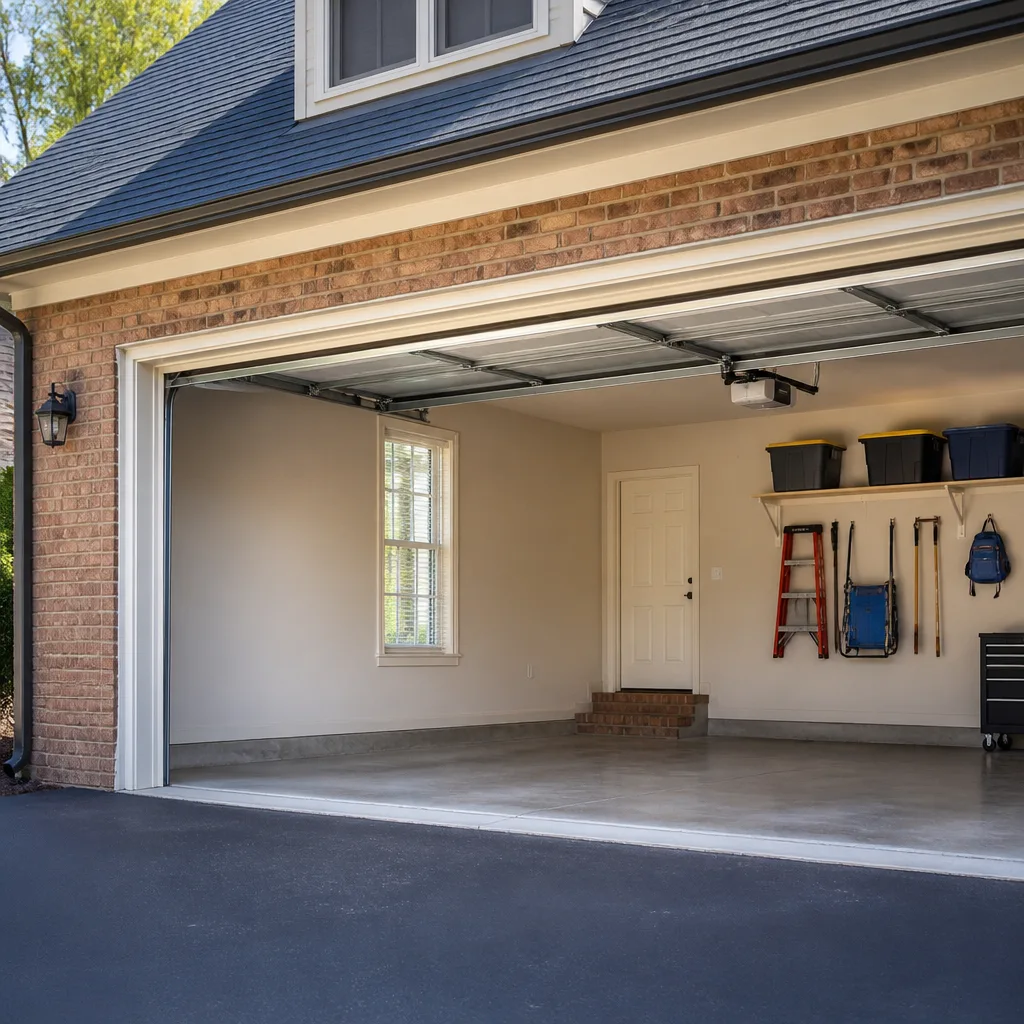 LiftMaster openers
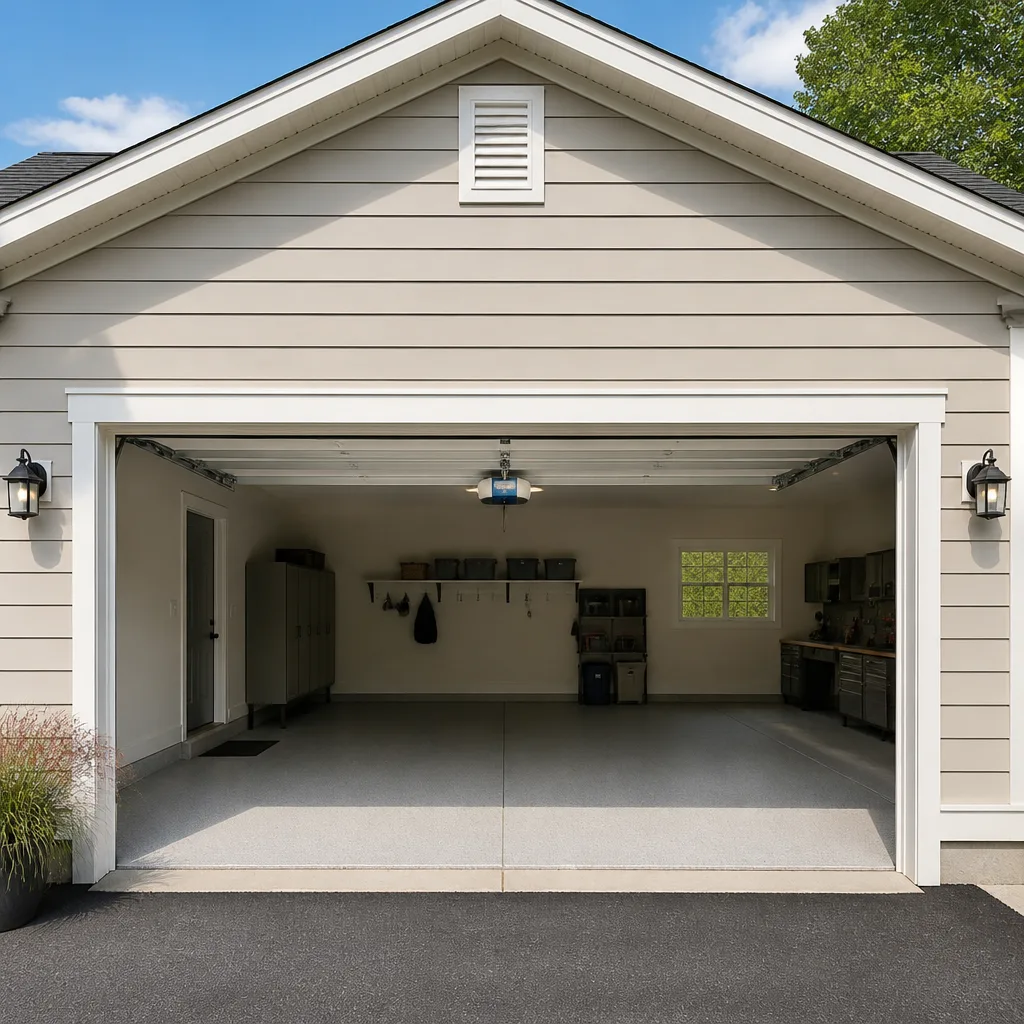 Chamberlain openers
Full 25-point door and opener safety check with every visit - springs, cables, rollers, tracks, and your LiftMaster or Chamberlain opener included
You get a price before we start. It does not change when the pro arrives.
Get your free estimateSeasonal Garage Door Care for Harlem: Year-Round Homeowner’s Guide
Most garage door failures we get called about in January were already decided in October. The first hard freeze catches a spring that had lost tension all fall, and it lets go on a morning when the door is stiff and the metal is cold. It’s the same story every year in Harlem: the damage happens quietly during a season homeowners aren’t thinking about the garage. This guide lays out care by the actual order in which the weather here stresses your door, from fall prep through the salt season to the humidity stretch. You’ll get the specific tasks, the warning signs worth acting on, and a simple calendar you can set and forget.
Quick Answer
Garage door care in Harlem should follow the damage timeline, not the calendar’s four seasons. Fall is for tension checks, seal inspection, and lubrication before the first frost. Winter is for watching what road salt and freeze-thaw cycles do to your hardware. Spring is recovery and inspection after months of stress. Summer is when you check the opener and any wood panels for humidity damage. Two care windows a year, placed before the frost and after the thaw, catch the failures that actually happen in this climate.
Styles & brands we work with
- Raised-panel steel
- Carriage house
- Modern flush
- Full-view glass
- LiftMaster openers
- Chamberlain openers
Table of Contents
- Why the Order of Care Matters More Than the Checklist
- Fall Prep: The Tasks That Must Happen Before 32°F
- Winter Failure Modes: What Salt and Freeze-Thaw Do
- Spring Recovery Checklist After the Thaw
- Summer Humidity: Opener Boards and Wood Panels
- Where Care Stops and a Professional Starts
- Building Your Harlem Garage Door Calendar
- Repair or Replace? Reading the Signals
Why the Order of Care Matters More Than the Checklist
Plenty of garage door guides hand you a list of monthly chores and leave it there. That approach misses the thing that matters most in Harlem: the seasons here don’t stress your door evenly. Winter does the heaviest damage, but the groundwork for winter is laid in fall, and some of the damage only shows up in spring. If you do the same inspection in July and in November, you’ll miss the failures that matter both times.
Think of it as a reloading cycle. A torsion spring under tension is a stored force, and cold weather changes how that metal behaves. Grass shouldn’t be growing on your weatherstrip, and it will if the seal has been letting water sit against the jamb for a season. Each care window has one or two jobs that count for more than everything else combined.
Here’s the sequence that holds up in practice:
- Fall (before the first hard freeze): spring tension check, weatherstrip and bottom seal inspection, full lubrication pass. This is when you’re preventing the January call.
- Winter (ongoing): keep salt and grit out of the tracks, watch the rollers and bottom brackets for corrosion, listen for new noises.
- Spring (after the thaw settles): full inspection of everything the freeze-thaw cycle has worked on for three or four months. Cable wear and bracket looseness show up here.
- Summer (humidity peak): opener electronics, remote and safety-sensor behavior, wood panel condition.
Homeowners we work with in Hamilton Heights and Sugar Hill tend to do the fall pass and skip the spring one. Spring is where the wear that winter caused becomes visible, so it’s the cheaper half of the year to catch a problem. When something does fail, Garage Door Repair Harlem handles the full range of repair work, so you don’t need to sort out which contractor covers what.
Fall Prep: The Tasks That Must Happen Before 32°F
Fall prep in Harlem means three things done in a specific order: check spring tension, verify the weatherstrip and bottom seal, then lubricate every moving part. Do them in that order and you catch the problems before the cold makes them worse. Do them out of order, or skip one, and you’re guessing by December.
Here’s why the sequence matters. If a spring has lost tension, you need to know that before you start working the door up and down checking the rollers. A weak spring under cold-weather metal fatigue is closer to failing than it looks. A compromised bottom seal lets in water and grit, which then grinds in the tracks all winter, so checking the seal before you lubricate means you’re not lubricating over the problem.
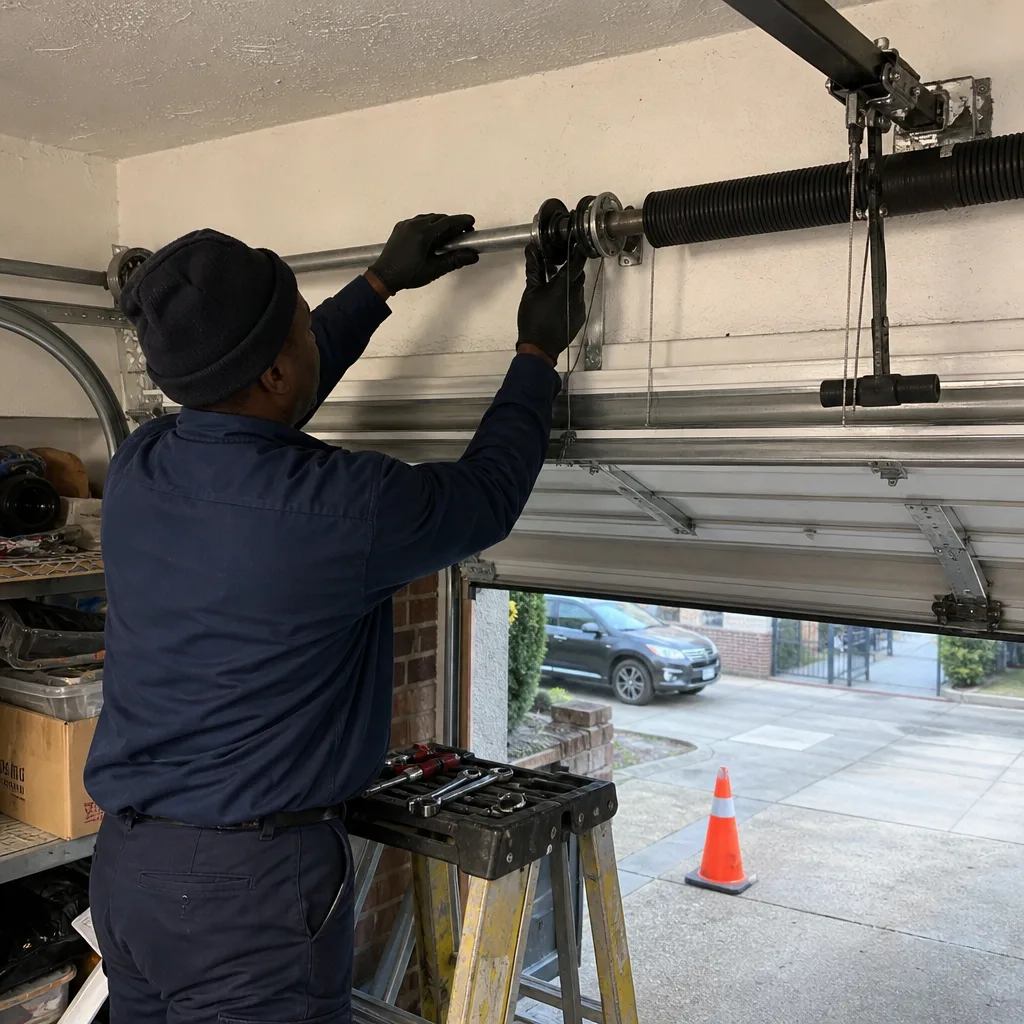
Step 1: Spring tension check. Lift the door about halfway by hand and let go. It should hold roughly where you left it. If it drops or feels noticeably heavier than it used to, that’s a tension signal worth acting on. Don’t try to adjust the spring yourself. Torsion and extension springs are under extreme load, and this is the one part of the door that ends people in the emergency room. Call a technician for spring work. Spring repair is a core part of what garage door repair covers, and it’s the repair we’re most often called for once the first cold snap lands.
Step 2: Seal and weatherstrip inspection. Look along the bottom of the door and around the frame with the door closed. Any daylight, visible cracks, or a flap that doesn’t sit flat against the floor is a problem. Rubber that’s gone hard and brittle doesn’t seal, and an unsealed bottom edge lets the cold in and water under the door.
Step 3: Lubrication pass. A garage door has more moving parts than most people realize: hinges, rollers, the track, and the torsion bar bearings. A proper pass takes fifteen minutes and lasts until spring.
- Use a garage-door-rated lubricant, not WD-40 as a substitute, on hinges and rollers.
- Keep lubricant off the rubber weatherstrip. Some products degrade rubber.
- Wipe the tracks clean with a rag before you lubricate anything. Grit under the rollers accelerates wear.
- Don’t lubricate the tracks themselves heavily. A light wipe-down is enough, and too much attracts dirt.
A door branded Clopay or Wayne Dalton that’s been up for several years is likely carrying original hardware. If the fall check turns up more than one worn part, that’s worth pricing as a package rather than replacing pieces one at a time.
Winter Failure Modes: What Salt and Freeze-Thaw Do
Winter damage in Harlem comes in two channels: salt tracked in from the street on the car and the boots, and the freeze-thaw cycle that works moisture into every gap. Both attack the metal parts of the door from the bottom up. Once the frost sets in, your job changes from prevention to monitoring.
Road salt is the bigger issue. The salt laid on Harlem streets gets carried in on tires and boots and settles as a fine film on the bottom section of the door, the bottom bracket, the lower rollers, and the first foot or two of each track. Left alone, that film pulls moisture out of the air and holds it against the metal. Over a season, the result is pitted paint and rusted rollers. The bottom brackets that take the most load are also the ones sitting closest to the salt line.
Freeze-thaw works differently. Any moisture that gets into a gap in the weatherstrip or under the bottom seal freezes, expands, and pushes the gap wider. It thaws, soaks in deeper, and freezes again. Three or four months of that cycle loosens screws, warps the bottom edge of a wood door, and starts to pull the bottom seal away from its retainer.
What to watch for through the winter:
- White or grey crust on the bottom bracket or lower rollers is salt residue. Wipe it off with a damp rag when you see it, and give the metal a light coat of lubricant afterward.
- A door that closes unevenly or leaves a gap at one corner usually means the track has shifted slightly. Usually that’s the freeze-thaw cycle loosening the fasteners.
- Grinding or squealing from one side is a roller or hinge losing its lubrication. Cold makes the noise louder.
- A door that goes up fine but comes down harder than it used to is often a spring that’s stiffened up, not a spring that’s failed. Have it checked.
- Ice buildup on the bottom seal is worth clearing when you can. Ice under the door leaves a gap that lets cold air and moisture in.
In January and February, we get a steady stream of calls from across Harlem: a door that won’t close, a spring that let go overnight, a roller that snapped. Most of those problems were set in motion in October. A worn spring under tension is much closer to failing than it looks.
A note on emergency response: if your door fails in the middle of the night or on a Saturday, the phone line is the first thing to try. We answer 24/7. Fast dispatch from 7am to 7pm, Sunday through Friday. Emergency service is built into how the business runs, and a call outside dispatch hours is booked into the next opening.
Spring Recovery Checklist After the Thaw
Spring inspection in Harlem is the counterpart to fall prep: instead of preventing damage, you’re finding what the winter did and fixing it before it gets worse. Three or four months of freeze-thaw cycles have stressed every fastener, seal, and bearing on the door. Now is when the wear shows up.
Work through this list once the freeze has stopped for the year:
- Check the bottom seal again. It’s been the first line of defense all winter. Look for cracking, splits, or a flap that no longer seals against the floor.
- Inspect the bottom brackets and lower rollers for rust. Any roughness or pitting in the roller surface means it’s time to replace that roller. A roller that isn’t rolling smoothly is damaging the track.
- Look at the cables. Cables running alongside the spring should be checked for fraying, kinks, or rust. Cables are under the same tension as the springs, and they’re not a DIY part either.
- Check the fasteners on the track brackets. Freeze-thaw cycles loosen them. Look for gaps between the bracket and the frame, and for tracks that aren’t sitting true.
- Test the door balance. Lift halfway and release. If it doesn’t hold, that’s a spring tension issue. If it drops fast, don’t keep working it. Call a technician.
- Lubricate everything again. Same pass as fall: hinges, rollers, torsion bearings. This is also when you’ll find the components that winter wore down and now need replacement.
Spring is also when a lot of Harlem homeowners realize the door they’ve been nursing through winter is at the end of its life. If the inspection shows up rusty panels, a warped bottom edge, and hardware that’s been repaired more than once, getting a garage door installation estimate at the same time makes sense. One business covers the whole range from repair to full replacement, so there’s no handoff between a repair tech and a separate installer. If you’re weighing that decision, we look at the door first, then lay out the options.
Summer Humidity: Opener Boards and Wood Panels
Summer problems in Harlem show up in the parts of your garage door system that don’t move: the opener and, on older doors, the wood panels. High humidity is hard on electronics and hard on wood. The failure mode is slow, and easy to miss until the door won’t open.
Opener electronics. The circuit board inside your opener lives in the garage, which is usually the least climate-controlled room in the house. High humidity and heat can degrade the board over time. The signs show up before total failure:
- The remote stops working from far away, or works only when you’re right in front of the door.
- The wall button works but the remote doesn’t, or vice versa.
- The door does a partial cycle, stops, and reverses after a pause.
- You have to hold the wall button down to get the door to close.
- The opener’s lights flicker or one safety sensor shows no light at all.
Some of these are simple fixes (a dirty sensor lens, a remote battery), but a board that’s been through a humid summer will produce the same symptoms. Chamberlain, LiftMaster, Genie, and Craftsman openers are all familiar territory. For anything that needs a new board or a new unit, that falls under garage door opener repair. If it’s a smart opener running on Wi-Fi, the diagnose step includes checking whether the Wi-Fi module itself is at fault before anyone touches the door.
Wood panels. If your door has wood or a wood-composite face, watch the bottom section for swelling, bubbling paint, or a rough texture. That’s the panel absorbing moisture. Swollen wood can throw the door out of alignment, which adds strain to everything else. Door sections from Amarr and similar brands are often engineered to resist this better than older wood, but nothing is fully immune in a humid garage.
If the garage has no ventilation, adding a simple vent or leaving the door cracked on mild days does help. So does keeping a dehumidifier running in the garage through the wettest months.
Where Care Stops and a Professional Starts
Some parts of garage door care are genuinely homeowner work: lubricating, wiping down tracks, checking seals, testing the opener, clearing ice. Others aren’t, and the line between the two is clear.
The skip list:
- Springs and cables. These are under extreme tension. A torsion spring can cause serious injury or death if it’s adjusted without the right tools and training. They’re not a homeowner repair.
- Torsion bar and winding components. Same as springs. Leave these completely alone.
- Track realignment on a door that’s under tension. Loosening a track bracket while the door is hanging on its springs is a good way to have the door come down on you.
- Replacing a spring or cable with a generic part. Springs are matched to the door’s weight. The wrong spring either won’t lift the door or overloads the opener and rollers.
For the parts that are safe to touch, use common sense: never work on a moving door, always disconnect the opener before testing anything by hand, and never stand under a door that’s only held up by a spring you don’t trust. If you’re not sure whether the door is safe to use, don’t use it. Call a technician and have it checked. The door will wait; your hands and feet might not. Our technicians have up to 13 years of experience and can tell you whether a spring has failed, a cable is worn, or the door just needs adjustment. When the fix is straightforward, that’s the fix.
Building Your Harlem Garage Door Calendar
The easiest way to stay on top of this is to tie reminders to the weather, not to a fixed month. NYC’s first hard freeze can arrive anywhere from late October to early December. The salt season starts when the first snow hits and runs until the last salting. Those are the real anchors.
Set four reminders and you’ll cover everything:
- “First frost check.” Schedule this for right after the first frost forecast of the year. Do the fall pass: spring balance test, seal inspection, lubrication, and get any weak component replaced before the cold settles in.
- “Mid-winter salt wipe.” Once or twice through the salt season, wipe the salt residue off the bottom bracket, lower rollers, and lower tracks, then relubricate. Takes ten minutes.
- “After thaw inspection.” Set this for two weeks after the last freeze. Do the full spring checklist: seals, cables, fasteners, rollers, balance, lubrication. This is the one that catches winter damage.
- “Pre-summer opener check.” Right before the humid stretch, test the opener, remotes, and safety sensors. Check wood panels for any sign of swelling.
A phone reminder is enough. Some homeowners in Harlem mark these on the same calendar they use for storm windows and gutters, which is the sensible pairing since all three are seasonal. Once the reminders are set, the work takes maybe an hour a year total across all four.
One more thing: if the fall pass turns up a problem, deal with it before winter rather than after. Cold weather turns a stiffness issue into a snapped spring faster than most people expect.
Repair or Replace? Reading the Signals
Repair is almost always the right answer for a single failed part: one spring, one roller, one opener component. Replacement makes sense when multiple parts are failing at once or when the door itself has structural problems. Here’s how we read it.
- One spring or cable fails, everything else is sound: repair. A matched pair of springs is usually replaced together, so the technician may recommend doing both even if only one broke.
- Rollers, hinges, and bottom brackets all showing rust and wear: often worth pricing a hardware refresh as a package rather than replacing pieces one at a time.
- Wood panels swelling, warping, or splitting along the bottom: if more than one section is affected, replacement is usually the more sensible path. A warped door puts constant strain on the springs and the tracks.
- The opener is the same age as the door and failing in multiple ways: replacement of the opener is often better value than repeated board-level repairs.
- Door is out of alignment after a spring or cable failure: the alignment itself is a repair, but the underlying damage to the tracks and panels should drive the decision.
Diagnosis comes before options. We look at the door, tell you what’s failed, and lay out both paths. Nobody’s pushed toward a new door when a repair will do. A door from Clopay or Amarr that’s been properly cared for will last far longer than one that hasn’t, and the care is the same either way.
Common Mistakes to Avoid
- Doing the fall inspection after the first freeze. Once the metal has stiffened, the spring tension test is less reliable and the door itself is harder to work with. Do the fall pass before the first frost, not after.
- Lubricating the tracks heavily. Overspraying the tracks attracts grit, and grit wears the rollers faster. A light wipe-down is enough; lubricant belongs on the moving parts, not the running surface.
- Waiting for the spring to break before replacing it. A spring that’s lost tension is putting strain on the opener and the rollers every time you use the door. Replacing it before it fails is usually cheaper than replacing everything it takes out with it.
- Ignoring the salt film on the bottom bracket. It’s the most overlooked part of winter care in Harlem. A quick wipe and relubrication a couple of times through the salt season is all it takes.
- Using WD-40 as a garage door lubricant. It’s a penetrant and a water displacer, not a long-term lubricant. It won’t hold up through a Harlem winter.
- Trying to adjust a torsion spring yourself. This is the most common and most dangerous mistake. Springs and cables are professional-only. No exceptions.
- Assuming the summer is care-free. Summer is when opener boards fail quietly and wood panels absorb moisture. One quick check before the humid season prevents the failures that show up in August.
See the difference
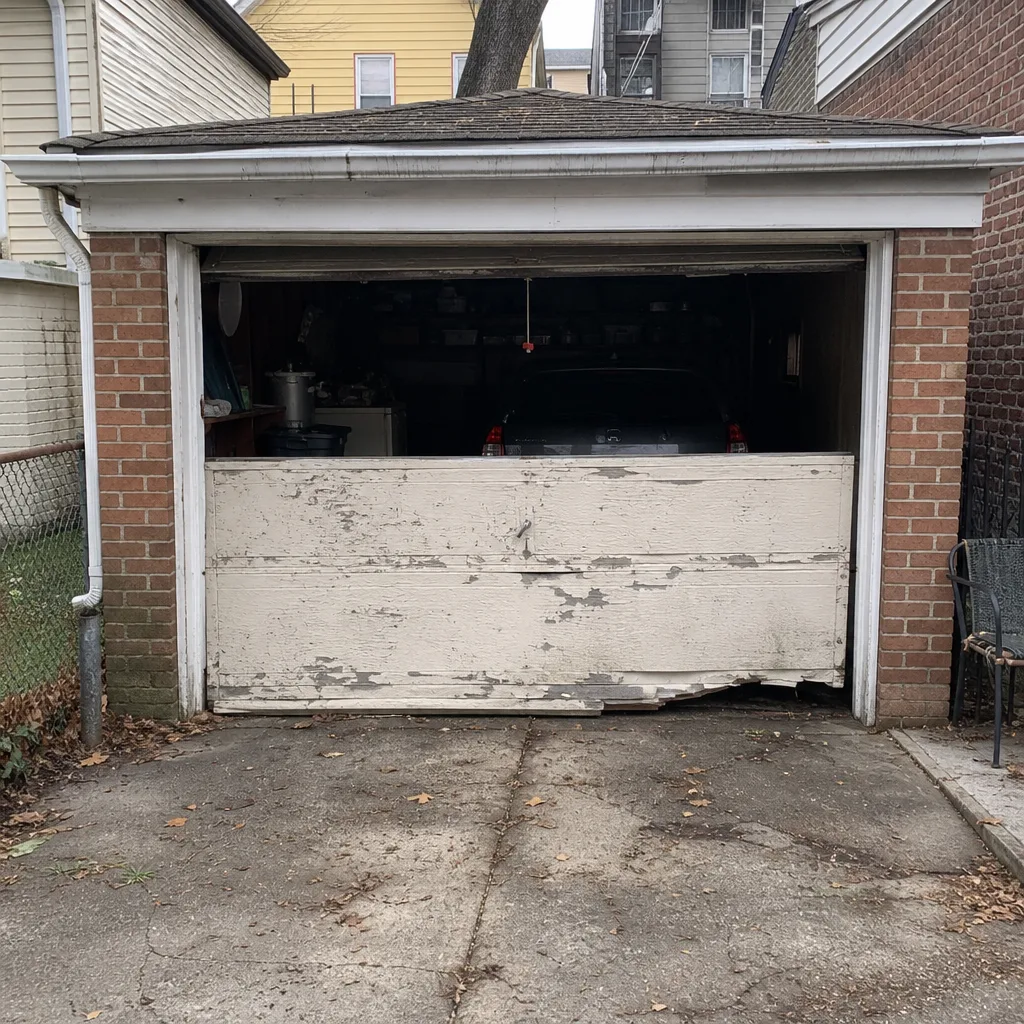 Before
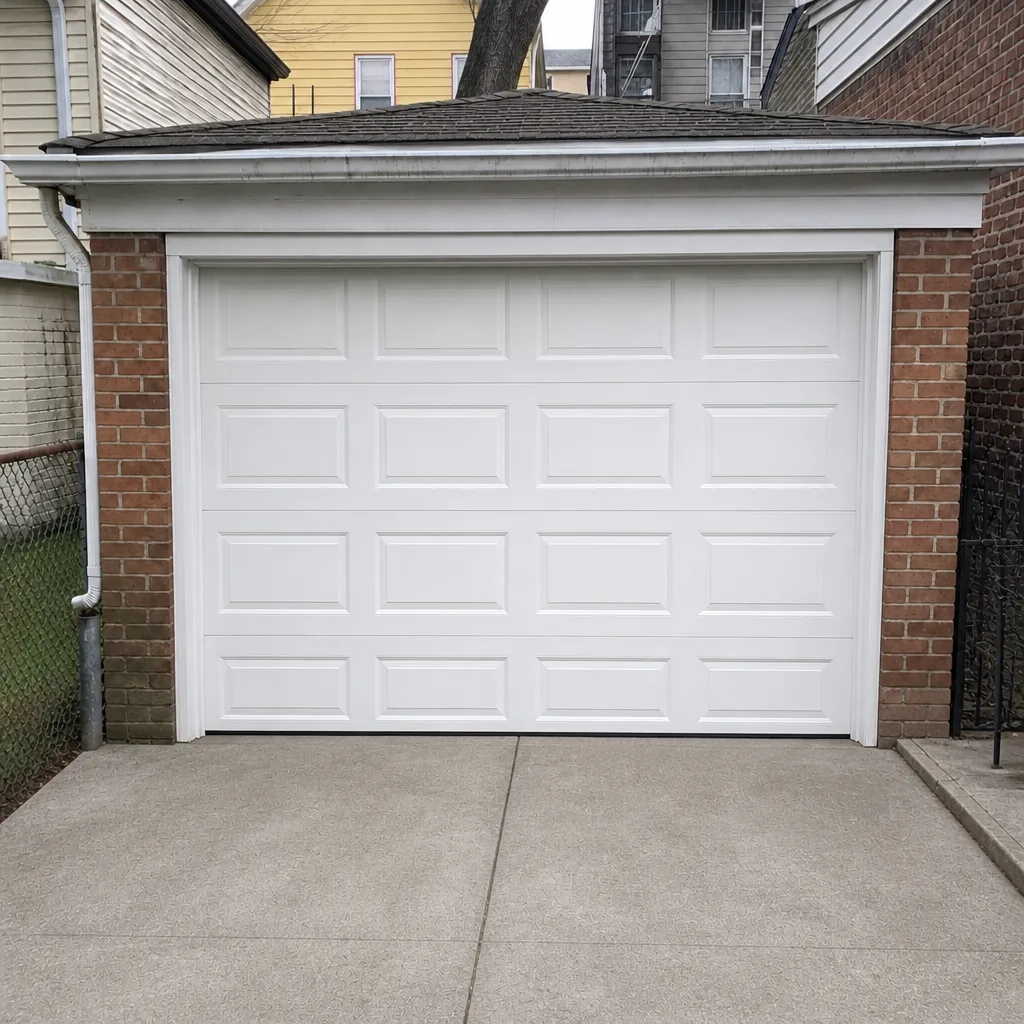 After
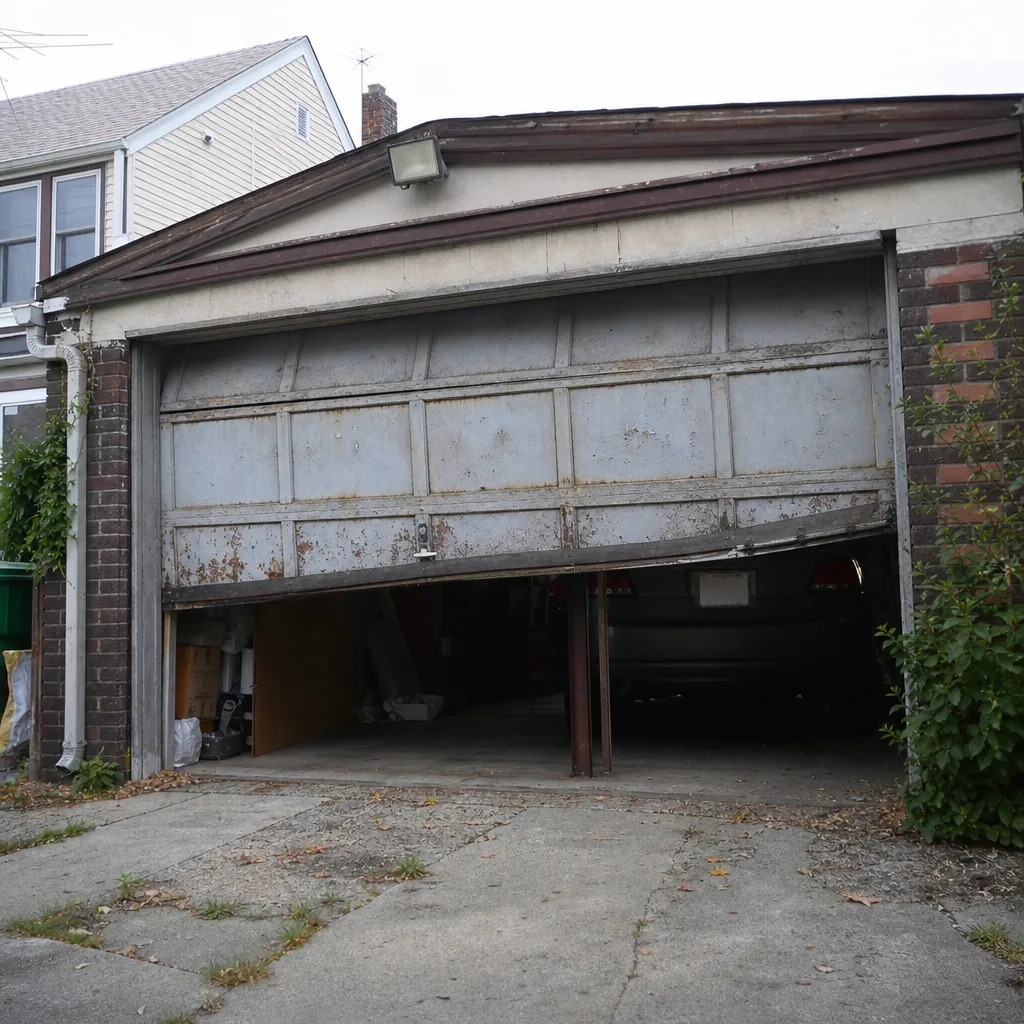 Before
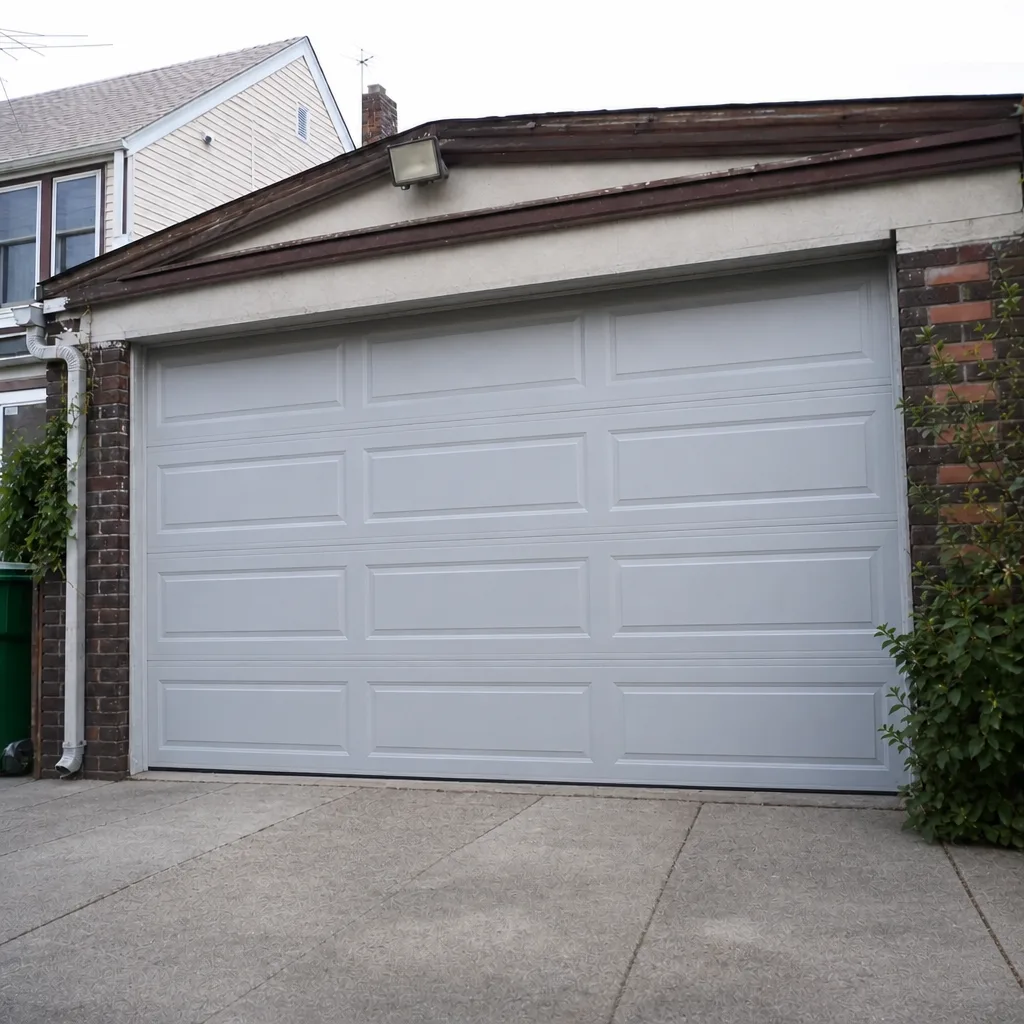 After
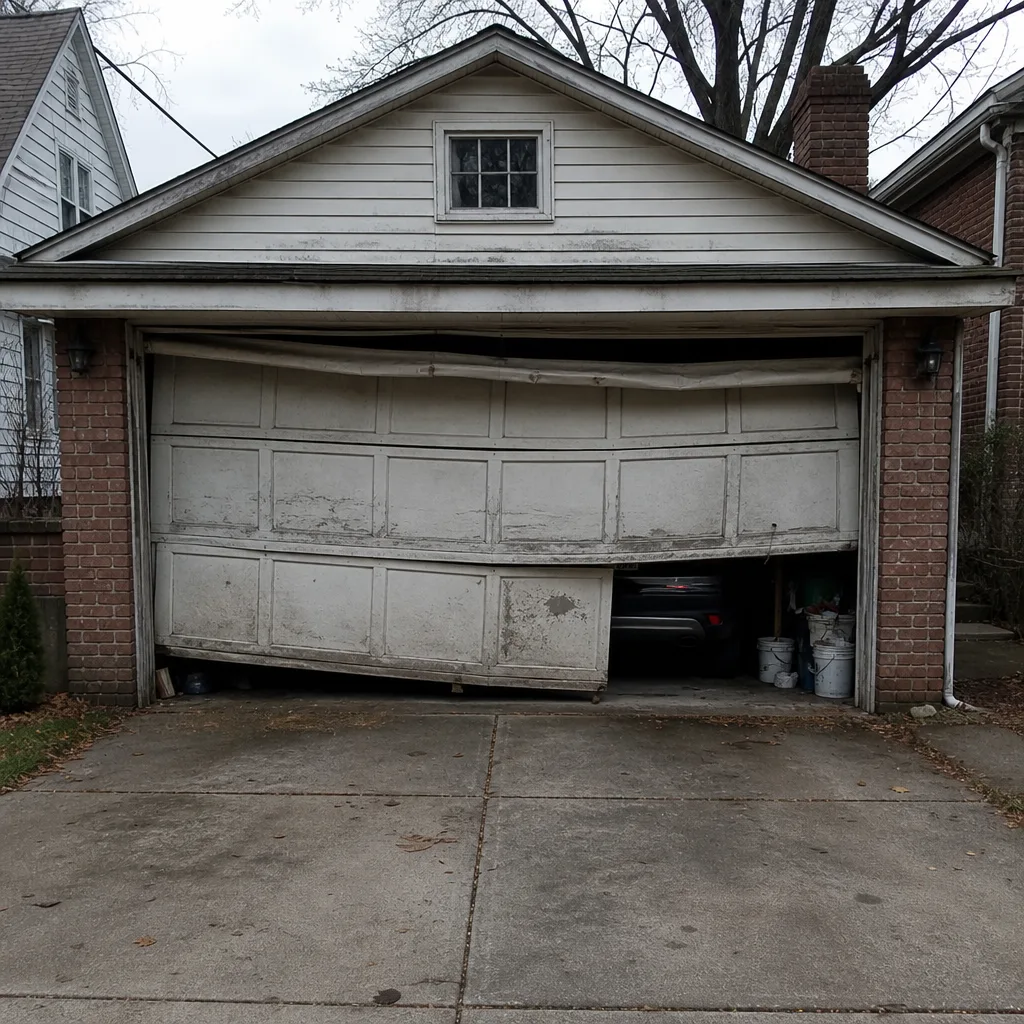 Before
 After
When to Call a Professional
Call a professional any time the spring, cable, or torsion bar is involved. Call when the door won’t close evenly, when the opener needs to be forced, when the door comes down hard, or when you’re not sure whether a noise is serious. Call when you’ve just had a salt season and you’re not sure what’s wearing out underneath. Call when the summer humidity hits and the door acts strangely.
We work on LiftMaster, Chamberlain, Genie, Clopay, Amarr, Wayne Dalton, Craftsman, and Raynor equipment, so whether your door or opener is one of those, the technician knows the hardware coming in. If your brand isn’t on that list, ask before booking.
Garage Door Repair Harlem offers free estimates in Harlem. Call (877) 829-5867. We answer 24/7. Fast dispatch from 7am to 7pm, Sunday through Friday. The price is quoted and agreed before any work starts, and the written estimate is the price.
Frequently Asked Questions
Do the fall pass before the first frost of the year, which in Harlem is usually somewhere between late October and early December. The spring tension test, seal inspection, and lubrication pass all work better before the cold sets in, and a worn spring caught in the fall is far less likely to fail in January. Set the reminder for right after the first frost forecast, not for a fixed date on the calendar. Call (877) 829-5867 for a free estimate if the pass turns up a problem.
Winter failures are usually set up in the fall by a spring that’s lost tension and a seal that’s no longer sealing. Once the cold hits, that spring is much closer to failing. Add road salt tracked in from the street, which corrodes the bottom bracket and lower rollers, and freeze-thaw cycles that work moisture into every gap, and the wear compounds. The door is under more load, and the damage that started in the fall gets worse. Call (877) 829-5867 for a free estimate on any suspected winter problem.
Yes, lubricating hinges, rollers, and torsion bearings is safe homeowner work as long as the door is stationary. Wipe the tracks clean first, use a garage-door-rated lubricant, and keep it off the rubber weatherstrip. What you can’t do yourself is adjust or replace springs or cables, which are under extreme tension. Call (877) 829-5867 if you’re not sure which part needs attention.
A remote that only works up close, an opener that stops and reverses partway, door that needs the wall button held to close, or flickering lights are all signs. Check the remote battery and the safety sensor lens first, since those are cheap fixes. If the symptoms survive those checks, the opener board or Wi-Fi module is probably at fault. Call (877) 829-5867 for a free estimate on a diagnosis.
Lift the door halfway by hand and let go. If it doesn’t hold roughly where you left it, the spring tension is off. Other signs are a door that feels heavier than usual, a loud bang from the garage, or a visible gap in a torsion spring. Don’t test any further. Call a technician and have it checked. Do not attempt to adjust or replace the spring yourself. Call (877) 829-5867 for a free estimate.
Usually yes, in the sense that a matched pair is replaced together. Springs on the same door usually have the same age and the same number of cycles, so if one has failed, the other is close behind. Replacing both at once is normally less expensive than two separate jobs. Call (877) 829-5867 for a free estimate and the technician will tell you what your particular door needs.
The Bottom Line
Harlem’s weather doesn’t stress your garage door evenly. Winter causes the heaviest damage, but the failures that happen in January were decided in October. The fix is a four-point calendar tied to the actual weather: a fall pass before the first frost, a mid-winter salt wipe on the bottom hardware, a spring recovery inspection after the thaw, and a summer check on the opener and wood panels. Each step catches a class of failure the others don’t. Springs, cables, and torsion bars are always a professional job. Everything else is a couple of hours a year. When something turns up that you can’t handle safely, Garage Door Repair Harlem can take it from there. Call (877) 829-5867 for a free estimate.
Written by the team at Garage Door Repair Harlem.