
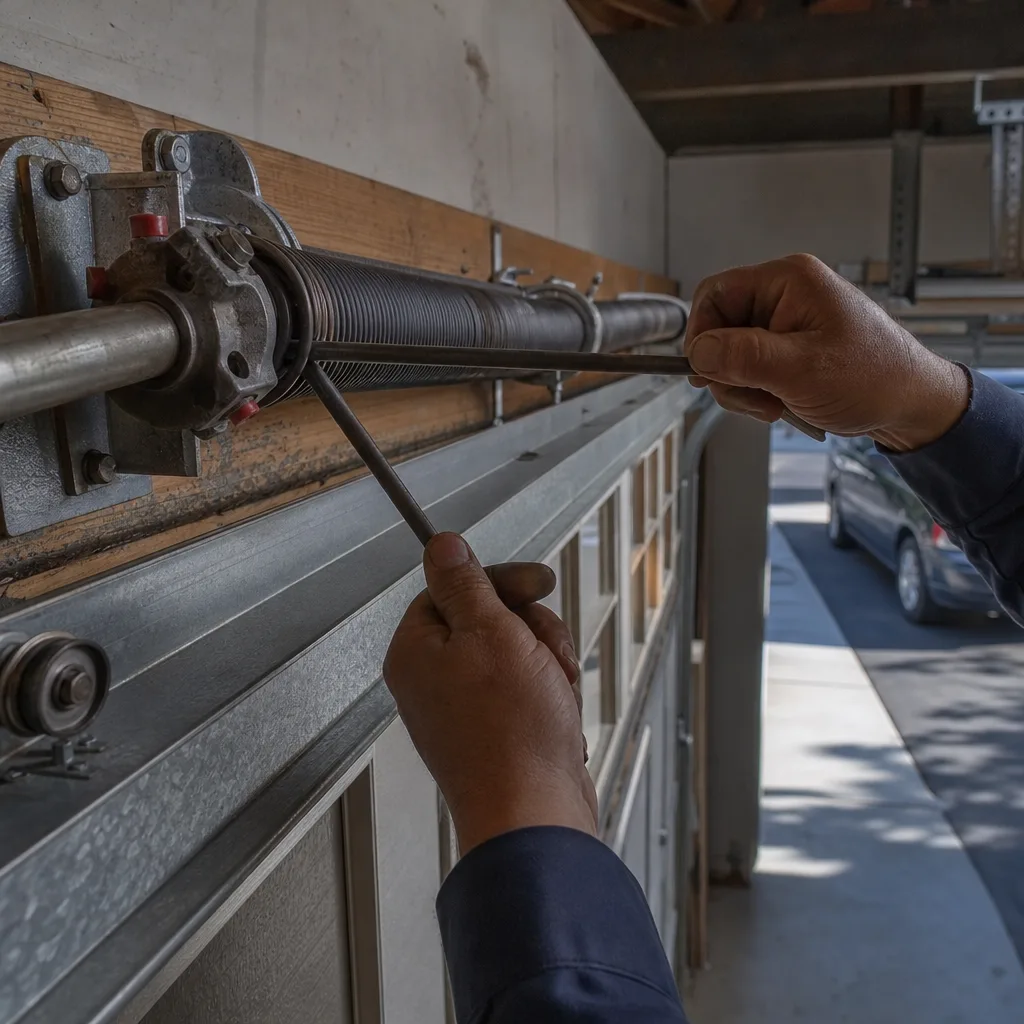
Last updated November 21, 2026
 Raised-panel steel
 Carriage house
 Modern flush
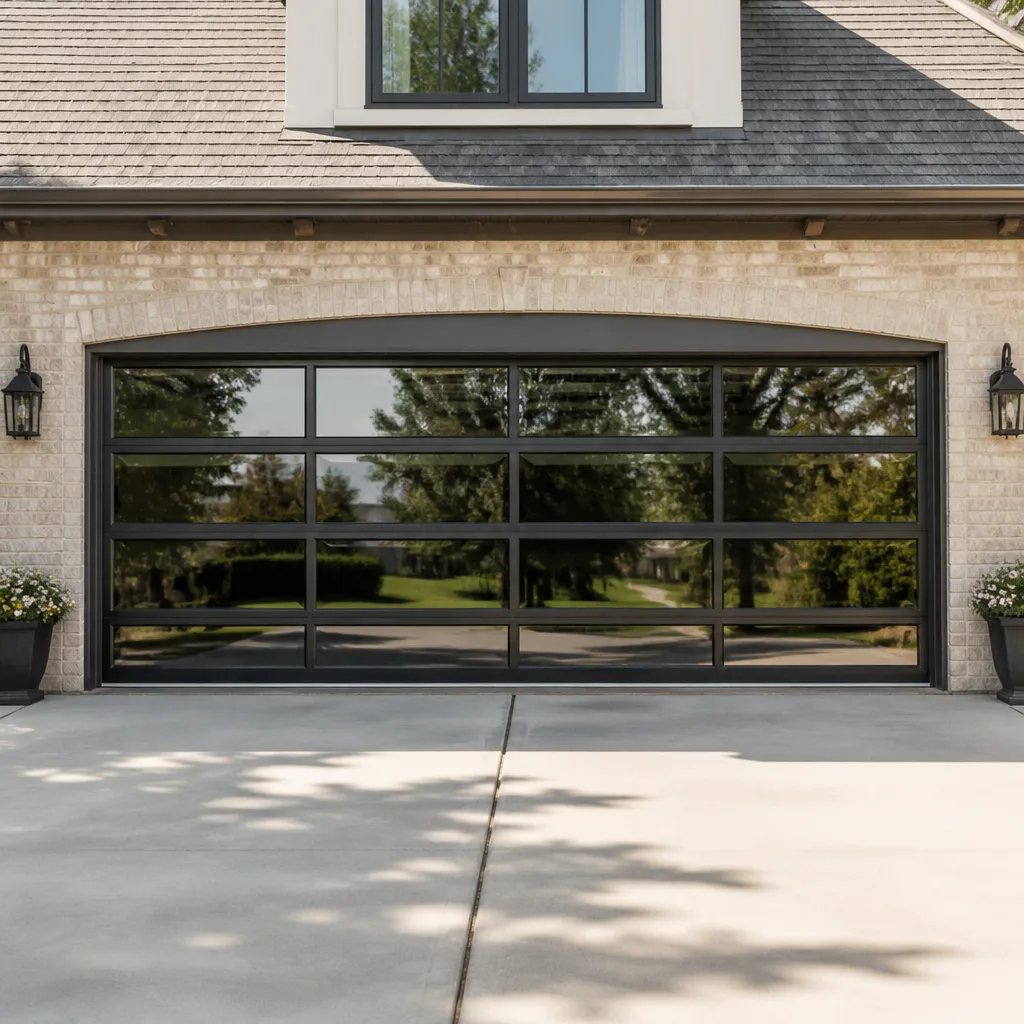 Full-view glass
 LiftMaster openers
 Chamberlain openers
Full 25-point door and opener safety check with every visit - springs, cables, rollers, tracks, and your LiftMaster or Chamberlain opener included
You get a price before we start. It does not change when the pro arrives.
Get your free estimateGarage Door Warning Signs: A Harlem Homeowner’s Reference Guide
A garage door that “sounds a little different” isn’t a quirk. It’s a report. Specific sounds map to specific failing components, and in our experience the gap between catching a $150 roller problem and paying to pull an immovable door off its tracks is usually just a few weeks of misread signals. Most homeowners treat grinding, popping, and slow openers as background noise until the day the door stops and the street is full of cold air. This guide decodes the warning signs component by component, so you can tell what’s actually failing instead of just that something’s wrong. We’ll cover sounds, visual wear, opener behavior, the line between “monitor it” and “stop using it today,” and why Harlem buildings wear garage hardware on a different schedule than the rest of the country.
Quick Answer
A garage door gives warning before it fails. The most urgent signs are popping noises near the springs, a door that reverses on its own, cables with broken or frayed strands, and rollers that have worn flat. If the door makes a loud bang and stops moving, a spring has likely snapped. Stop operating it and call a professional at (877) 829-5867. Everything else, like squealing, grinding, or a slow opener, can usually be monitored or scheduled before it becomes a failure.
Styles & brands we work with
- Raised-panel steel
- Carriage house
- Modern flush
- Full-view glass
- LiftMaster openers
- Chamberlain openers
Table of Contents
- Sound-to-Component Diagnostic Index
- Visual Wear Indicators Before Failure
- What Your Opener’s Behavior Is Telling You
- Monitor vs. Same-Day: Clear Decision Criteria
- How Harlem Conditions Accelerate Wear
- The Spring and Cable Danger Zone
- A Monthly 5-Minute Inspection Routine
- Frequently Asked Questions
Sound-to-Component Diagnostic Index
A garage door is a mechanical system with maybe a dozen moving parts, and each part fails in a characteristic way. Listen to what it’s telling you.
- Grinding: Metal on metal, usually worn rollers or dry hinges. If the grinding comes from the opener housing itself, it’s often a failing gear assembly inside the unit. Openers from Chamberlain and Genie have different gear layouts, so knowing which brand you’re dealing with helps diagnose faster.
- Popping or snapping near the center of the door (overhead): This is often a spring that’s about to give out. Stop using the door and get an inspection. This is one of the repairs where we usually tell people to stop before it becomes an emergency call.
- Squealing: A dry torsion tube, dry rollers, or worn bearings. Usually low-risk but worth addressing before it accelerates wear on the shaft. A squeal at the top of the cycle that only happens when the door is opening is typically the torsion bar. Squealing throughout the travel is rollers or hinges.
- Banging at the start or end of travel: Loose track hardware, failed lag bolts, or a torsion spring that’s lost tension. Use a wrench to check that lag screws into the jamb aren’t loose before assuming the problem is internal.
- Rattling that gets faster as the door speed increases: Worn rollers that have lost their bearings. The roller doesn’t roll anymore; it slides inside the track. That rattle is the sound of a sliding friction, and every open and close is wearing the track.
- A metallic “clank” when the opener starts or stops: Loose chain or belt tension on a traditional opener, or a failing trolley assembly. Belt-driven units on Genie and LiftMaster models don’t usually clank unless the belt has slipped a sprocket.
- Loud pop far away from the door, near the motor: On some Chamberlain units this indicates a stripped main gear. Those units often continue to open the door but at high noise levels, which is the system running on borrowed time.
If you’re hearing more than one of these at once, the door has reached the point where it’s likely to fail. We’ve handled enough doors in Harlem to recognize the sound index in a quick phone diagnosis, which is often faster than trying to describe it. If you’re not sure which of these you’re hearing, garage door repair starts with a technician listening to the door first, before touching anything.
Visual Wear Indicators Before Failure
You can’t hear a worn roller or a frayed cable, but you can see both. This is a numbered routine you can walk through in five minutes with a flashlight.
- Cables: Look at each side where the cable winds onto the drum. A good cable is a tight bundle of uniform strands. A cable that’s going is visibly frayed, has broken strands sticking out, or has rust-colored spots where the coating has worn through. One broken strand means the cable’s carrying capacity is already compromised.
- Rollers: With the door up and the light on, look at each roller inside the track. A healthy roller is smooth and round. A worn one has a visible flat spot, a cracked rim, or is sitting askew inside the track. If the roller spins freely but the door still chatters, the bearings are shot even though the roller surface looks fine.
- Hinges: Rusted hinges are common on the bottom two panels where splash and grit land. Look for rust bleeding onto the door paint under the hinge plates. A hinge that looks frozen will force the roller to drag.
- Torsion springs: Look for a visible gap in the coil. A spring that’s snapped will have an obvious break, either on the coil itself or where it was wound on the shaft. Rust streaks on a spring are a warning that the spring is cycling past its rated life. Springs look identical whether they have one turn of tension left or fifty, so never probe or adjust one yourself.
- Tracks: Walk the length of each track with the door closed. Dents at panel joints, separation between track sections, or a bend that makes the door hesitate at a specific height should all be noted. The tell is often a shiny wear mark where a roller is being forced against the outside of the track.
- Panel faces: Cracks around the hinge points and panel seams are common on Clopay and Amarr steel doors where the paint has chipped and rust has started underneath. A crack that reaches the panel edge is a structural indication, not a paint issue.
- Weather seal: A flattened seal lets in cold air, water, and grit. Grit grinding into the bottom roller is one of the most common causes of short roller life in Harlem.
Any of these on their own is manageable. Two or three together puts you into the “schedule service now” category. If you see an actual snapped cable, don’t operate the door until a technician sees it, because a broken cable can let the door drop or come off the track.
What Your Opener’s Behavior Is Telling You
The opener is the brain of the system and it fails in predictable ways. The trick is separating an opener problem from a door problem, because the openers always get blamed first.
- Door moves slowly or struggles to lift: This is usually a door problem, not an opener problem. Binding rollers, a failing spring, or a dragging track is forcing the opener to work harder. Replacing the opener without fixing the cause will just burn out the new one.
- Door reverses immediately after touching the floor: Travel limits or the safety sensor is out of alignment. The blinking LED on the unit usually tells you which side. On Chamberlain and LiftMaster openers the sensor LED diagnostic pattern is reliable enough to rule the sensor side in or out in a minute.
- Remote works but wall button doesn’t (or vice versa): This points to a dedicated connection path, not the motor. A remote-only problem is often a dead battery or an off-frequency transmitter; a wall-button-only problem is usually the wire or the wall control itself.
- Opener runs but the door doesn’t move: The trolley is disconnected, or on certain Genie models the carriage has slipped its engagement point. This can usually be reconnected without parts, but the door must be balanced to reconnect safely.
- Remote range dropping off over time: This almost always follows a neighbor installing something on the same frequency, or the receiver antenna at the opener being blocked or pinched. If a remote works next to the opener but not from the street, the unit is fine.
- Door opens fine, but behaves strangely when you try to close it: Reversal on close typically traces to the safety sensors, a loose track at the bottom of the door, or a door with a slightly warped panel. This one has to be seen on-site to distinguish.
We work on both traditional and smart openers. If your LiftMaster, Chamberlain, or Genie is connected to a home automation app and it’s throwing strange status updates, we can usually trace the cause on the first visit. The relevant test is whether the door does exactly what the opener says it’s doing, and that’s what a proper garage door opener repair call starts with: a technician who knows the brand ahead of arrival, not guessing at the unit.
Monitor vs. Same-Day: Clear Decision Criteria
The question most homeowners actually want answered is simple: do I stop using this today, or do I write it down and deal with it next week? Here are the criteria we use.
Stop using the door and call for same-day service
- Loud bang followed by the door no longer moving or falling
- Visible snapped spring or a spring with a visible gap
- Door has come off one track and is sitting cockeyed
- Door reverses on its own repeatedly or refuses to close
- One panel visibly hanging off its stile
- Any sparking from the opener or the wall outlet it’s plugged into
- Cable with three or more broken strands, or a cable that has jumped its drum
Schedule service within a week
- Grinding, squealing, or popping without a bang
- Worn rollers (flat spots or cracked rims)
- Opener slowing down or struggling
- Door traveling unevenly at one height
- Remote range dropping off
- Reversed sensor LED that reset fixes temporarily
Monitor and address at your next inspection
- Minor surface rust on hinges or door panels
- A single worn roller on a low-traffic door
- Weather seal that’s starting to flatten but still seals
- Slight unevenness that appears only on very cold mornings
When in doubt, doing a phone diagnosis takes just a couple of minutes. If the door is grinding, help is same-day. If your car is parked inside and can’t get out, that’s what our Garage Door Repair Harlem team is set up to handle. Emergency calls are booked into the next opening, Sunday through Friday, from 7am to 7pm. The phone is answered around the clock.
How Harlem Conditions Accelerate Wear
Harlem wears garage doors harder than most places. Not because of anything exotic, but because of what’s in the air and under the wheels.
Winter road salt and street grit. The city trucks the streets heavily from the first ice storm through the last one, and that salt and grit ends up on your driveway, then on the bottom roller, then inside the track. The bottom two rollers on a Harlem door routinely wear faster than the top four. If you’re spotting flat spots anywhere, start your inspection at the bottom of the door.
Cold snaps. Steel and torsion springs contract in cold weather. A spring that was perfectly happy in October often pops in January, because the metal has less give. If your door has gotten noticeably noisier since the temperatures dropped, that’s a sign to schedule a spring inspection before it fails. Similarly, a door that fits fine in June can be tight at a panel in February.
Street vibration. The potholes, bus routes, and crosswalks that make Harlem what it is also shake the buildings. A small vibration every hour is enough to back out a lag bolt over a season. If you hear a new rattle on a door that was quiet last month, check the lag bolts into the jamb before assuming the door is failing.
Pre-war building stock. Many Harlem garages sit in older buildings with original lintels, jamb geometry, and framing. Openers aren’t always mounted true, and door tracks aren’t always perfectly parallel. A ceiling that isn’t parallel to the door puts extra load on one side of the trolley over time. That’s one of the reasons we prefer to see the door before recommending a replacement: sometimes a new opener on a slightly skewed track will fail early, and the solution is adjustment, not equipment.
Steep stoops and stacked parking. If your garage door opens onto a driveway with a slope, the bottom panel and seal carry load that flat-driveway doors don’t. Worn bottom seals are the leading cause of roller failure on those setups, and the fix is cheap if you catch the seal before the roller.
The Spring and Cable Danger Zone
Torsion springs and the cables that work with them are under enormous load, and they fail hard. If a spring snaps while you’re standing under the door, at best it’s a loud bang and a door that won’t open. At worst, the door comes down and you’re underneath it. This is the single component in the whole garage door system that you should never adjust, tighten, lubricate, or “test” yourself if you’re not trained. The tool you’d use to wind a torsion spring is specifically designed to hold constant force, and a slip with that tool has maimed plenty of people. Our technicians have up to 13 years of experience and treat spring work as the most physically risky repair in the category, not a routine one. That’s why we offer spring service as a dedicated line item rather than bundling it into a general tune-up.
Things that look like “warning signs you can fix yourself” but actually aren’t:
- A spring with one visible broken coil isn’t waiting to be replaced. It’s already broken, and the door is running on the other spring or on nothing.
- A cable with visible fray has already lost carrying capacity. It doesn’t get “monitored.” It gets replaced.
- A torsion bar that squeals is telling you the bearings are dry. That’s a professional lubrication and inspection job, not a can of spray lube on the shaft.
What you can check safely: if your springs are painted a color, that paint is a code indicating wire gauge. If your springs are rusty, that’s a warning of cycling past normal life. If you don’t see a color code at all, the spring is likely original to the door or a nonstandard replacement, and a technician should measure it before any work happens.
A Monthly 5-Minute Inspection Routine
You don’t need a toolbox to catch most of these. Here’s the routine we suggest walking through once a month, and definitely after any cold snap or storm.
- Open and close once, listening. Stand near the door and ignore the phone. Listen for anything new compared to last month. A new sound is the earliest warning sign you’ll get.
- Look at both springs and note the color code. If either has changed appearance (more rust, a visible gap), that’s your data point.
- Walk the tracks and look for dents, bends, or shiny rub marks. Rub marks in the same spot every month mean something’s misaligned and getting worse.
- Look at your bottom two rollers specifically. The bottom of a Harlem door always wears first. A flat spot at the bottom is your early warning.
- Test the safety reversal by placing a roll of paper towels under the door and closing it. The door should reverse on contact. If it doesn’t reverse, that’s a same-day call, not a monitored item.
- Check the exterior seal at the bottom of the door and the sides. Daylight coming through means air is coming through, which means grit is coming through.
Track your findings somewhere visible, a sticky note on the wall inside the garage works fine. The goal is comparison month over month, so you can flag the change before it becomes a failure. If you want a professional baseline once a year, that’s what our garage door installation team also does when we install a new door: we leave behind a maintenance schedule that matches the hardware and the building.
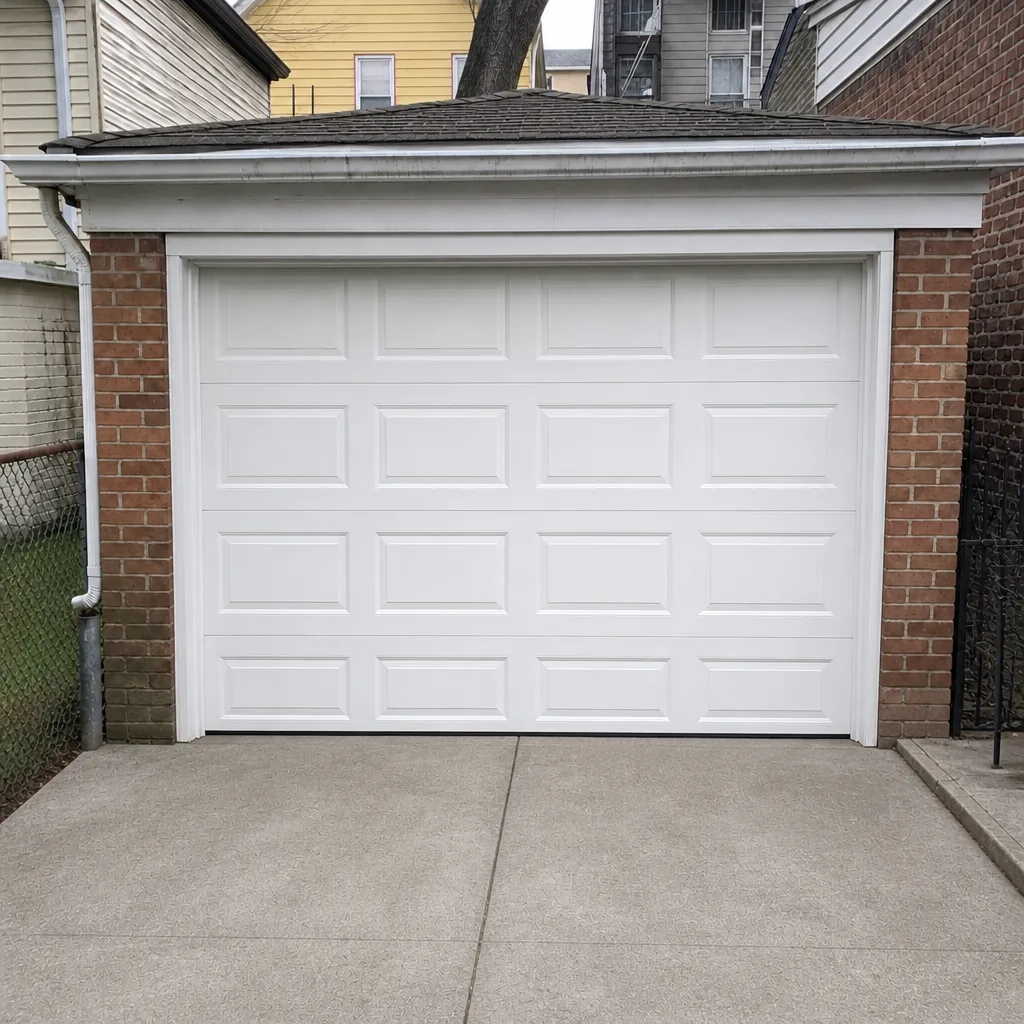
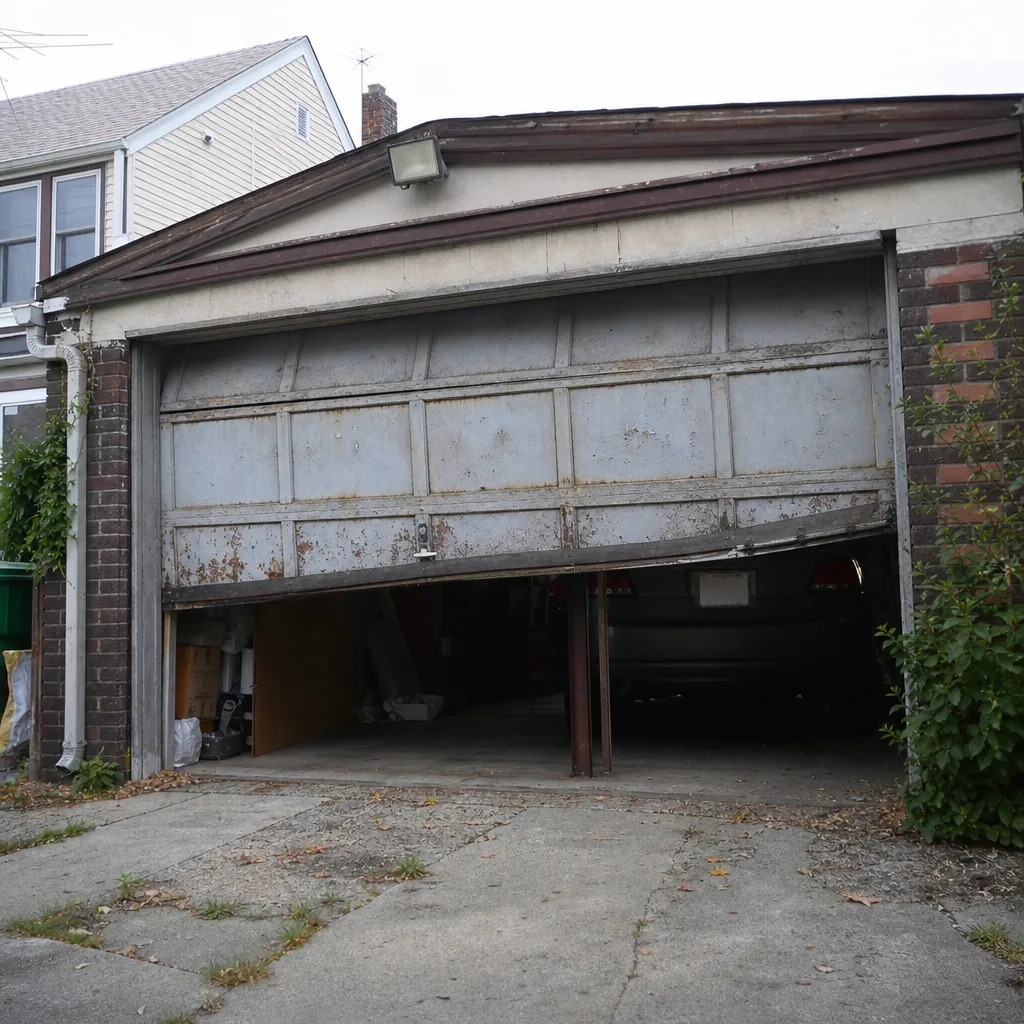
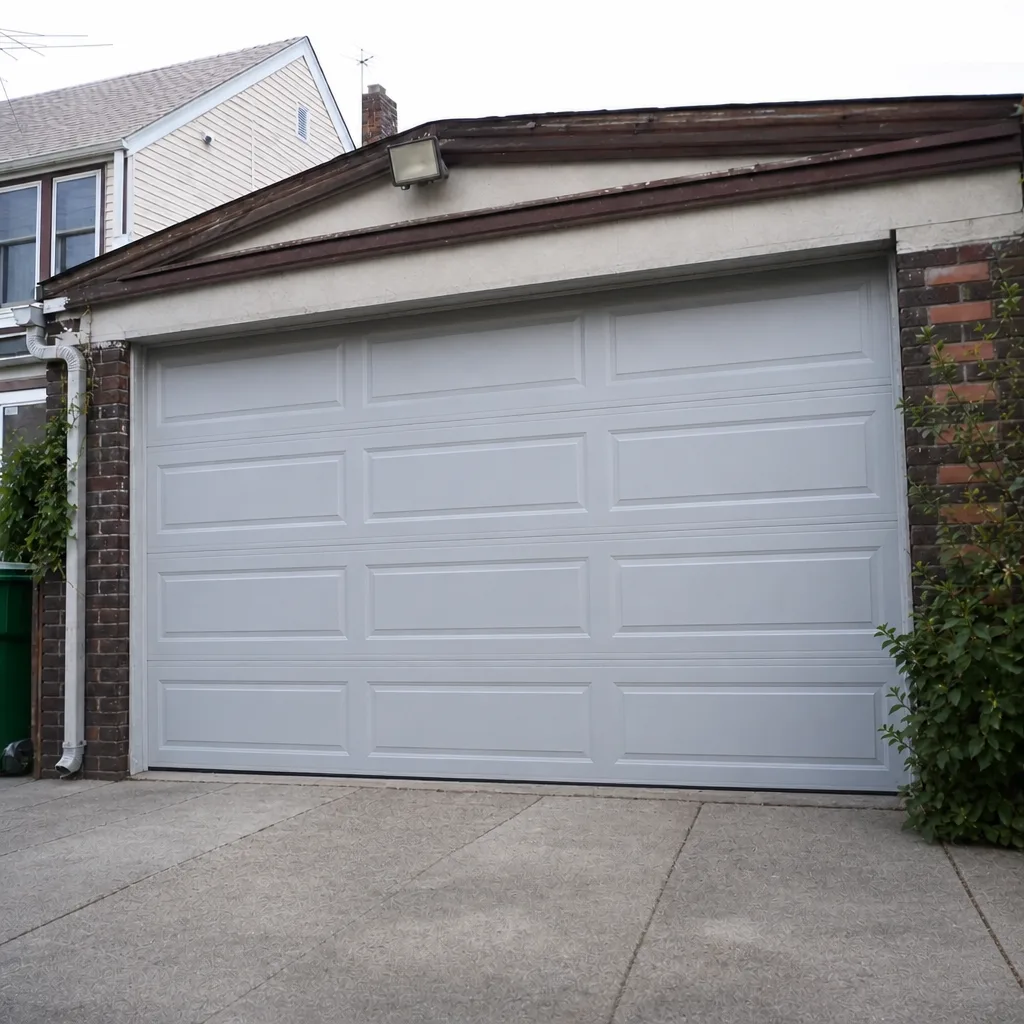
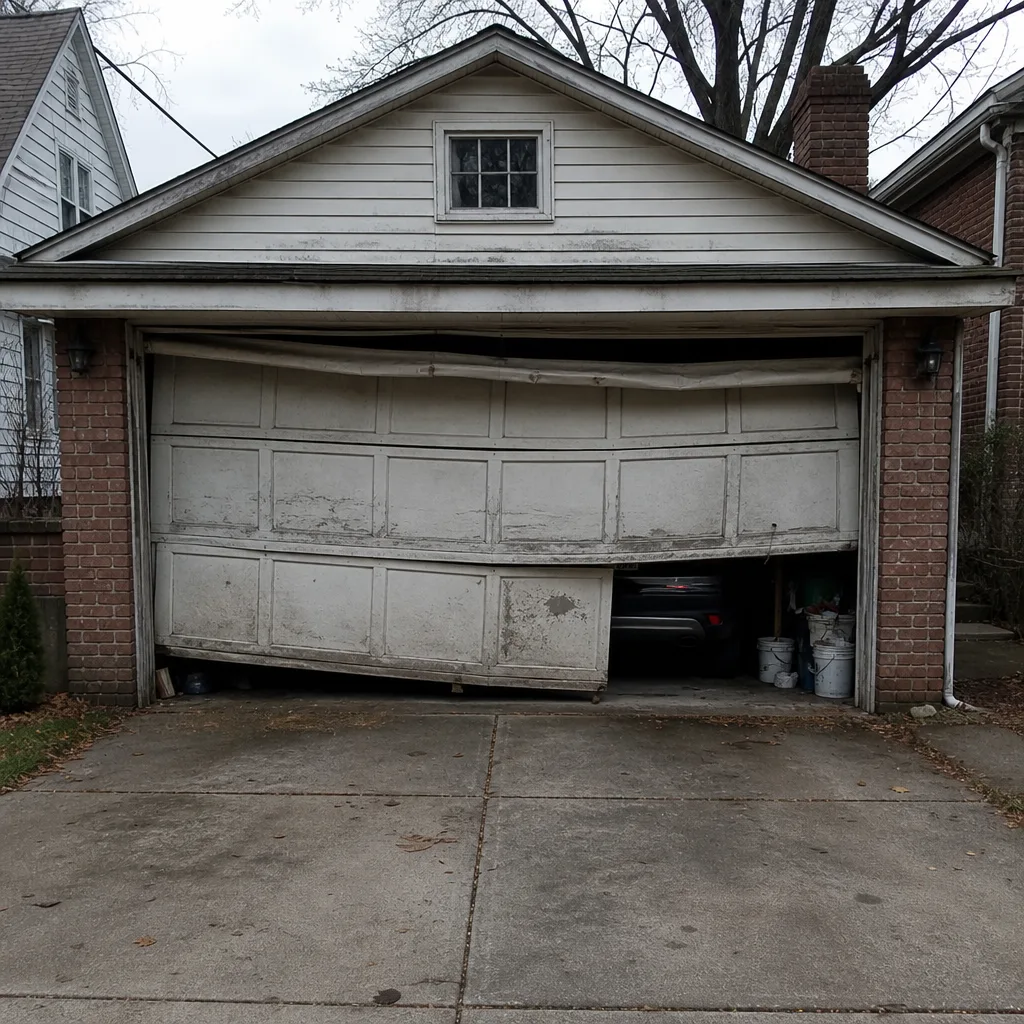
See the difference
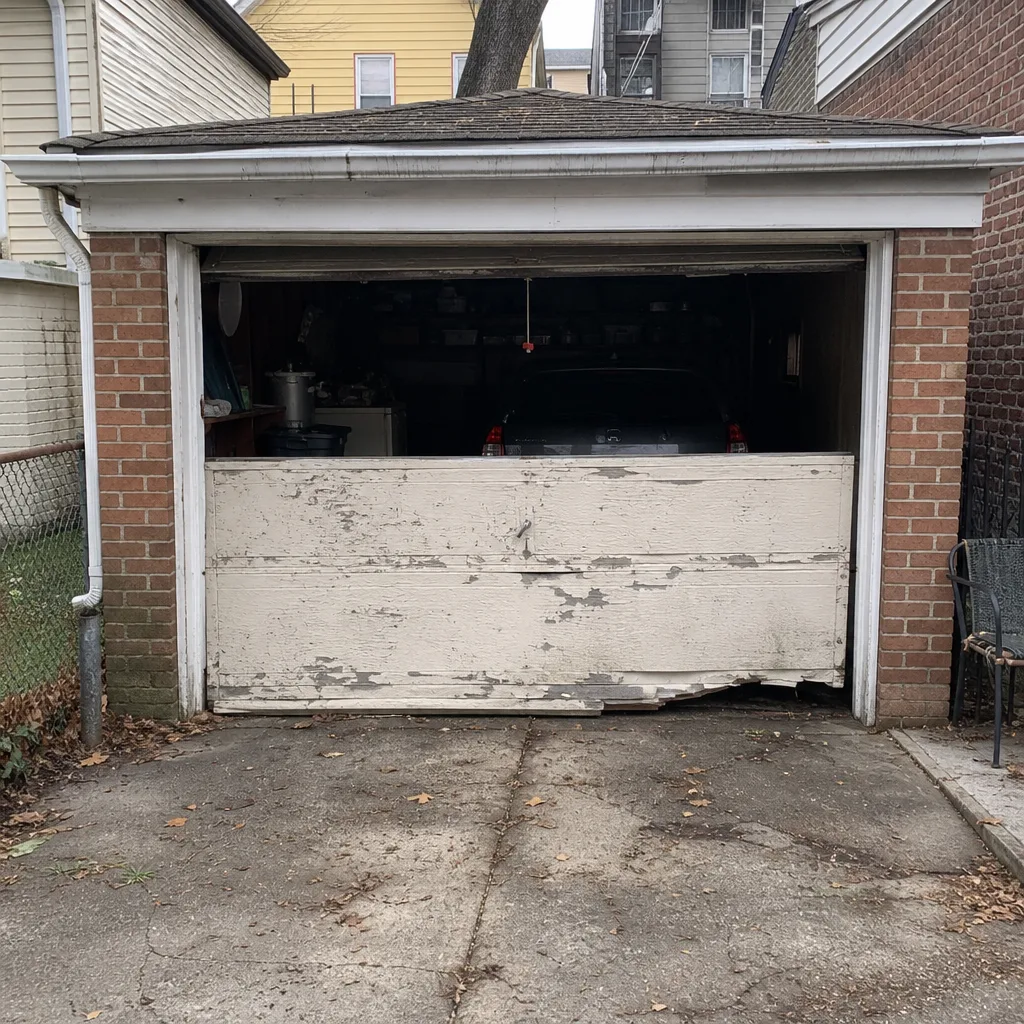 Before
 After
 Before
 After
 Before
 After
Common Mistakes to Avoid
- Assuming the opener is the problem when the door is actually struggling. A new opener on a binding door just moves the failure to the new unit. Diagnose the door first, then the opener.
- Spray-lubricating a torsion spring or shaft. It feels like a cure, but it can attract grit and accelerate wear. Get a professional to lubricate the correct points at the right intervals.
- Treating a loud pop as “normal” because the door still opens. A pop often means a spring has snapped and the door is running on the other spring or on the opener alone. Every open after that pop is one more chance the door comes down.
- Ignoring frayed cables. Cables don’t fail gradually. They fail at the weakest strand, and they can fail the next time you touch the door.
- Tightening lag bolts with the door down. This isn’t a fix, it’s a way to strip the hole. With older Harlem jamb framing, a stripped lag adds a new problem rather than fixing the old one.
- Not writing down the brand and model of your equipment. If your Clopay door has a LiftMaster opener and something happens, knowing the brands before you call shortens the diagnosis. Write it down now.
- Assuming “nothing to worry about” when the door only grinds at the bottom. Bottom-panel wear is exactly what a new bottom seal or a lower roller can head off, at a fraction of the cost of a door problem that takes out the track.
When to Call a Professional
Call us when the door makes a sound you can’t identify, when the door reverses on its own, when you can see a broken spring, or when the door has come off its track. Also call when you’ve got a noisy door and you’d rather not find out the hard way what’s causing it. Those are all cases where an hour of a trained eye beats another month of guessing.
We handle all five parts of the system: repair, opener repair, spring repair, installation, and emergency service. The brands we work on cover most of what’s on Harlem doors today: LiftMaster, Chamberlain, Genie, Clopay, Amarr, Wayne Dalton, Craftsman, and Raynor. If your unit is one of those, we’ll arrive already familiar with the hardware.
Garage Door Repair Harlem offers free estimates in Harlem, call (877) 829-5867. The price is quoted and agreed in writing before any work starts. On repairs, that estimate happens on the first visit. On a new door, a technician measures and prices it before anything is ordered.
Frequently Asked Questions
The most urgent warning sign is a loud pop or bang near the top center of the door, followed by the door refusing to move or falling back down. That’s the classic signature of a snapped torsion spring, and it’s the repair where continuing to operate the door creates a real safety risk. Stop using the door and call a professional. If you’re not sure what you heard, we can help diagnose it over the phone. Call (877) 829-5867. We answer 24/7. Fast dispatch from 7am to 7pm, Sunday through Friday.
Repairs start with a diagnosis and a written estimate, and the estimate sets the price for the job. We don’t quote one number for everything, because a worn roller and a broken spring are different work. The estimate is free. Call (877) 829-5867 to schedule one, and the technician will tell you the range before touching the door. Repairs are quoted and agreed before any work starts, so there’s no invoice surprise at the end.
In most cases, yes. Same-day repair is the core of what we do, and stuck doors are usually a spring, cable, or off-track problem that we carry the parts for. If your door has actually come off the track or the spring has snapped, that’s the priority call. Call (877) 829-5867. We answer 24/7. Fast dispatch from 7am to 7pm, Sunday through Friday. A call outside dispatch hours gets booked into the next opening.
No. Grinding usually points to worn rollers or dry hinges, which are low-risk if caught early but degrade the rest of the system over time. The exception is grinding from inside the opener housing itself, which often means a stripping gear inside the motor. A technician can tell the two apart in a few minutes and give you the option to fix it before the gear lets go entirely.
Yes, winter is when a lot of the accumulated wear shows up. Cold shrinks the metal in the guides and the springs, so a door that was fine in October can be tight, noisy, or slow in January. If your door has gotten louder or more sluggish since the temperature dropped, that’s your cue to schedule an inspection before a spring fails. Don’t wait for the door to stop.
We have certified service across 8 major brands, including LiftMaster, Chamberlain, Genie, Clopay, Amarr, Wayne Dalton, Craftsman, and Raynor. Those cover most of the doors and openers in Harlem homes, and knowing the hardware means we don’t guess at the problem on arrival. If your brand is in that list, we’ll come prepared. If it’s not, call and tell us the model before booking a visit.
No, if the diagnosis matches what we quoted. If the technician finds something additional, they’ll stop and explain it before doing the extra work, and nothing proceeds without your go-ahead. That’s the whole point of a written estimate: the price you agree is the price you pay for the work described.
If your car is parked inside and the door won’t open, you don’t need to do anything except leave the door clear. If the door is operable and the car is on the far side of the garage, moving it out before the technician arrives is helpful but not required. Safety clearances are part of what we set up when we get there.
The Bottom Line
Most garage door failures are not sudden. They announce themselves through sound, then through visible wear, then through opener behavior. A grinding noise is a worn roller, a pop is a spring, a reversing door is a sensor or a travel limit, and a door that only complains on cold mornings is telling you winter is loading it up. Catch those signals the first time and the cost is small. Miss them, and the cost is a night without a way back into the house. Write down your brand, do the five-minute check once a month, and call for anything that isn’t a monitor-level item. When you need eyes on the door, call (877) 829-5867 for a free estimate. We answer 24/7. Fast dispatch from 7am to 7pm, Sunday through Friday.
Written by the team at Garage Door Repair Harlem.