
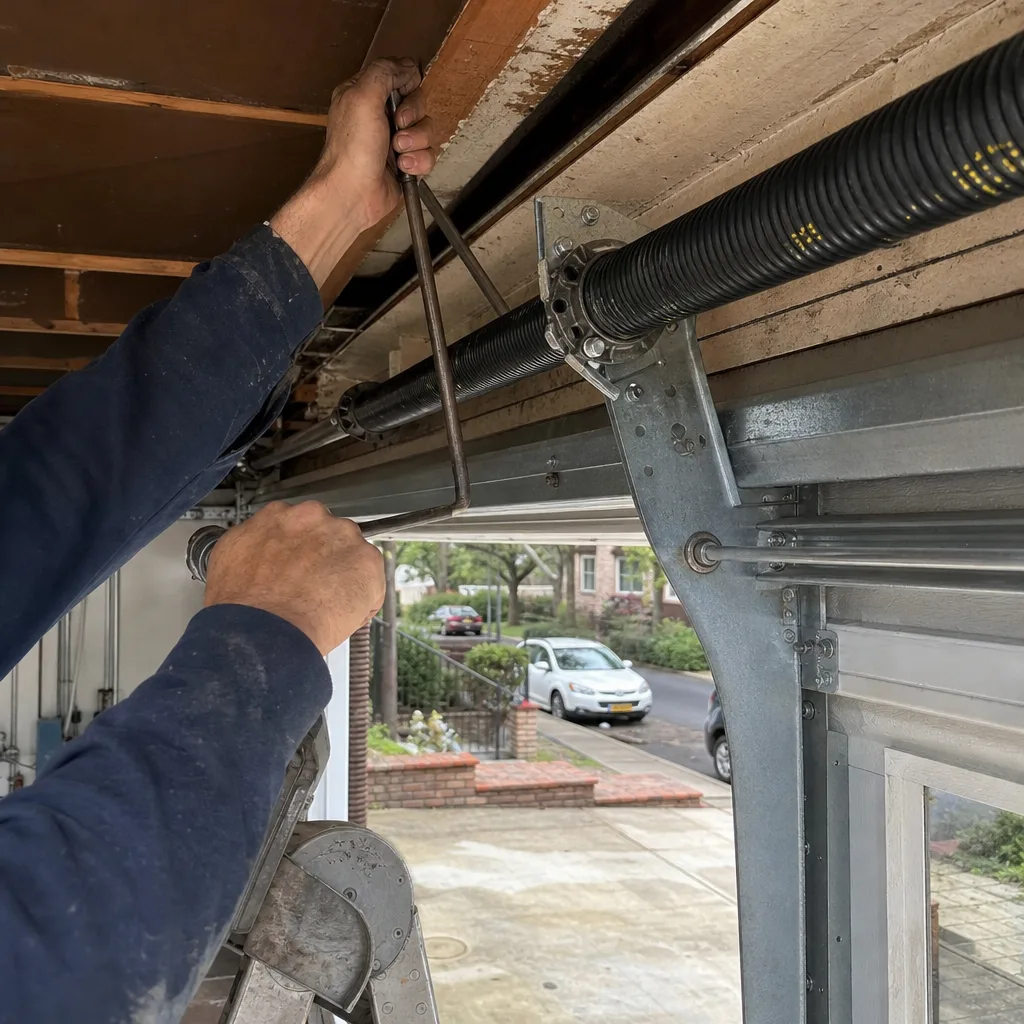
Last updated November 21, 2026
 Raised-panel steel
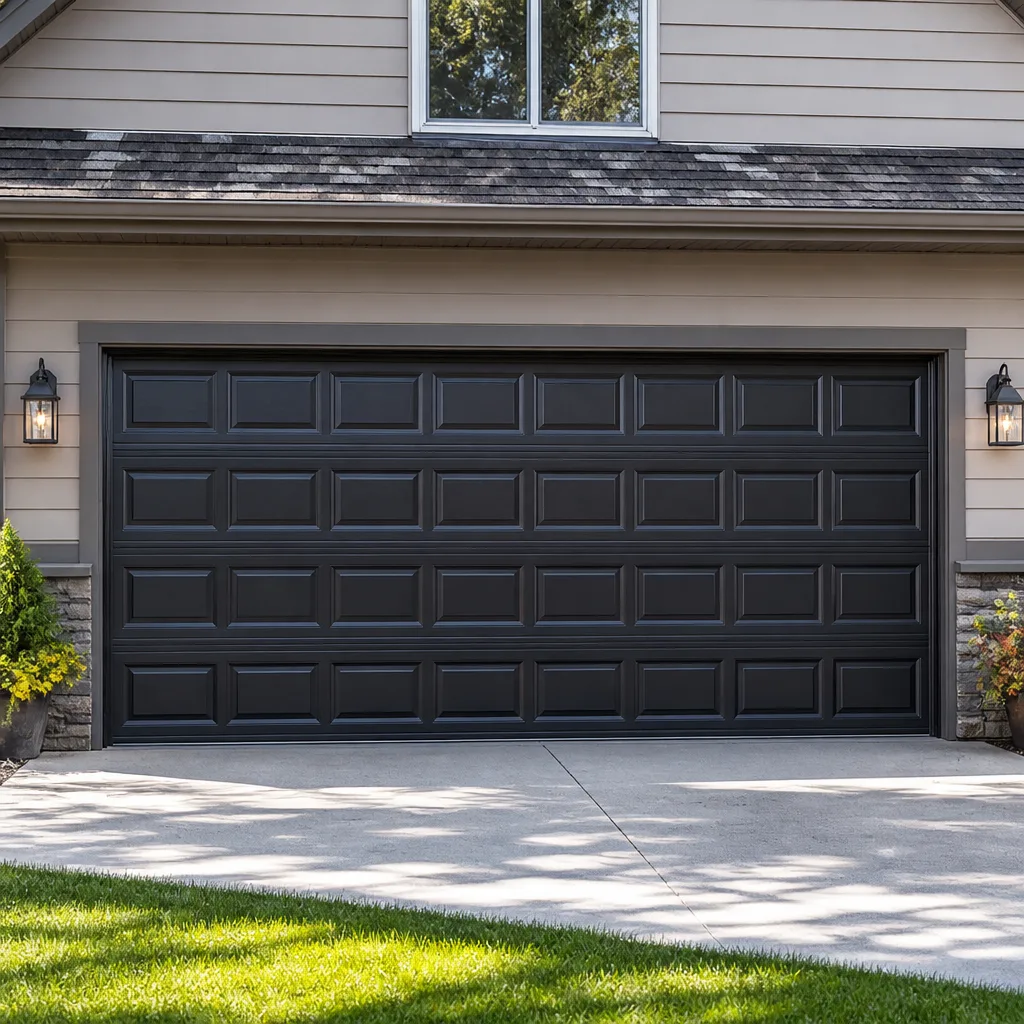
 Carriage house
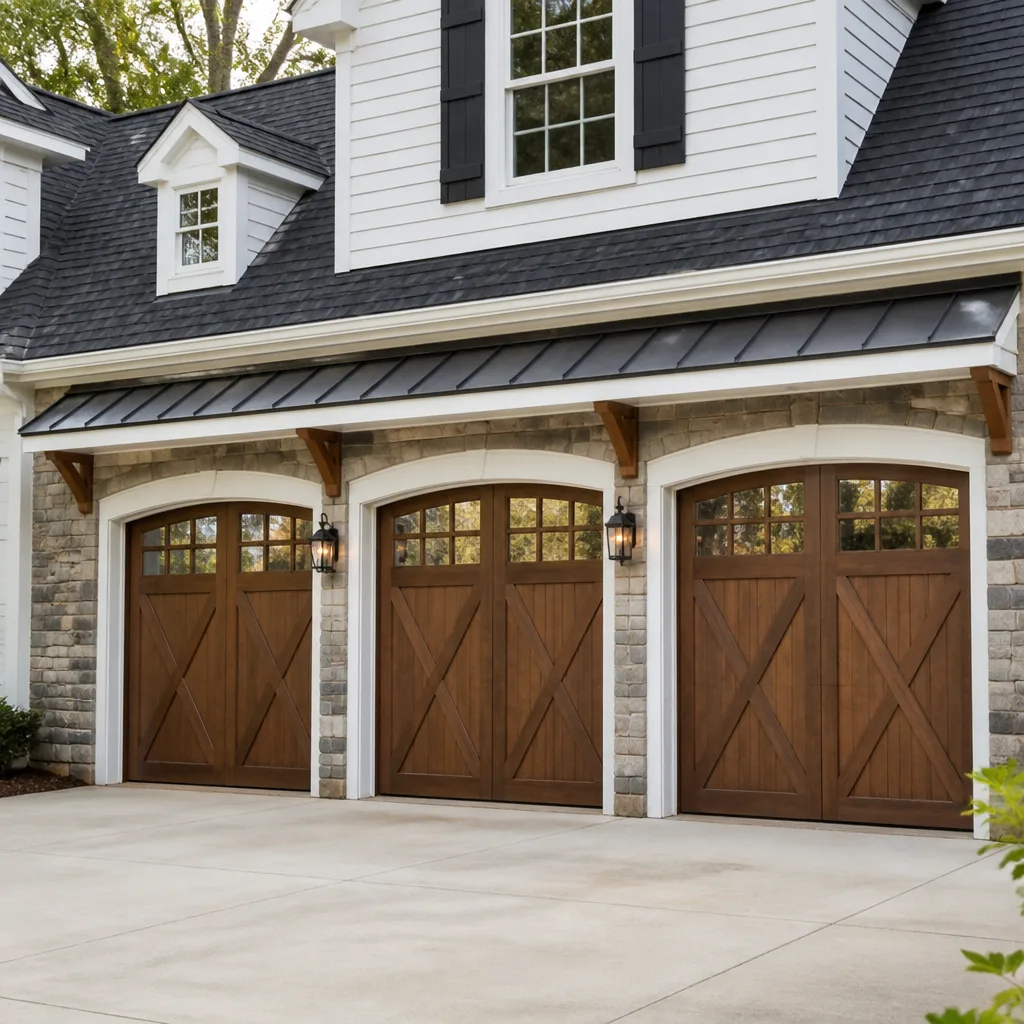
 Modern flush
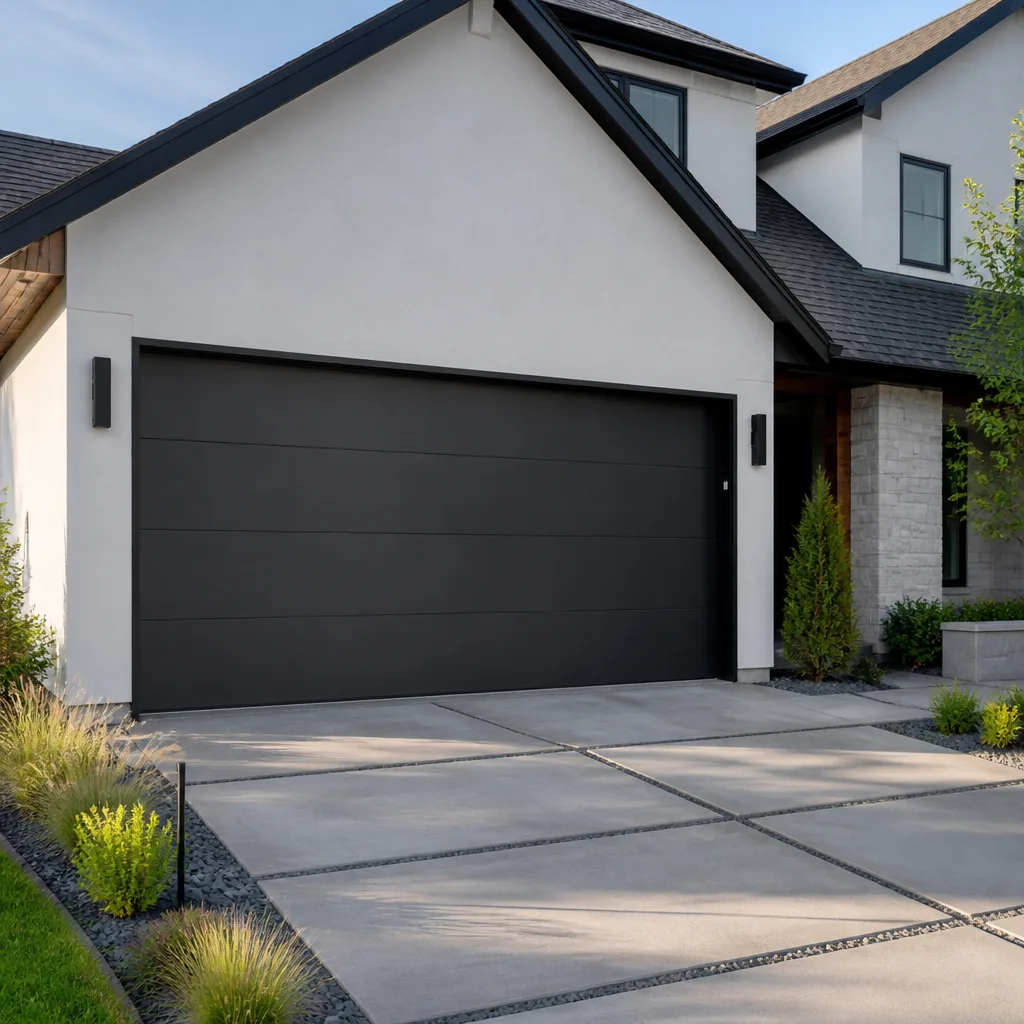
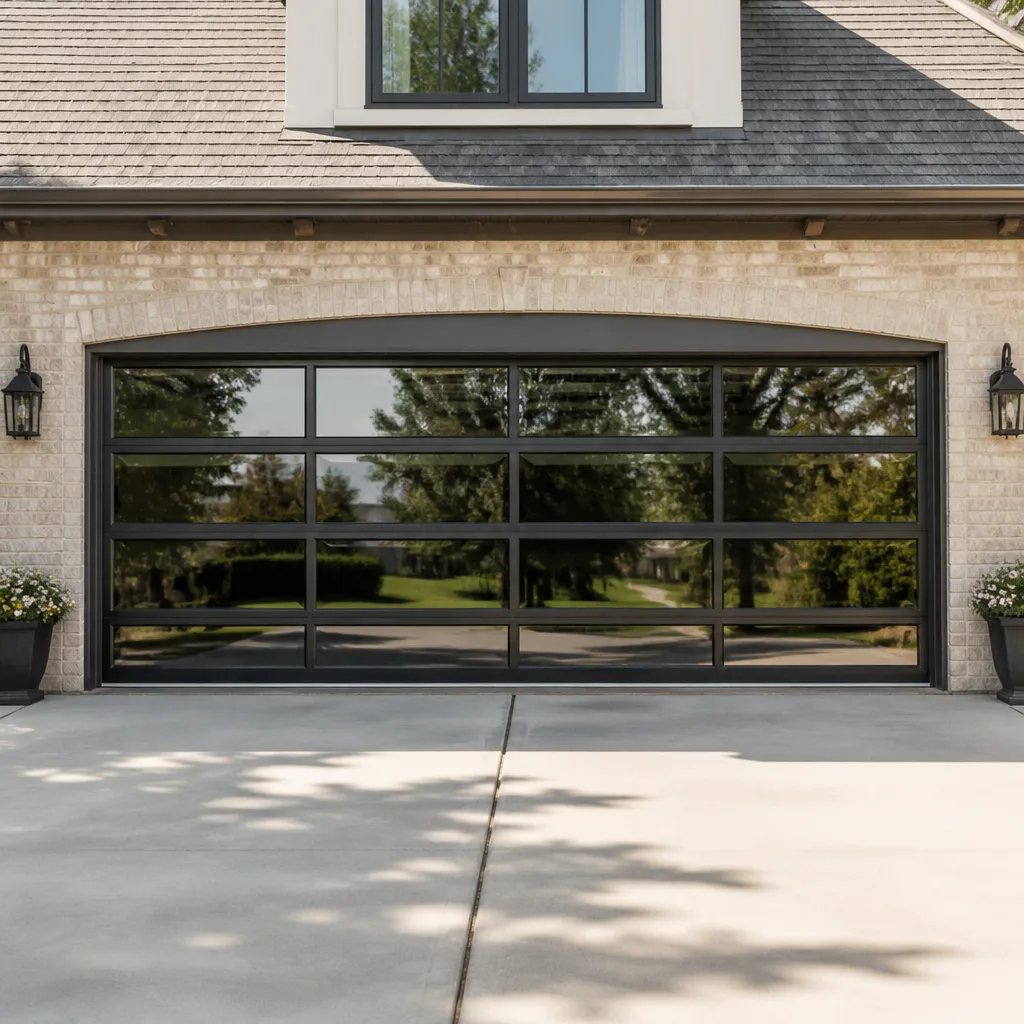 Full-view glass
 LiftMaster openers
 Chamberlain openers
Full 25-point door and opener safety check with every visit - springs, cables, rollers, tracks, and your LiftMaster or Chamberlain opener included
You get a price before we start. It does not change when the pro arrives.
Get your free estimateDIY vs Professional Garage Door: The Harlem Homeowner’s Decision Guide
Most guides to DIY garage door work get the question backwards. They frame it as a skill test: are you handy enough to fix it yourself? That’s not the real dividing line. The real line is physics and law. A torsion spring under tension holds enough stored energy to break bones when it releases wrong, no matter how confident you feel holding a wrench. Meanwhile, lubricating rollers, swapping a bottom weather seal, or reprogramming a keypad are jobs a careful homeowner can do in twenty minutes with no risk at all. This guide breaks garage door work down task by task for Harlem homeowners, so you know exactly where safe DIY ends and professional work has to begin, and where hiring out is simply the cheaper, smarter call.
Quick Answer
Safe DIY garage door tasks in Harlem include cleaning and lubricating tracks, replacing weather seals, tightening visible bolts, and reprogramming remotes or keypads. Torsion springs, cables, and anything involving the counterbalance system should always be handled by a trained technician, because the stored energy can cause serious injury. For those repairs, call (877) 829-5867 for a free estimate.
Styles & brands we work with
- Raised-panel steel
- Carriage house
- Modern flush
- Full-view glass
- LiftMaster openers
- Chamberlain openers
Table of Contents
- The Task-by-Task Breakdown
- Why Torsion Springs Are Categorically Different
- NYC Licensing: When DIY Isn’t Just Risky, It’s Not Allowed
- The Honest Cost Comparison for Harlem Homeowners
- How to Prep the Job So You Pay Less Even When You Hire Out
- Harlem Conditions That Affect Your Garage Door
- What to Check Before You Decide
The Task-by-Task Breakdown
Here’s the simplest way to think about it. Garage door work splits into three buckets: things you can do safely, things that need a trained hand, and things that are genuinely dangerous or restricted. The list below covers the jobs Harlem homeowners ask about most often. If your task isn’t here, the rule of thumb is this: if it involves the counterbalance system (springs, cables, drums, or the brackets holding them), leave it alone.
Safe for DIY
- Cleaning the tracks. A stiff brush and a rag remove grit and old grease. Clean tracks reduce noise and stop rollers from binding.
- Lubricating moving parts. Rollers, hinges, and the torsion bar bearings take a garage door lubricant, not WD-40. A few drops in the right spots quiet a door noticeably.
- Replacing the bottom weather seal. A worn seal lets in drafts and water. Most seals slide out of a channel and the replacement slides in. Measure the width before you buy.
- Tightening visible bolts and hinges. Loose hinge screws cause rattles. Snug them, don’t crank them; overtightening strips the metal.
- Reprogramming remotes and keypads. Whether your opener is a Chamberlain or a Genie, the manual walks you through pairing. No tools required.
- Replacing remote batteries and photo-eye alignment. If the door won’t close but the motor runs, a misaligned safety sensor is often the cause. Cleaning the lens and nudging the bracket back into line is a safe fix.
Needs a Trained Technician
- Opener repair and replacement. Electrical work plus mechanical load. Wiring mistakes on a 120-volt circuit are a shock and fire risk.
- Panel replacement. Getting a new panel to seat correctly in the track and match the winding pattern of the old one is harder than it looks, and a misaligned panel can bind the whole door.
- Track realignment. A bent track seems like a bend-it-back job. It usually isn’t; forcing it can crack the bracket and pull the whole door off its line.
Dangerous or Legally Restricted
- Torsion spring repair or replacement. The spring above the door holds the entire weight of the door. Unwinding it without the right rods and training can release that energy in a fraction of a second.
- Cable replacement. Cables carry the same load. A snapped cable under tension can whip with enough force to cause deep cuts or worse.
- Anything on a shared or commercial system. In a multi-unit building in Harlem, the garage door on a shared entrance falls under contractor licensing rules. We cover that below.
If you’re facing a repair in the second or third bucket, that’s exactly the work our garage door repair service handles. Diagnosis first, then options, then a written price before anything starts.
Why Torsion Springs Are Categorically Different
A torsion spring isn’t a bigger version of a hinge. It’s an energy storage device. When the door is closed, the spring is wound tight; that stored energy is what lifts a two-hundred-pound door with one hand. A standard residential torsion spring on a double door can hold hundreds of pounds of force at rest. Release it without the correct winding rods, and the force goes wherever the spring, the rod, or your hand directs it.
That’s the mechanical reason this repair is in a different category from everything else on a garage door. It’s not that spring work is harder to learn. It’s that the failure mode is violent and immediate, with no second chance to do it differently. Trained technicians use specific rods, stand clear of the winding cone, and know which direction to turn based on how the spring is wound. Nothing about that transfers to a homeowner reading a guide.
The other reason springs get their own category: they fail without warning. Unlike a noisy roller that announces itself months in advance, a torsion spring can snap mid-cycle with a bang that sounds like a gunshot. When that happens, don’t cycle the door. The opener is now lifting the full door weight with nothing helping it, and the strain goes straight into the opener gears and the door panels. Call for service instead. We answer 24/7, and fast dispatch from 7am to 7pm Sunday through Friday gets a technician out to assess the damage.
If your door has extension springs (the older style running along the horizontal tracks), the physics are similar. Extension springs stretch under load, and they fail too. The safety cables running through them should be intact and properly secured. If you see one spring stretched longer than the other, stop using the door and get it looked at. Replacement springs should match the original spec for door weight; a spring rated for the wrong load can fail early or strain the opener.
For a deeper look at how spring repair fits into the broader picture, our Garage Door Repair Harlem overview covers the full service list.
NYC Licensing: When DIY Isn’t Just Risky, It’s Not Allowed
Here’s the wrinkle most DIY guides skip. New York City requires a Home Improvement Contractor (HIC) license for anyone paid to perform home improvement work, garage doors included. That law applies to the contractor, not to you working on your own home. If you’re replacing a weather seal on your own door, no license comes into play. But once a job moves into a shared space, or you’re paying someone to do it, the rules change.
On a multi-unit building, a shared garage entrance or a commercial garage system isn’t yours alone. Repairs that affect the shared door affect every resident who uses it, and building management or a co-op board often requires licensed, insured contractors for that work. In those cases, DIY may be barred by your building’s policy even if you’re capable. Before touching a shared garage door in Harlem, ask the building’s management what documentation they need from whoever does the work. It’s a quick call that saves a headache later.
Our technicians have up to 13 years of experience, and every technician we dispatch arrives ready to work on your specific brand. We handle Chamberlain, Genie, Clopay, Amarr, and the other major lines, which means you’re not explaining your hardware to someone who hasn’t seen it before. Our garage door installation service follows the same pattern, whether you’re replacing a single door or a shared one.
A few practical notes on whatever contractor you hire, whether it’s a garage door specialist or anyone else doing work in your building:
- Ask for the HIC license number and check it against the NYC Department of Consumer and Worker Protection database.
- Ask for proof of liability insurance and, where required, workers’ compensation coverage.
- Get the scope of work and the price in writing before anything starts.
That last point matters on every garage door job. The price should be quoted and agreed before any work begins, and the written estimate should set the final number.
The Honest Cost Comparison for Harlem Homeowners
Let’s put actual numbers on the decision. The table below shows typical estimated ranges for common garage door work. These are estimates for a job of standard size, not quotes; the written estimate you receive sets the final price. We’d rather give you a realistic ballpark now than have the invoice surprise you at the end.
| Task | Typical Estimated Range | DIY Reasonable? |
|---|---|---|
| Weather seal replacement | $50 – $150 | Yes, with a careful measure |
| Roller and hinge lubrication | Cost of lubricant only | Yes |
| Opener repair | $150 – $350 | No, electrical and load risk |
| Torsion spring replacement (one spring) | $180 – $340 | No, dangerous |
| Torsion spring replacement (matched pair) | About twice the single-spring range | No, dangerous |
| New door installation | Quoted per job after measure | No |
Look at that second-to-last row honestly. Replacing a matched pair of springs costs about twice what a single spring does, because a pair is usually replaced together. That’s a meaningful number, and it’s the one homeowners are tempted to avoid by doing it themselves. But weigh it against the risk. The tool cost for safe spring work (winding rods sized to your spring) is a few dozen dollars, and the injury risk is real. For spring and cable work, the professional route is the rational choice even at the higher end of the range.
The picture flips for smaller jobs. A weather seal costs a fraction of what a service call costs, and if you’re comfortable measuring and sliding a new seal into the channel, do it yourself. Same for lubrication and keypad reprogramming. Those are DIY wins.
The gray zone is opener repair. A dead opener is often a straightforward fix: a stripped gear, a bad capacitor, a safety sensor out of alignment. But if the fix involves the control board or the wiring, the risk isn’t worth the savings. Our garage door opener repair service handles both legacy openers and modern Wi-Fi units. Diagnosis first, options second, and the price stays what the estimate said.
How to Prep the Job So You Pay Less Even When You Hire Out
If you decide to hire out, you can still save money. Controllable items in a garage door service often come down to how much diagnosis time a technician needs. Do the prep below before calling, and the job goes faster, which usually means a tighter estimate.
- Clear the area around the door. Move bikes, bins, and clutter out of the garage floor in front of the door and around the tracks. A technician who doesn’t have to move your belongings finishes faster.
- Document the problem. Note exactly what happens: does the door go up but not down? Does the motor run without moving the door? Does it stop halfway? Take a short video of the door in motion. Specific symptoms point straight to the cause.
- Write down the brand and model. The sticker on the inside of the opener chassis has the model number. If you know you have a Chamberlain or a Genie, say so when you call. We work on all eight of the major brands we service, and knowing the brand up front lets the technician bring the right parts.
- Measure the door. Height and width, and note whether it’s a single or double door. This matters for spring sizing and for any panel replacement.
- Check the power. If the opener is dead, confirm the outlet works and the breaker hasn’t tripped. It saves a diagnostic step.
- Note the spring type. Look above the door. Is there one spring or two, and are they torsion or extension? That’s useful context.
- Clean the tracks before you call. A surprisingly common cause of a sticking door is track buildup. Clean it first, and you may not need the visit at all.
None of that requires any mechanical skill. It’s just information. The more of it you hand over, the less time the technician spends figuring out the problem, and the more directly the estimate targets the actual repair.
Harlem Conditions That Affect Your Garage Door
Garage doors in Harlem live in a specific environment. Humidity, freeze-thaw cycles in winter, and the drafts that come through older service openings all push on the same hardware. Springs that sit through a cold snap can lose tension or fail outright. Weather seals that dry out in summer let snowmelt and rain into the garage in winter. Tracks collect grit from the street.
The result is a predictable rhythm. Doors that are fine in July often announce themselves in January. Doors on properties along the steeper side streets, where snowmelt and salt from the roadway get kicked up, tend to show more seal wear and more track buildup. Wear on the rollers accelerates when a track is dirty, and dirty rollers put more strain on the opener. A simple quarterly cleaning and lubrication routine can cut that chain off at the start.
Older homes in Harlem also bring their own quirks. A one-car garage added or refinished in a building’s history might have a track alignment that only makes sense with a door of a certain weight. Newer construction tends toward single-panel doors with modern smart openers. If you’re not sure what you’re working with, that’s a good sign to get a professional opinion before you touch it. Our technicians have up to 13 years of experience across older and newer hardware, and we know the difference.
When a door fails after dark or during a cold snap, that’s exactly the situation our emergency service is built for. We answer 24/7. A call outside dispatch hours is booked into the next opening, Sunday through Friday, 7am to 7pm. And when you’re planning a bigger job, our garage door installation service includes the full selection process, so you’re not choosing panels and openers alone.
What to Check Before You Decide
A five-minute inspection tells you which bucket your problem belongs in. Work through this list with a flashlight and a notepad, standing inside the garage with the door closed.
- Springs: Look for a visible gap in the coil, a spring that hangs loose, or two springs of noticeably different tension. A gap means the spring is broken and the door shouldn’t be operated.
- Cables: Look for fraying, kinks, or a cable that’s come off the drum. Never touch a cable that’s under tension; just note the condition and call.
- Tracks: Run your eye along the track from the floor up. Dents, kinks, or a track that’s visibly out of line are a professional fix. Grit and debris are a rag-and-brush job.
- Rollers: Worn rollers look flattened or chipped. A squealing door usually points to rollers and hinges that need lubrication.
- Weather seal: A brittle, cracked, or missing bottom seal needs replacing, and you can do that one yourself.
- Opener: If the motor runs but the door doesn’t move, the drive is the problem. If the door won’t close on its own, check the safety sensors first.
- Door balance: Disconnect the opener and lift the door halfway. If it won’t hold roughly where you leave it, the spring tension is off and needs a professional.
That last check is the clearest early warning sign that something’s out of balance. It’s safe to perform, because you’re only lifting the door by hand with the opener disconnected. If the door won’t hold, don’t fight it. Set it back down gently and make the call.
Common Mistakes to Avoid
- Using WD-40 on the tracks or rollers. It attracts dust and turns into grit. Use a garage door lubricant and wipe away the excess. In Harlem, where street grit finds its way into garages, this matters.
- Prying a bent track back into shape. The bracket behind the track takes the load, and forcing it can crack the whole assembly. Stop and let a technician look at it.
- Trying to unwind a torsion spring without winding rods. Never improvise with a screwdriver or a wrench. If you don’t have the right tools, you don’t have the tools.
- Replacing one spring and leaving the other. Matched springs wear at the same rate. Replace one and the second usually fails within a short stretch, which means paying for two visits.
- Calling an unverified contractor. In NYC, anyone paid for home improvement work needs a Home Improvement Contractor license. Ask for the number and check it.
- Ignoring the safety sensors. If the door won’t close, the photo-eye sensors are often the culprit. A quick check of their alignment can save you a service call.
- Against advice, cycling the door with a broken spring. The opener is now pulling the full door weight alone. That’s how you turn a spring repair into a spring plus opener repair.
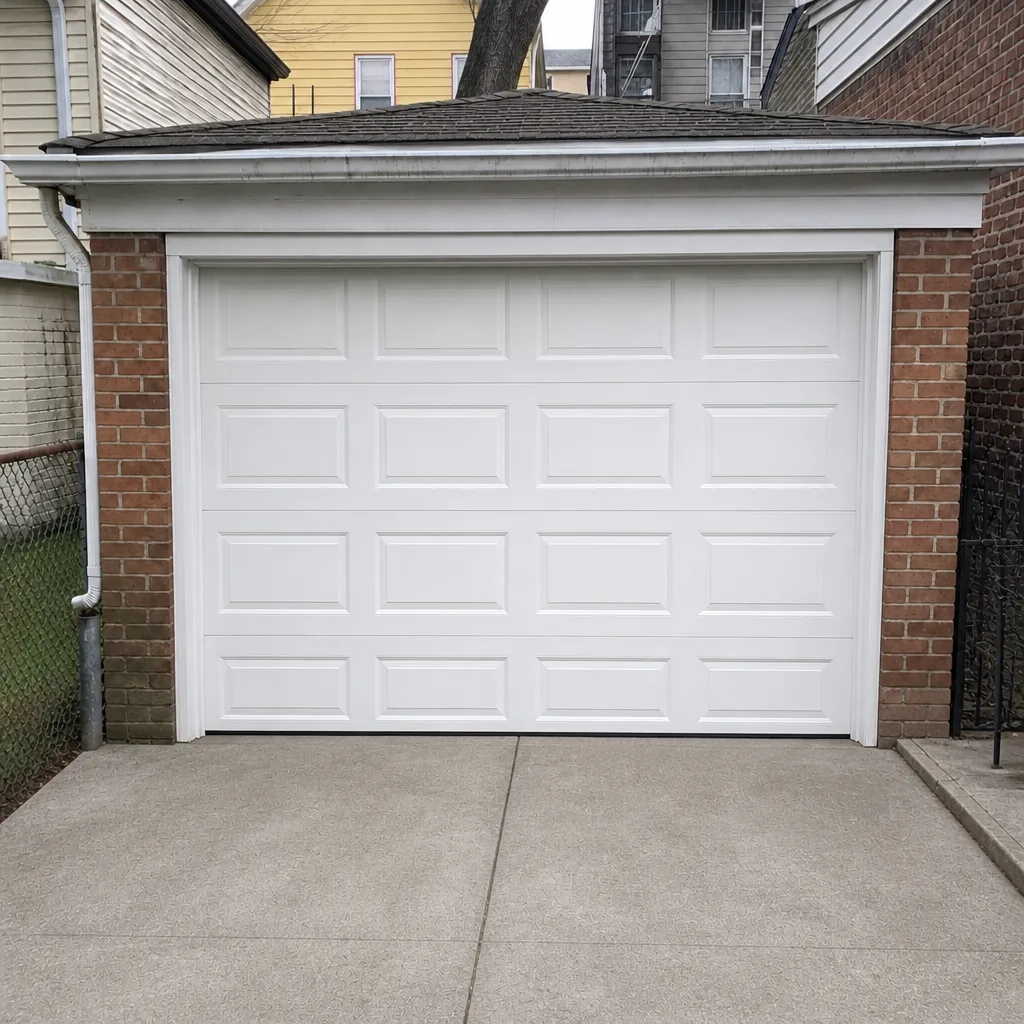
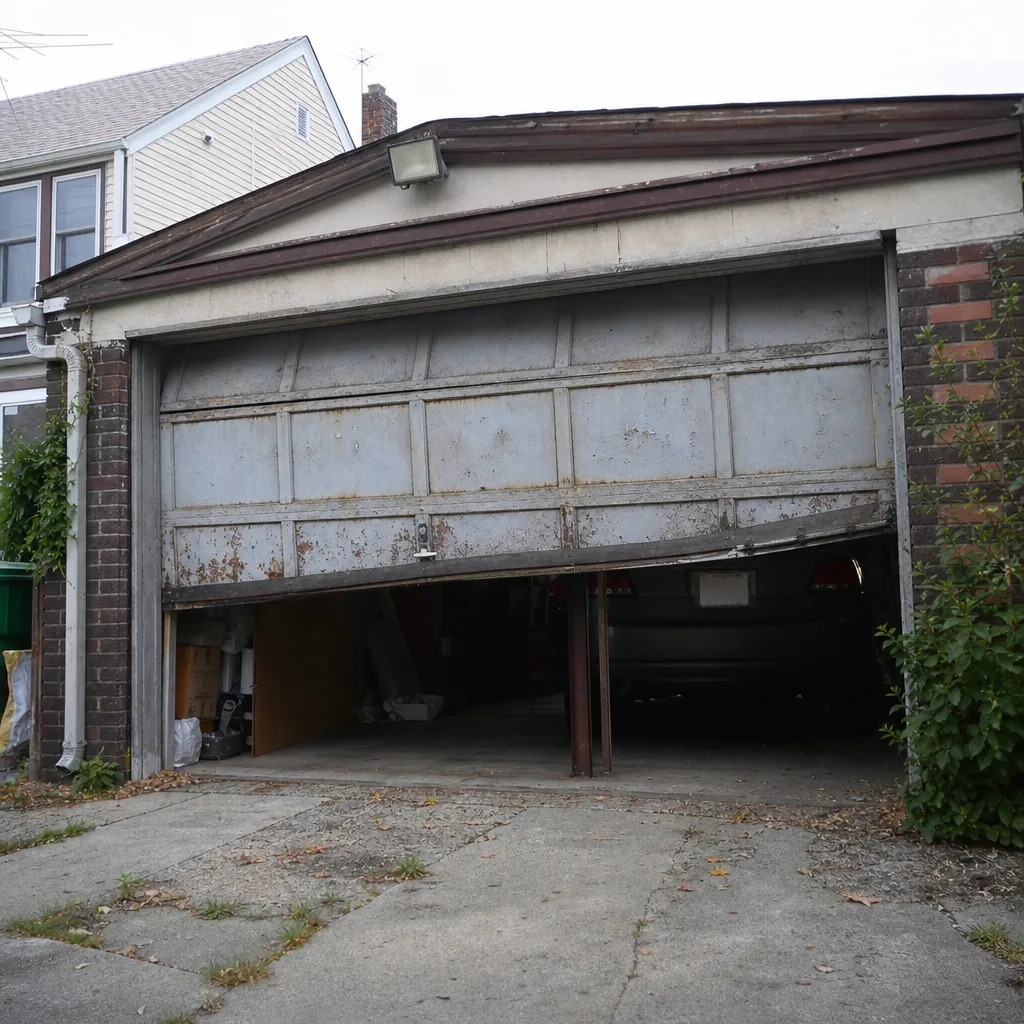
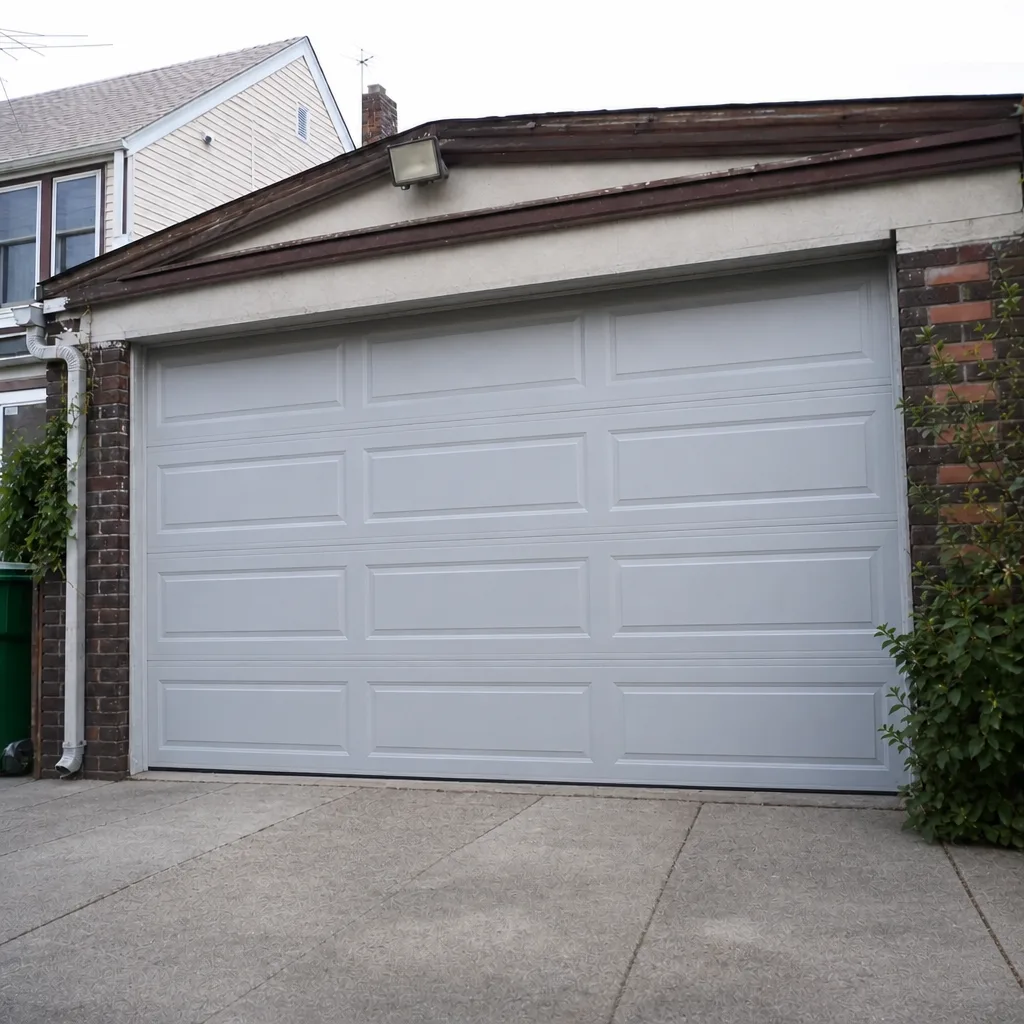
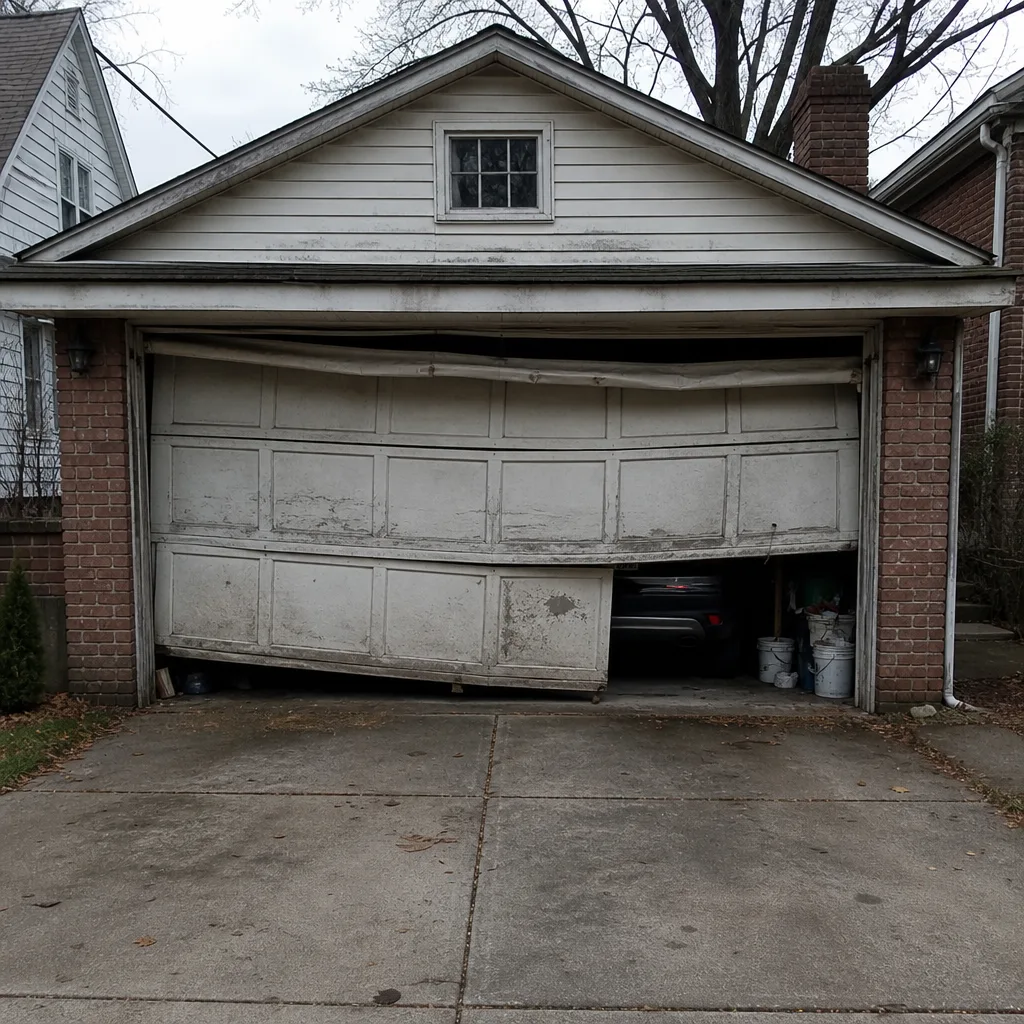
See the difference
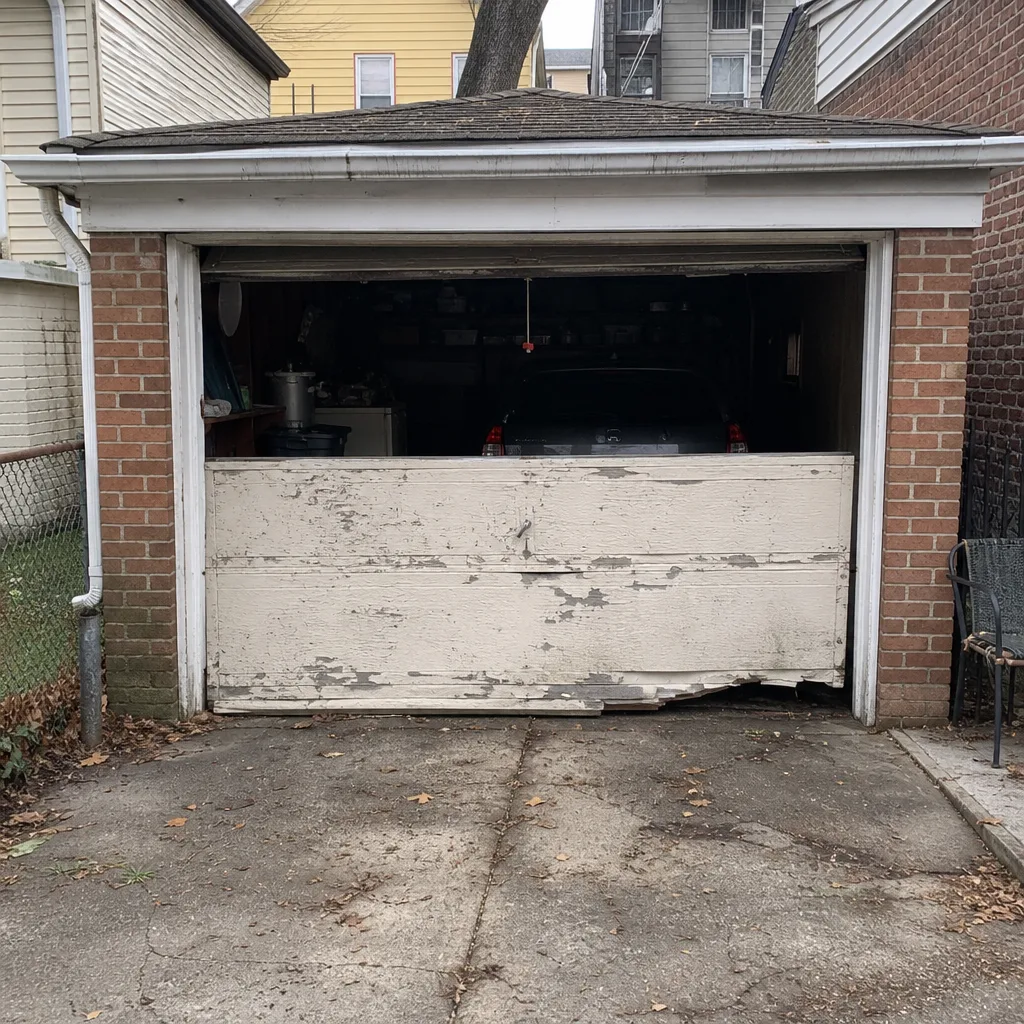 Before
 After
 Before
 After
 Before
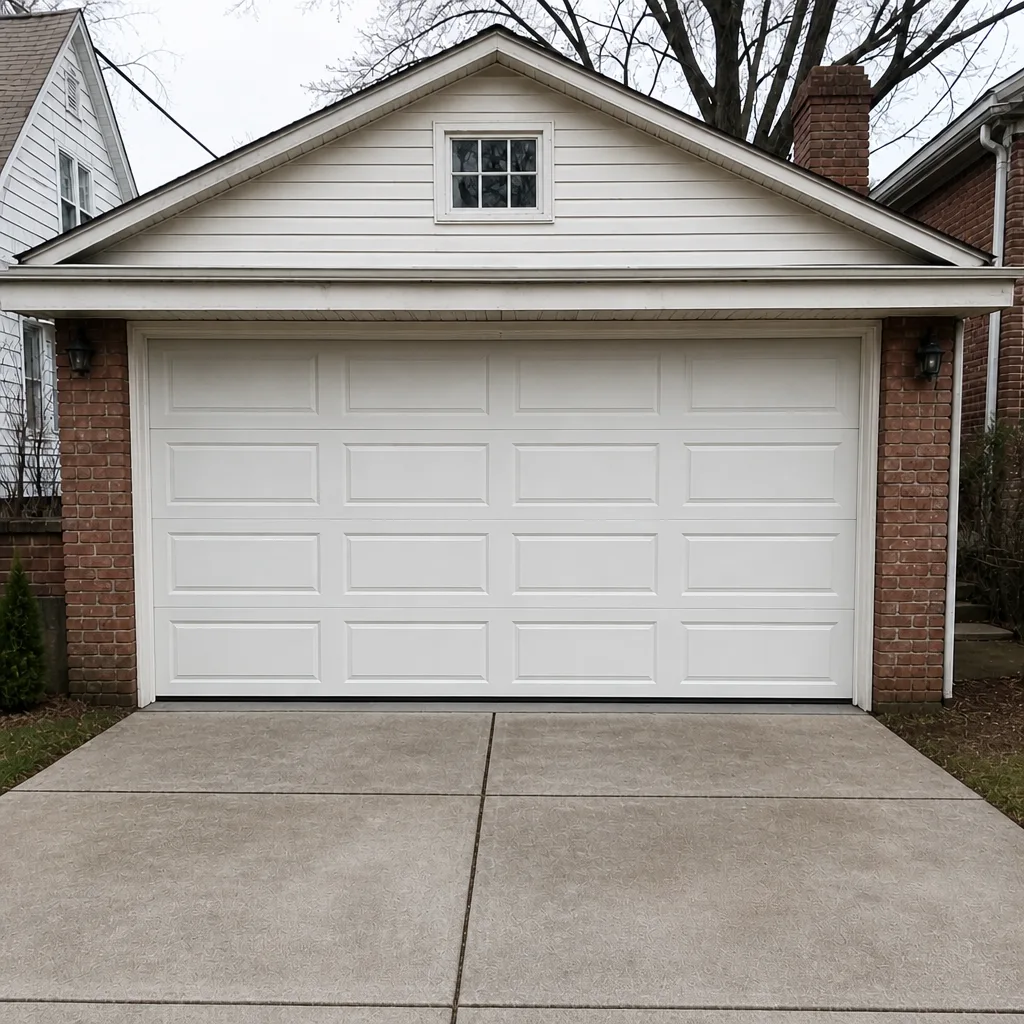 After
When to Call a Professional
Call for a technician whenever the work touches a spring, a cable, a drum, or the brackets that hold the counterbalance system. Call when the opener motor runs but the door doesn’t move, when the door comes down faster than it goes up, when a track is bent, or when the door won’t balance. Call for anything on a shared or commercial garage entrance, where NYC licensing rules apply. And call when the door won’t close or won’t open at all and you need it working today. Garage Door Repair Harlem offers free estimates in Harlem. Call (877) 829-5867. We answer 24/7, and fast dispatch from 7am to 7pm runs Sunday through Friday.
Frequently Asked Questions
You shouldn’t. A torsion spring stores enough energy to cause severe injury when it releases wrong, and the risk doesn’t change based on how careful you are. The safe choice is a trained technician with the correct winding rods. Call (877) 829-5867 for a free estimate; spring repair for one spring typically runs $180 – $340, with a matched pair about twice that.
Cleaning and lubricating tracks, replacing a bottom weather seal, reprogramming remotes and keypads, and tightening visible bolts are all safe for a careful homeowner. The dividing line is the counterbalance system: anything involving springs, cables, drums, or the brackets that hold them is professional work. Call (877) 829-5867 if you’re unsure where your task falls.
New York City requires a Home Improvement Contractor (HIC) license for anyone paid to do home improvement work, including garage doors. DIY work on your own door isn’t covered by that rule, but repairs on a shared or commercial garage system in a multi-unit Harlem building are usually restricted to licensed contractors. Ask the building’s management what documentation they require. Call (877) 829-5867 for a free estimate; estimates are free.
Spring repair in Harlem typically costs about $180 – $340 for a single spring, and roughly twice that for a matched pair, since both are replaced together. The written estimate sets the final price, and it’s agreed before any work starts. Call (877) 829-5867 for an exact quote; estimates are free.
We work on Chamberlain, Genie, Clopay, Amarr, Wayne Dalton, LiftMaster, Craftsman, and Raynor, so the odds are strong that your opener is one we’ve seen many times. Give us the brand and model when you call and we’ll confirm before we schedule. Call (877) 829-5867. We answer 24/7, with fast dispatch from 7am to 7pm Sunday through Friday.
The most likely outcomes are serious injury or further damage to the door and opener. If you operate a door with a broken spring, the opener carries the full door weight alone, which can strip its gears. Stop cycling the door and call (877) 829-5867. A call outside dispatch hours is booked into the next opening, Sunday through Friday, 7am to 7pm.
The Bottom Line
The dividing line on garage door work isn’t skill, it’s physics and law. Clean your tracks, replace your own weather seal, reprogram your keypad. Those are easy wins. Leave springs, cables, and opener wiring alone; the stored energy and electrical risk make them professional territory. In Harlem, shared and commercial garage systems bring HIC licensing into the picture, so check before hiring anyone for that work. Get a written estimate before any job starts and keep it as the final price. Call (877) 829-5867 for a free estimate.
Written by the team at Garage Door Repair Harlem.